
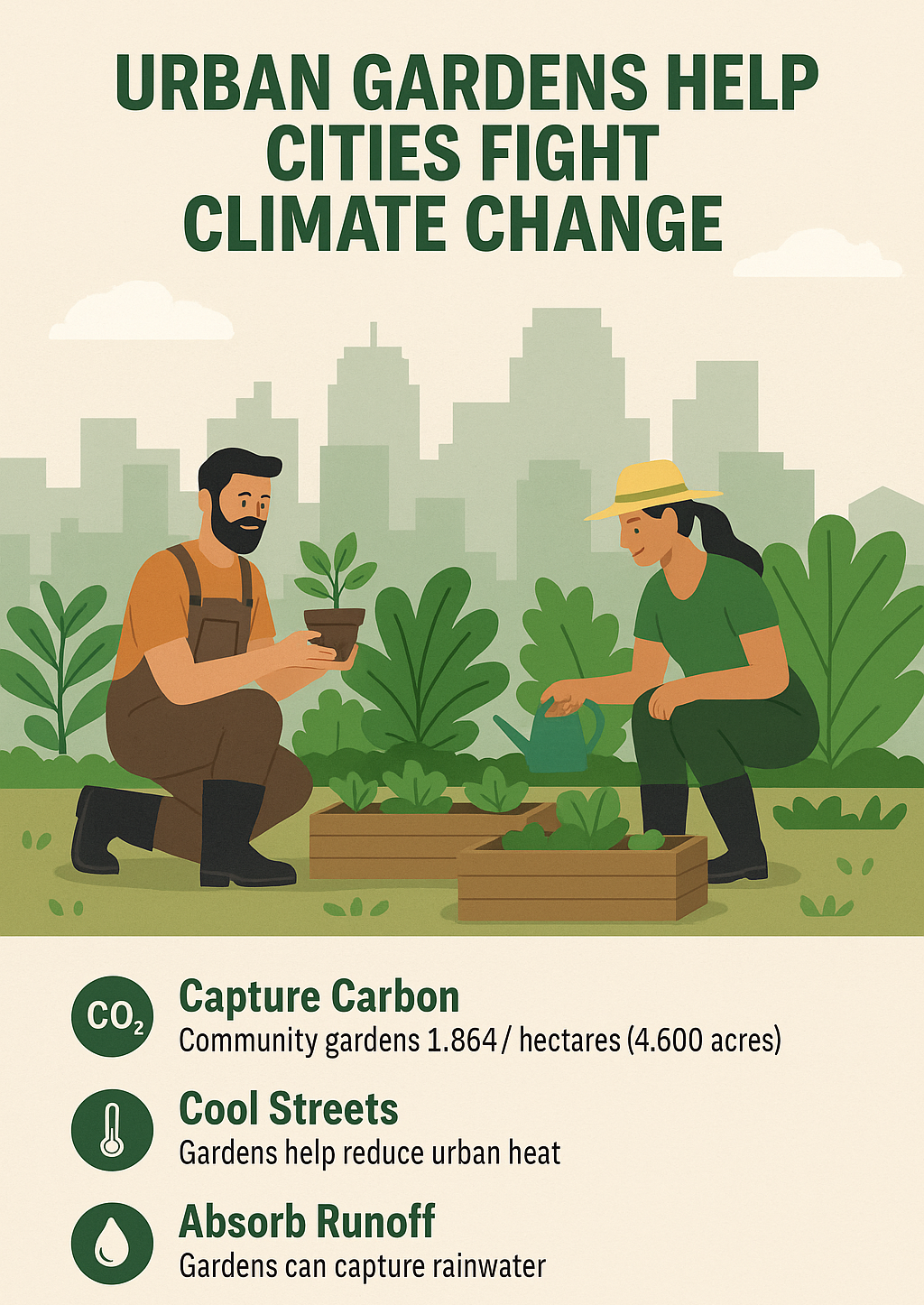
According to a joint study by three Polish universities, Warsaw, a city renowned for its parks and boulevards lined with trees, is pursuing a new frontier in climate resilience through urban gardens. According to the study, 1,864 hectares (4,600 acres) may be used for a network of community gardens spread around the city. These gardens could capture carbon, cool hot streets, and absorb runoff. The study, which involved more than 250 interviews and spatial analysis, demonstrates how these gardens contribute to the social fabric, in addition to their environmental benefits. By combining ecological innovation with community engagement to support urban sustainability, this project offers a paradigm for communities worldwide that are grappling with extreme weather and rising temperatures.
Who Uses the Urban Gardens: A Diverse Movement
People from all walks of life are drawn to Warsaw’s urban gardening movement, which is incredibly welcoming and inclusive. Schoolchildren establishing pollinator patches, cultural organisations converting courtyards into micro-farms, and a core team of 10 to 15 consistent volunteers per garden, assisted by sporadic assistants and bystanders, are all highlighted in the report. The volunteer lists are dominated by young middle-class families and retirees, many of whom are women with advanced degrees, contributing a variety of skills and energy.
These gardens foster a sense of community by serving as gathering places where people can relax, converse, or tend to their plants. By guaranteeing that gardening spans all ages, educational levels, and financial backgrounds, this variety broadens the movement’s appeal and makes it a team effort to improve Warsaw’s green areas.
Also Read: Rooftop Gardens: Transforming Urban Spaces Into Green Oases
Urban Gardeners’ Motivation: Beyond the Harvest
According to co-author Piotr Majewski of SWPS University, the reasons behind Warsaw’s urban gardeners go much beyond the production of food. The primary motivations for gardeners are social ties, environmental contribution, connectivity with nature, and mutual learning. The actual value lies in biodiversity, composting, and workshops on sustainable living; however, tomato and herb harvests are a bonus. These initiatives align with international research that links urban agriculture to climate adaptation, as even small plots can mitigate the urban heat island effect, capture pollution, and serve as carbon sinks. This emphasis on ecological and social benefits makes gardens a potent instrument for resilience in a city of almost two million people, particularly as climate challenges intensify.
Also Read: Water-Wise Gardening: Growing A Climate-Resilient Garden
Tiny Plots, Big Impact: Scaling Gardens Citywide
Warsaw’s 1,864 hectares of urban gardens, the majority of which are conveniently located within a quarter-mile of residential areas, have the potential to have a considerable impact. To create a distributed green infrastructure network, these pocket-sized plots can be designed to cool streets, channel organic waste through composting, and store floodwater during flash floods. The social capital created—cooperation, shared norms, and trust—proves to be equally important, binding neighbors together to help one another during floods or heatwaves.
Interviewees frequently place a higher value on community development than vegetable yields, with workdays serving as skill-sharing events where newcomers make friends, retirees teach gardening, and kids learn stewardship. This network could expand throughout the city with minimal funding, such as city hall starter kits or leased public property, thereby improving social and environmental resilience.
Also Read: Sustainable Gardening Tips For Small US Backyards
Urban Gardens in City Plans: A Policy Imperative
Given their importance in climate adaptation and green infrastructure, Majewski and his group support the inclusion of urban gardens in Warsaw’s urban planning regulations. It is suggested that gardens be incorporated into new house designs, integrating them into government schemes, leasing public space at affordable rates, and simplifying the permitting process. Participation may be extended beyond eco-activist circles with the assistance of municipalities, including soil, lumber, and rain barrels, as well as increased public awareness. There are still issues, though: how many gardens are required for quantifiable flood mitigation or cooling? Is it possible to guarantee fair distribution in every district?
Municipal involvement may grow as gardens evolve from pastimes to vital infrastructure. Notwithstanding these uncertainties, the study’s “hero activists” show promise by transforming underutilised areas into resources for climate adaptation. Warsaw and other cities may be led towards a sustainable future by this combination of ecological and social advantages.
Also Read: Urban Gardening Techniques For Small Spaces: How To Grow Your Own Food In Tiny Areas
Conclusion
To sum up, Warsaw’s investigation into urban gardens as a climate strategy demonstrates a win for both the environment and society. Supported by a diverse, driven community, the 4,600 acres have been identified as a scalable solution to address rising temperatures, stormwater, and carbon emissions. The gardens are an essential adaptation technique in a warming world due to their capacity to absorb water, cool streets, and promote community unity.
This model has the potential to transform urban landscapes worldwide with the aid of smart policy, demonstrating that even small plots can have a significant impact. Warsaw’s strategy, which combines nature with neighbourly ties, provides a model for resilience and solidarity as cities deal with increasing climate stresses.
Also Read: Climate Change Fuels Aphid Invasion In UK Gardens As Warm Spring Boosts Numbers

0 Comments