
Across the rapidly growing urban centers of Asia, climate scientists and urban planners are warning that flood risks are rising across Asia’s megacities at an alarming pace. Floods are more frequent in cities such as Jakarta, Mumbai, Bangkok, Manila, and Shanghai. The floods halt roads, destroy buildings, and put the lives of a lot of people in danger. As urban populations grow and climate patterns shift, the reality that flood risks are rising across Asia’s megacities is becoming one of the most urgent environmental challenges facing the region.
Asia has many very big cities, and most of them have access to the sea, rivers, or low flat land. This increases their chances of being struck by adverse weather and rising oceans to a large extent. According to the United Nations Environment Programme, climate change causes rainstorms to be stronger and floods to be more frequent in these locales.
This demonstrates why the threat of floods is increasing in the megacities of Asia and why governments should have fast solutions.
Rapid Urbanization and Growing Vulnerability
Urbanization has transformed Asia over the past several decades, turning many cities into dense megacities with populations exceeding ten million people. While urban growth has created economic opportunities, it has also increased exposure to environmental hazards.
Large areas of natural wetlands and floodplains have been replaced by buildings, roads, and concrete infrastructure. When these natural drainage systems disappear, rainwater has fewer places to flow.
This is one of the reasons why flood risk is rising across Asia’s megacities. Rapid urban expansion often outpaces the development of adequate drainage infrastructure.
Also Read: Urban Waste Crisis: Why Cities Struggle With Waste Disposal
Climate Change and Extreme Rainfall

Climate change is intensifying rainfall events in many parts of Asia. Warmer air holds more moisture, which leads to heavier downpours during storms and monsoon seasons.
As global temperatures rise, extreme rainfall events are becoming more frequent. Scientists say these conditions are contributing to the growing reality that flood risk is rising across Asia’s megacities.
These climate trends are accelerating the rise in flood risks across Asia’s megacities.
Also Read: Atmospheric Dust Linked To Rising Urban Air Quality Concerns
Sea Level Rise and Coastal Cities
Many Asian megacities are located along coastlines or river deltas, making them vulnerable to rising sea levels. As global temperatures increase, melting glaciers and expanding ocean waters are raising sea levels worldwide.
This process increases the likelihood of coastal flooding during storms and high tides. As sea levels continue rising, flood risk is rising across Asia’s megacities located near coastal areas.
Cities such as Jakarta, Bangkok, and Shanghai face particularly severe risks. According to climate scientists, global sea levels have risen by about 20 centimeters since the late nineteenth century.
These rising oceans contribute to the reality that flood risks are rising across Asia’s megacities.
Also Read: How Urban Biodiversity Projects Are Changing Cities For The Better
Data Snapshot: Flood Risk Trends in Asian Megacities
| Indicator | Latest Data | Source |
|---|---|---|
| Global sea level rise since 1900 | ~20 cm | https://www.unep.org |
| Increase in extreme rainfall events | Significant rise in recent decades | https://www.nationalgeographic.com |
| Major vulnerable megacities | Jakarta, Mumbai, Bangkok, Manila | https://www.unep.org |
| Key drivers of flood risk | Climate change and urbanization | https://www.unep.org |
| Regions most affected | Coastal and delta cities in Asia | https://www.nationalgeographic.com |
These indicators demonstrate why flood risk is rising across Asia’s megacities.
Also Read: Warming Climate Fuels Higher Urban Tropospheric Ozone Pollution
Land Subsidence and Sinking Cities
In addition to climate change and urbanization, many Asian cities are literally sinking. Land subsidence occurs when groundwater is extracted faster than it can be replenished.
As water is pumped from underground aquifers, the land surface gradually sinks. This phenomenon significantly increases vulnerability to flooding. Because several major cities are experiencing subsidence, flood risks are rising across Asia’s megacities. Jakarta is one of the most prominent examples, with some areas sinking several centimeters per year.
This sinking land amplifies the danger that flood risk is rising across Asia’s megacities.
Also Read: India’s Urban Heat Crisis: Are Our Cities Prepared For What’s Coming?
Aging Infrastructure and Drainage Systems
The importance of city systems is that they are used to manage floods, and in most cases, cities have old drainage systems that do not work effectively anymore.
Storm drains constructed long ago are not able to handle the heavy downpour that has come with the change in climate. When the drains fail, the water accumulates within a very short time at roads and houses.
These infrastructure challenges further explain why flood risks are rising across Asia’s megacities. Upgrading drainage systems requires large investments and long-term planning.
Without modernization, flood risks are rising across Asia’s megacities and will likely continue increasing.
Also Read: Illegal Immigration And Urban Green Space Strain In India’s Smart Cities
Loss of Natural Flood Barriers
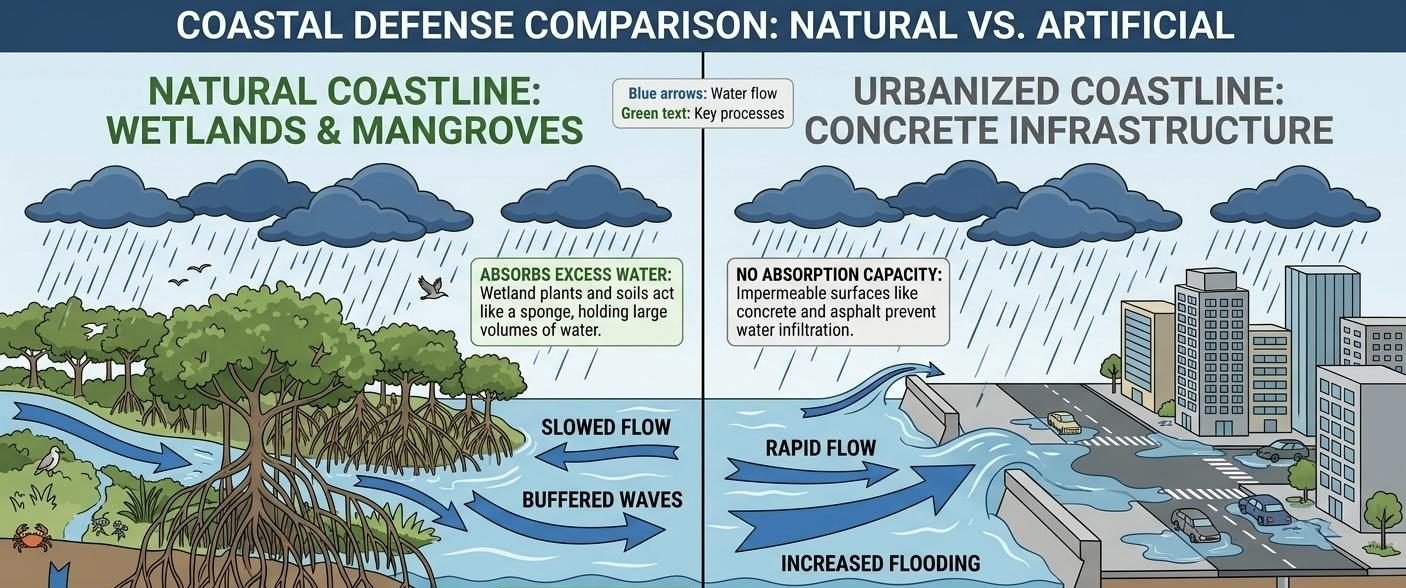
Natural ecosystems such as wetlands, mangroves, and forests play a crucial role in absorbing floodwaters. These ecosystems act as natural buffers that reduce the impact of storms and heavy rainfall.
However, urban expansion has destroyed many of these natural defenses. When wetlands and mangroves disappear, cities lose an important layer of protection.
This environmental loss contributes to the reality that flood risk is rising across Asia’s megacities. Restoring natural ecosystems is therefore an important strategy for reducing flood vulnerability.
Also Read: Cyclones, Floods And Wildfires Rank Among 2025’s Costliest Climate Disasters
Social and Economic Consequences
Flooding in megacities affects millions of people and can cause major economic disruption. Floodwaters damage homes, businesses, transportation systems, and critical infrastructure. Low-income communities often suffer the most severe impacts because they frequently live in flood-prone areas.
The fact that flood risk is rising across Asia’s megacities, therefore, raises important social justice concerns. Economic losses from flooding can reach billions of dollars during major disasters.
These financial consequences highlight the urgency of addressing the problem that flood risks are rising across Asia’s megacities.
Also Read: Disaster Losses Decline In 2025, But Global Risk Outlook Still Troubling, Munich Re Reports
Adaptation Strategies for Urban Flood Protection
Cities across Asia are beginning to implement new strategies to manage increasing flood risks. Governments are investing in infrastructure improvements and climate adaptation programs.
Important flood mitigation strategies include:
- Building improved drainage and stormwater management systems
- Restoring wetlands and coastal mangrove ecosystems
- Constructing sea walls and flood barriers
These measures aim to reduce the impact of rising flood risks. However, because flood risks are rising across Asia’s megacities, cities must continue expanding their climate resilience efforts.
Also Read: Top 6 Most Expensive Climate Disasters Of 2025
The Role of Climate Policy and Planning
There should be long-term planning regarding climate to reduce flood risk in rapidly expanding urban areas.
Governments are forced to include climate adaptation in city development regulations. The city planners are now focusing more on natural designs that utilize natural drains and green areas.
These efforts are designed to address the reality that flood risks are rising across Asia’s megacities. Better planning can reduce vulnerability to extreme weather events.
Addressing climate change itself is also essential for slowing the trend of rising flood risks across Asia’s megacities.
Also Read: How Disasters Change Our Love Lives: And Why It Matters
Conclusion
Asia’s megacities represent some of the most dynamic and rapidly growing urban regions in the world, but they are also increasingly vulnerable to environmental challenges. Climate change, rising sea levels, urbanization, land subsidence, and aging infrastructure are combining to create a dangerous situation in which flood risk is rising across Asia’s megacities. These risks threaten millions of people and pose significant economic and environmental challenges.
Addressing the issue that flood risks are rising across Asia’s megacities will require a combination of climate adaptation strategies, sustainable urban planning, and global efforts to reduce greenhouse gas emissions. Investments in resilient infrastructure, ecosystem restoration, and improved water management systems can help cities adapt to changing environmental conditions. Ultimately, it is essential to comprehend and manage what creates the increasing flood threat in the major cities of Asia to maintain the safety of the urban population and ensure the sustainable development of the region as well.
Also Read: The Role Of Circular Water Systems In Urban Sustainability
FAQs
1. Why are floods increasing in Asian megacities?
Floods increase because of climate change, rising seas, an increase in population, and land sinking.
2. What are the most susceptible cities?
Large flood risk is experienced in Jakarta, Bangkok, Manila, and Mumbai.
3. What has been the increase in sea level across the world?
The rise of the sea level has been around 20 centimeters since the late 1800s.
4. Why would increasing the number of cities increase flood hazards?
The construction of additional cities seals natural drains using concrete that prevents the water from soaking up.
5. Can we lower flood danger?
Yes, through the mending of city drains, recovery of nature, and climate planning.
Also Read: Pollution Across India: Mapping The Nation’s Most Toxic Sites And Urban Hotspots

0 Comments