
According to a recent United Nations report, heat-related mortality among people aged 65 and older has climbed to new heights since the 1990s, highlighting a serious public health problem as global temperatures rise due to climate change. This trend shows how heat-related deaths among the elderly surge 85% is not just a headline but a growing international crisis.
With an aging population and more frequent heatwaves, urgent attention is needed. The Weight of Time, the UN Environment Programme’s (UNEP) Frontier study, published on July 10, 2025, presents practical solutions to protect vulnerable groups and provides crucial insights into this escalating problem.
What Does the UN Frontier Report Say as Heat-Related Deaths Among the Elderly Surge 85%?
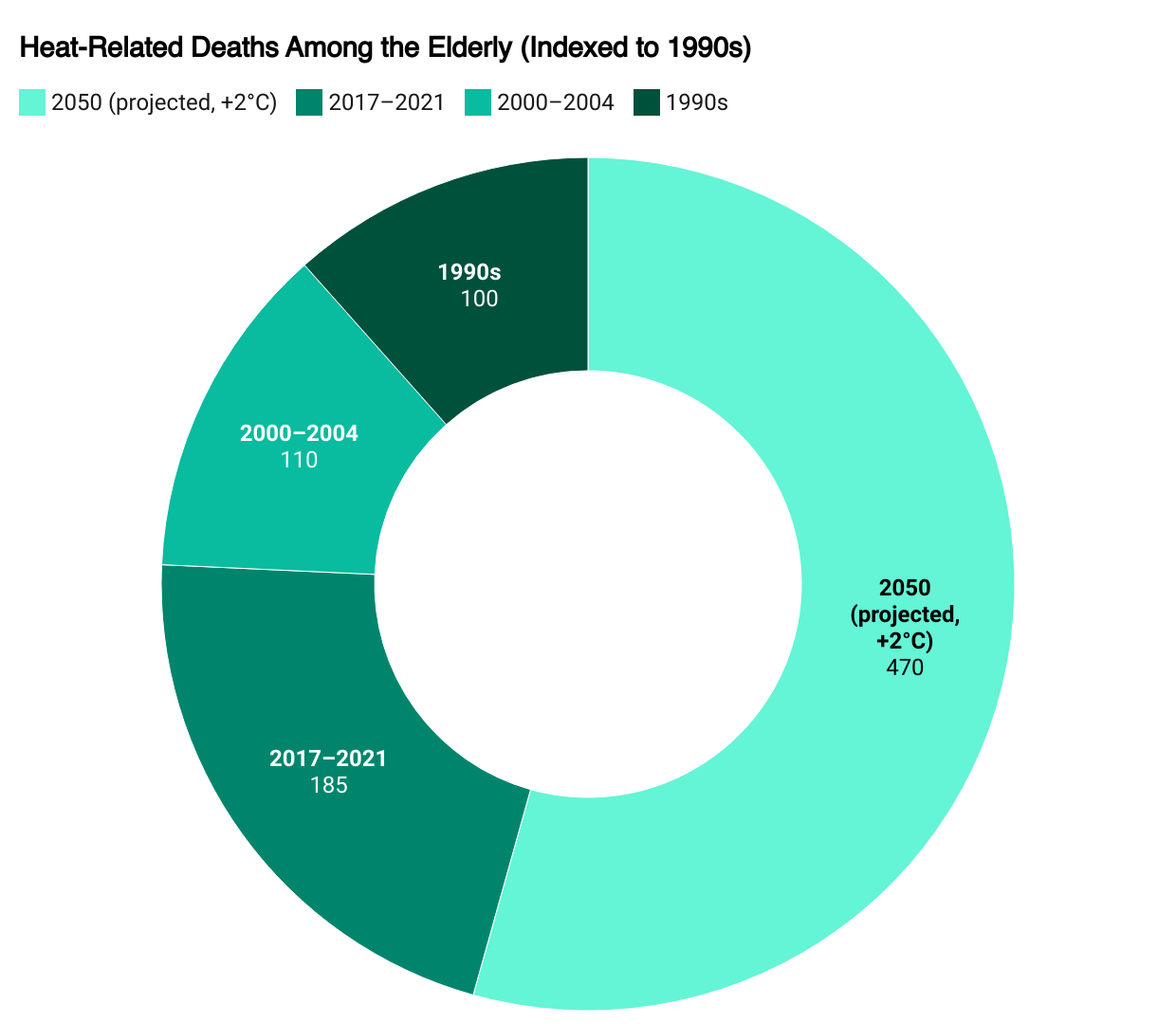
The UNEP Frontier report, part of the Foresight Trajectory initiative, focuses on the vulnerability of older individuals to rising temperatures. According to the report, the number of heat-related deaths among those aged 65 and above has increased by approximately 85% since the 1990s. If the global temperature rises by 2°C by 2050, heat-related deaths among the elderly could surge by 370%.
The report highlights greater risks in densely populated urban areas and low-to middle-income countries, where adaptation resources are often limited. It also highlights additional climate-related hazards, such as glacier melting and flooding, that exacerbate the vulnerability of older populations.
Heat-Related Deaths Among the Elderly (Indexed to 1990s)
| Year/Period | Heat-Related Deaths Index (Base=1990s) | Notes |
|---|---|---|
| 1990s | 100 | Base reference |
| 2000–2004 | 110 | Slight increase from the 1990s |
| 2017–2021 | 185 | An 85% increase from the 1990s |
| 2050 (projected, +2°C) | 470 | 370% projected increase from the 1990s |
Also Read: Heatwaves Claim 1180 Lives In Spain Over Past Two Months, Ministry Reports
Historical Context: Why Do Heat-Related Deaths Among the Elderly Surge 85%?
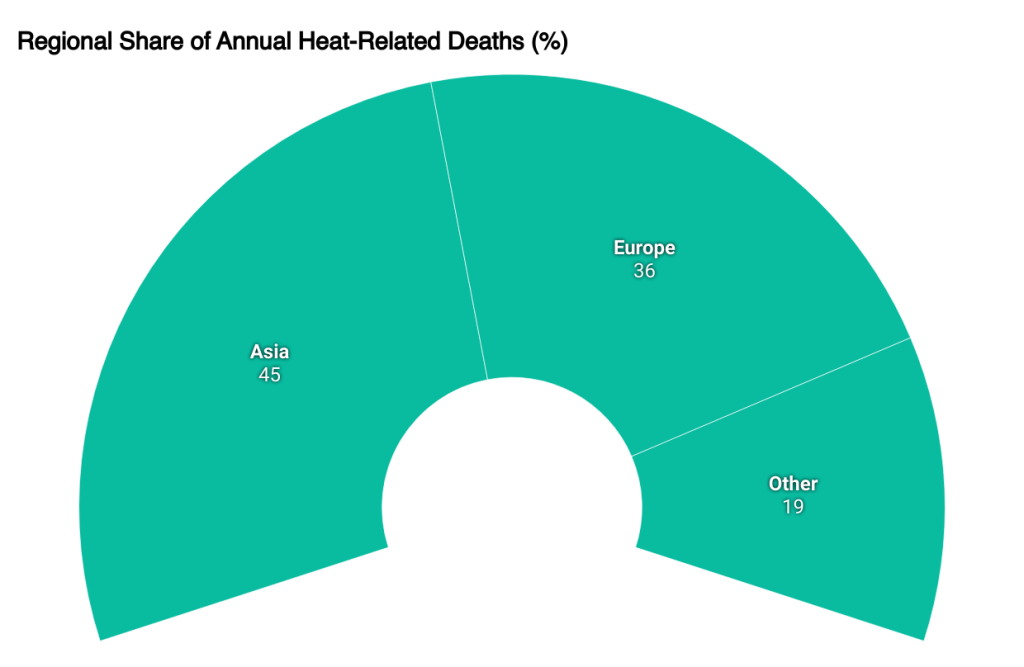
The findings of the UN report are consistent with data from the World Health Organization (WHO), which shows that heat-related mortality among people over 65 rose by approximately 85% between 2000 and 2004 and 2017 and 2021. An estimated 489,000 heat-related deaths occur annually, with Asia accounting for 45% and Europe for 36%.
Events such as the 2003 European heatwave, which resulted in over 70,000 excess deaths, most of them among the elderly, underscore the scale of the crisis. In India, older adults experienced an additional 2.1 to 4 heatwave days per year between 1986 and 2005 and 2013 and 2022.
Regional Share of Annual Heat-Related Deaths
| Region | Share of Annual Heat-Related Deaths (%) |
|---|---|
| Asia | 45 |
| Europe | 36 |
| Other | 19 |
Also Read: Europe’s Heatwave Claimed 2300 Lives In 10 days: New Study
What Lies Ahead? Projections for 2050
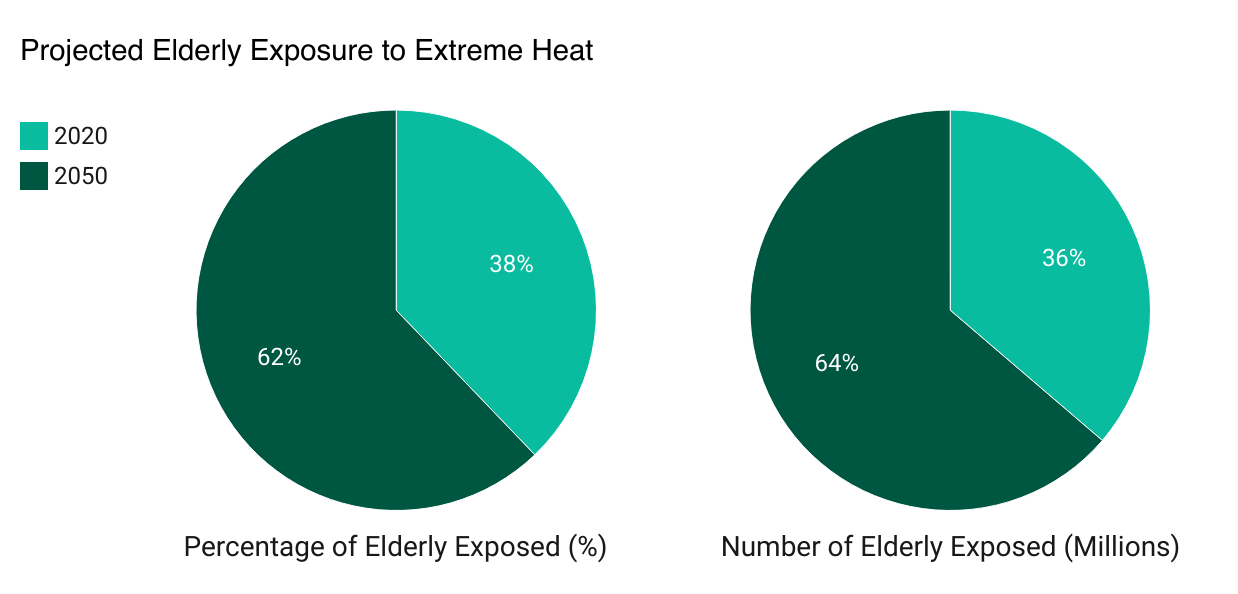
Without mitigation, the number of heat-related deaths among the elderly could grow dramatically. By 2050, if global temperatures rise by 2°C, fatalities are projected to increase by 370%. According to Nature Communications, more than 23% of people aged 69 and above will live in regions where daily maximum temperatures exceed 37.5°C, up from 14% in 2020. This means that between 177 and 246 million additional seniors could be exposed to extreme heat.
Projected Elderly Exposure to Extreme Heat
| Year | Percentage of Elderly Exposed (%) | Number of Elderly Exposed (Millions) |
|---|---|---|
| 2020 | 14 | 140 |
| 2050 | 23 | 246 |
This adds another layer to the ongoing concern as heat-related deaths among the elderly surge 85% across timeframes and continents.
Also Read: Climate Change Threatens 90% Of Wild Vanilla’s Pollination Links By 2050, Study Finds
Why Are Older Adults Especially Vulnerable?
Elderly individuals are more vulnerable to extreme heat due to reduced thermoregulation and cardiovascular response. Chronic diseases like heart disease, diabetes, and respiratory illness worsen with heat stress. Medications can also limit hydration and heat tolerance.
Additionally, older adults in urban areas may experience social isolation and have limited access to cooling solutions, thereby increasing their exposure to health risks. According to the CDC, these combined factors make people aged 65 and above particularly susceptible to heat-related conditions.
Also Read: California Heatwave: Intensifying Climate Change Threatens Ecosystems And Economies
How Can We Protect Older Adults as Heat-Related Deaths Among the Elderly Surge 85%?
The UN Frontier report provides several recommendations:
- Urban Planning: Design green, age-friendly, and pollution-free cities to reduce heat islands.
- Monitoring Systems: Strengthen weather forecasting and heat alert systems.
- Disaster Risk Management: Create community-based programs for preparedness and response.
- Information Access: Ensure older people receive timely climate and heat warnings.
The report also promotes the “15-minute city” model, which aims to ensure that public services, healthcare, and shops are within walking or cycling distance, thereby reducing car use and improving air quality. At an individual level, older adults are encouraged to stay hydrated, avoid outdoor activities during heat waves, and use cooling devices.
The recent UN Human Rights Council resolution to create a legally binding framework on the rights of older persons further strengthens global efforts.
Also Read: Climate Change Poses Severe Threat To Global Crop Yields
Frequently Asked Questions
1. How Does Extreme Heat Affect the Elderly?
Extreme heat increases the risk of heat stroke, exhaustion, and worsening chronic conditions among older adults due to physiological decline.
2. What Can Be Done to Address This Growing Concern?
Improving green spaces, implementing early warning systems, ensuring access to hydration, and providing support for older populations during heat events are critical.
3. Is the Risk Evenly Distributed Globally?
No. Tropical and mid-latitude regions, particularly urban areas in low- and middle-income countries, face the most significant risks.
Also Read: Once-In-A-Billion Event: Mediterranean Marine Heatwave Surges By 8°C, Alarming Scientists

0 Comments