
Due to global warming, the earth’s land is drying out, affecting 8 billion people. Water scarcity already affects nearly one-third of the world’s population, and it is getting harder to raise animals and crops. The United Nations Convention to Combat Desertification (UNCCD) reports that in the past three decades, 77.6% of earth’s land has been subjected to drying, indicating that climate change is speeding up these trends. According to a UNCCD assessment, drylands—areas with limited water—now comprise almost 40% of the Earth (not including Antarctica).
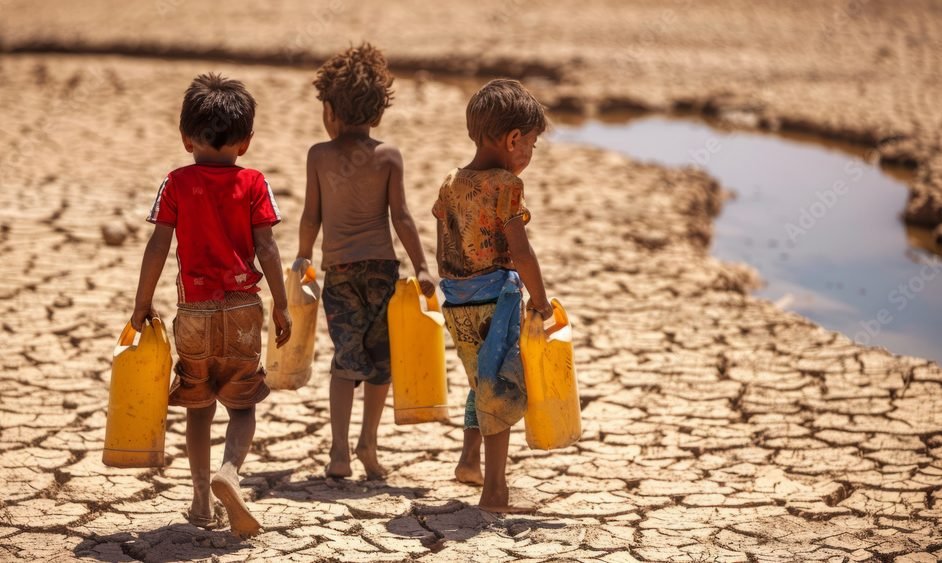
The Food and Agriculture Organisation (FAO) estimates that elevated salt levels affect 10% of the world’s soils, endangering an additional 2.5 billion acres of land. This worrying trend directly threatens food security and agricultural production, intensifying interrelated global concerns like soil aridity and salinization. These problems also degrade biodiversity, diminish freshwater availability, and impair ecosystem health.
Degraded soils have cascade impacts beyond environmental issues and pose serious socioeconomic problems. Declined agricultural output increases hunger risk, especially in vulnerable areas that rely on subsistence farming.
At the same time, communities are compelled to relocate in pursuit of livable circumstances and sustainable livelihoods due to the loss of arable land. Consequently, this exacerbates global instability and leads to economic deterioration.
The seriousness of the situation is highlighted by Nichole Barger, an aridlands ecologist with the UN Convention to Combat Desertification (UNCCD), who warns that billions of people face a bleak future marked by hunger, displacement, and worsening economic conditions if we don’t work together to reduce emissions and address soil degradation. Governments, businesses, and communities must prioritize carbon reduction, sustainable land management, and international collaboration to avert these disastrous consequences.
Also Read: Impact Of Emission Trading On Developing Economies: Equity And Economic Growth
The Drylands’ Increasing Scope
7.6% of the planet’s territory was altered by climate change between 1990 and 2020, with wet regions becoming drier. Approximately 30% of the world’s population now lives in drylands covering an area greater than Canada. In recent decades, this percentage has risen by more than 7%. According to projections, this percentage may quadruple by the end of the century if emissions are not reduced, meaning that more than two-thirds of the world’s land (apart from Greenland and Antarctica) will hold less water.
Traditionally, the earth’s land is drying out, experiencing these changes. High-emission models for regions such as the Mediterranean, central Mexico, and the Midwest of the United States predict similar shifts. These patterns highlight the sobering fact that the issue is becoming worse under the existing circumstances and will get worse as temperatures rise.
Hannah Waterhouse, a soil and water scientist at the University of California, Santa Cruz, highlights the wider ramifications: “We can look to current geopolitical and ecological events to understand what lies ahead.” For example, resource constraints in Sudan are being exacerbated by climate change, which is causing violence against civilians.
Unlike drought, aridity refers to long-term weather patterns where evaporation exceeds precipitation, making it challenging to support life. Arid conditions are permanent, as opposed to transient droughts. UNCCD executive secretary Ibrahim Thiaw explains: “Droughts end. However, the capacity to revert to earlier conditions is lost as a region’s environment dries.” “The drier climates currently affecting large areas of the world will redefine life on Earth.”
Agriculture is already being impacted as the world’s land is drying out. Decreased food yields, biodiversity loss, migration, and negative health effects are all associated with these situations. They also promote soil and water salinization and exacerbate erosion, sandstorms, and wildfires.
Also Read: The European Union Emissions Trading System: Lessons Learned And Future Directions
Causes of Widespread Aridification
1. Climate Change
The primary driver of widespread aridification is the warming of the planet. Higher temperatures increase evaporation rates and reduce soil moisture, exacerbating dryness. According to the Intergovernmental Panel on Climate Change (IPCC), global temperatures have risen by approximately 1.1°C since pre-industrial levels, with significant consequences for precipitation patterns.
2. Unstoppable Land Use
Overgrazing, deforestation, and monocropping have degraded such a huge area of land, which is more liable to drying. For example, the Amazon rainforest, sometimes referred to as the “lungs of the planet,” is nearly reaching a point where parts of it will turn into conditions that could be savannas due to deforestation and lower rainfall.
3. Population Growth and Urbanization
The pace of urban expansion is accompanied by the destruction of natural vegetation and over-extraction of groundwater. The water consumption rate in arid and semi-arid cities—Las Vegas, Dubai, southern Spain, among others—is unsustainable.
Also Read: Top Phrases That Defined Our Climate In 2024
Salinised Soils and Their Effects
Excessive salt exacerbates the problems caused by growing drylands. Ten percent of the world’s irrigated and rain-fed cropland is made up of salt-affected soils, drastically lowering agricultural yield. Excessive salinity hinders plants’ ability to absorb water, limiting their growth and increasing the likelihood of soil erosion. In severely impacted areas, output losses for crops like rice and beans might reach 70%.
Seventy percent of salt-affected soils are found in nations like China, Russia, and the United States, costing the world’s agriculture industry an estimated $27 billion annually. If nothing is done about the problems that could affect more than half of the world’s crops, food insecurity could worsen by 2050.
The interaction of salinization and aridity produces a vicious cycle. Due to a lack of freshwater, brackish water is frequently used for irrigation in desert areas, raising the salinity of the soil. As soil fertility decreases due to rising salt, global food security is at risk.
The effects are especially severe in areas like sub-Saharan Africa, where the world’s land is drying out, and crop production capacity might drop by 22% by 2050 under current emission projections. Staple crops like rice, wheat, and soybeans are particularly susceptible to these changes.
Also Read: The Climate Cost Of Trump’s Tariffs
Impacts on Food Security
Three-quarters of Earth’s land drying out is directly linked to declining agricultural productivity. Currently, irrigated land—which constitutes only 20% of global farmland—produces 40% of the world’s food supply. As water becomes scarcer and soils lose fertility, crop yields are expected to decline significantly.
- Crop Failures: Crops such as wheat, maize, and rice are particularly vulnerable to reduced water availability. For example, the 2022 drought in Europe caused wheat production to drop by 15% compared to the previous year.
- Livestock Mortality: Long-term aridification also affects pastoral communities. East Africa lost millions of livestock during the 2020-2022 drought, a devastating blow to livelihoods and increasing food insecurity.
- Economic Impacts: Each year, land degradation and desertification cost the world’s agricultural sector $878 billion. In turn, these losses put upward pressure on food prices and make poor countries more vulnerable.
Also Read: Climate Change Drives Up Insurance Costs, And Missed Mortgage Payments
Impacts on Water Security
Water scarcity is a critical consequence of land drying. The drying of soils reduces groundwater recharge while shrinking rivers and reservoirs limit surface water availability. Freshwater withdrawals for agriculture, which account for 70% of global water use, are becoming increasingly unsustainable.
- Groundwater Depletion: Groundwater levels are being depleted at an alarming rate in northern India, California’s Central Valley, and parts of China. NASA satellites in orbit over Earth have picked up tremendous declines in the groundwater of those areas, threatening the long-term availability of this precious resource.
- Urban Water Crises: Cities like Cape Town and Chennai have faced “Day Zero” scenarios, where water supplies nearly ran out due to prolonged dry spells. Such crises are expected to become more frequent as three-quarters of Earth’s land drying out progresses.
Regional Hotspots
Certain regions are more vulnerable to aridification due to their climatic and geographical conditions:
- Mediterranean Basin: Long-term drying trends have affected agriculture and biodiversity in southern Europe, North Africa, and parts of the Middle East. The region is now experiencing its worst droughts in over a century.
- Sub-Saharan Africa: Over 45% of the land in this region is at risk of desertification, threatening the livelihoods of millions of smallholder farmers.
- Western United States: States like California, Arizona, and Nevada are facing chronic water shortages, with the Colorado River reaching historically low levels.
Also Read: 13 Of The World’s Most Gentle And Affectionate Dog Breeds
Challenges and Solutions
The recent UNCCD COP16 session in Riyadh, Saudi Arabia, discussed the pressing need for action. The importance of land to human survival was highlighted by U.N. Secretary-General António Guterres, who said, “We treat land like dirt, but we depend on it for our survival.”
Experts advise using nature-based solutions, such as agroecology, better crop and water management, and creating salt-resistant crop types. Resilience and land restoration investments are also essential. According to a recent UNCCD analysis, stopping global soil degradation may save the economy $23 trillion at a cost of $4.6 trillion by 2050.
Nonetheless, the summit revealed both achievements and difficulties. Despite pledging $12 billion to combat land degradation in 80 vulnerable nations, negotiators could not reach a consensus on a legally binding action plan.
Large-scale, top-down initiatives like Africa’s Great Green Wall effort, which has been criticized for escalating water scarcity and biodiversity loss, have drawn scepticism from Hannah Waterhouse. She supports resilience initiatives that are locally led and prioritize long-term sustainability.
FAO soil expert Maria Konyushkova sees the reports as a wake-up call for governments to spend money on adaptation measures. She cautioned that “all the trends show that freshwater resources will continue to deplete.” “We need to start putting our various adaptable strategies into practice right away. The crisis has already materialized.”
Conclusion: A Call to Action
Alarming reality requires immediate concerted action. The three-quarters of the earth’s land drying out needs immediate attention and cooperation. It goes beyond just environmental concerns – it becomes a humanitarian crisis influencing food and water, thus general stability across the globe. Embracing sustainable lifestyles, investments in new emerging technologies, and international collaboration will provide pathways toward preventing or, at least, lessening the consequences of the impacts caused by aridification while developing a sustainable future. The stakes are high, but so, too, is the potential for positive change. Together, we can address the challenges of a drying planet and ensure a sustainable future for generations to come.
Also Read: Climate Change Drives Up Insurance Costs, And Missed Mortgage Payments

0 Comments