
The Amazon Rainforest has been at the heart of the conversation regarding climate change for decades. A new study recently published in the Journal Environmental Microbiome has revealed that climate change could reduce Amazon’s ability to absorb methane. The “Lungs of the Planet” could suffer severe long term effects due to the rising temperature, intense heat waves, droughts and flooding.
Climate Change’s Impact on Methane Absorption
According to new research from the University of São Paulo, climate change could disrupt the rainforest’s methane cycle by causing a disproportionate imbalance in methane uptake and emissions.
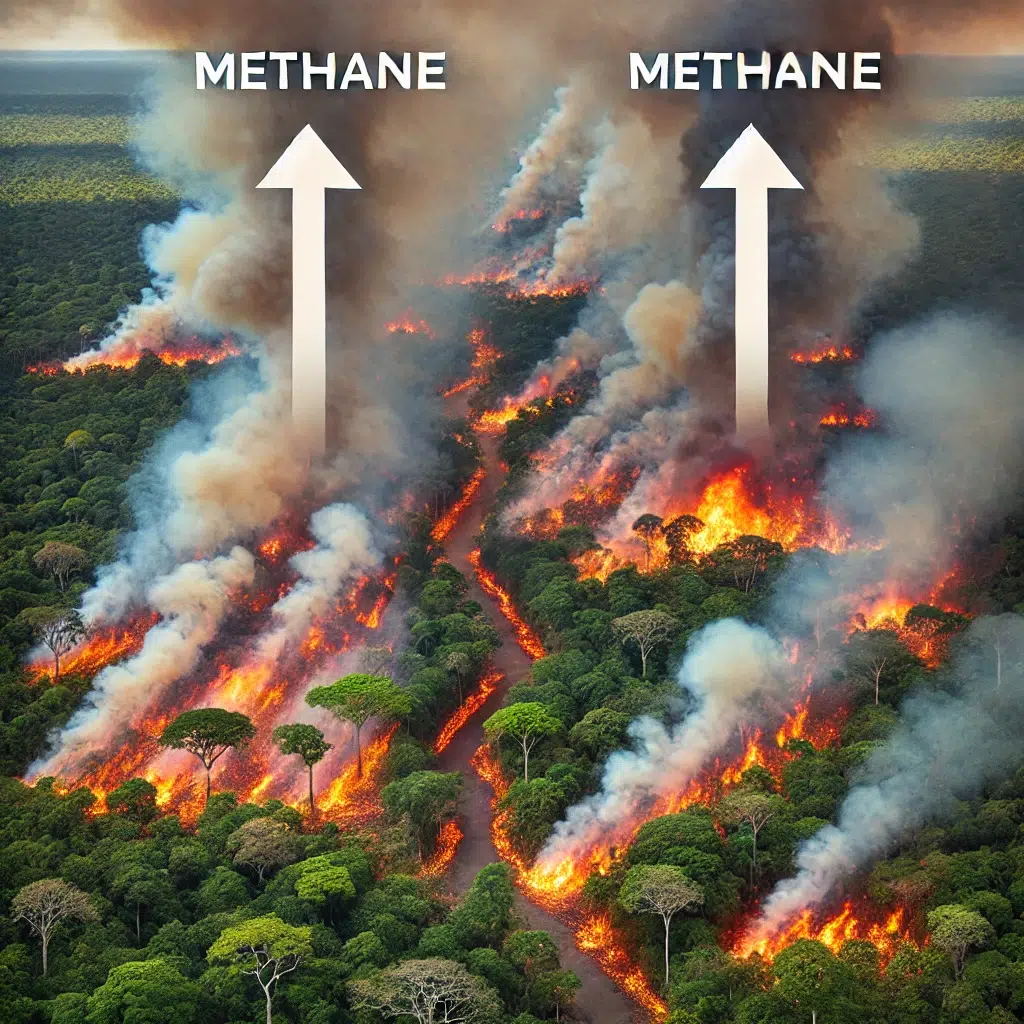
Methane is the second most significant greenhouse gas, increasing climate change, with only carbon dioxide (CO₂) surpassing being the first most significant greenhouse gas. Methane has a high global warming potential (28 times greater than carbon dioxide over a 100-year period), and even small amounts of methane can significantly contribute to global warming. Different areas of the Amazon are reacting contrastingly to the same change within the ecosystem, as climate change could reduce Amazon’s ability to absorb methane.
Also Read: How Methane In Coal Mines Harms The Environment
Contrasting Microbial Reactions in Floodplains and Upland Forests
The Floodplains in the Amazon, which cover over 800,000 square kilometers during the rainy season, contribute up to 29 % of global wetland methane emissions. In these areas, microbes were quick to adopt a resilient nature as they continued the process of breaking down organic matter and produced methane; in fact, they were recorded to increase in numbers, which may pose a problem in the future.

On the other hand, Upland forests have been recorded as being deeply affected by this imbalance. The study found that methane absorption in upland soils of the Amazon decreased by 70% under warmer and drier conditions. Microbes in this region were found to be more sensitive in nature to the change in temperature. Such extreme change within the ecosystem has caused most of the general microbes and bacteria to perish while the specialist microbes persist.
Overall, the study examines the role of climate change and its impact on the Amazon forests’ methane cycle. In upland forests, methane absorption decreased by 70% under warmer and drier conditions. Conversely, in the Amazon’s floodplains, which contribute up to 29% of global wetland methane emissions, the microbes showed a resilient response. This imbalance caused due to rising temperatures tracing back to climate change could reduce Amazon’s ability to absorb methane.
Also Read: Why Food’s Methane Emissions Deserve Urgent Attention?

0 Comments