
Climate change and human rights are not simply an environmental problem but a human rights crisis that can be quantified. As indicated by the Intergovernmental Panel on Climate Change, there has been an increase in global temperatures of about 1.1°C compared to pre-industrial times. If things remain this way, it is predicted that the planet will exceed 1.5°C by 2030.
The World Health Organization forecasts that more than 250,000 individuals may die each year between 2030 and 2050 because of factors including heatwaves, malnutrition, malaria, and diarrhea. On the other hand, the World Bank predicts that about 216 million people will become internally displaced persons by 2050 due to the effects of climate change.
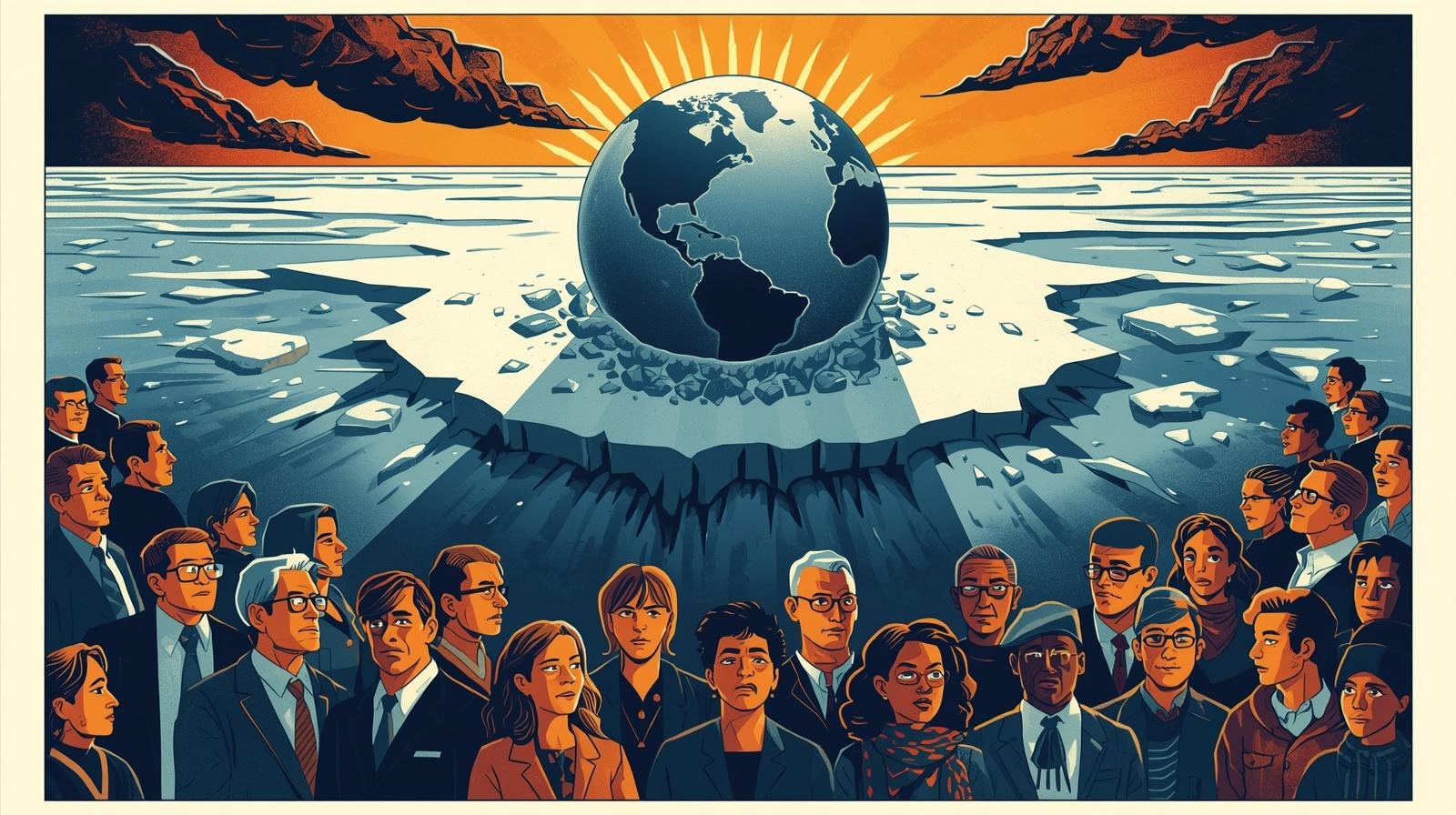
Why Is Climate Change a Human Rights Issue?
Climate change is increasingly seen as a human rights concern because of how disproportionately it impacts different groups of people. Vulnerable groups, especially those living in developing countries, are going to experience the most severe impact from climate change relative to their contribution to greenhouse gas emissions.
Professor Joyeeta Gupta and Volker Türk have both examined how climate change is more than just a crisis of temperature, but also a crisis of justice. One example of how climate change is linked to human rights is in terms of international climate agreements.
The global goal of limiting temperature rise to 2°C was a result of compromise; as such, there are still challenges to achieving that goal. For many small island nations, 1.5°C is already severe enough to threaten their future due to the impact of sea-level rise and extreme weather events.
Also Read: Climate Change Is Threatening India’s Indigenous Tribes With Storms, Droughts, And Displacement
Who Is Affected by Climate Change?
The consequences of climate change and the violation of human rights do not affect all people equally:
- Islands are vulnerable to sea-level rise.
- Poorer regions lack the necessary means to adapt to climate change.
- Children in Africa and Asia may suffer from health-related issues in the long term.
- Farmers endure drought and irregular weather patterns.
Environmental problems like seawater contamination, glacial melting, and torrential rainfall do not merely affect natural ecosystems; they threaten livelihood and survival.
“Once the glaciers of the Himalayas have melted, they cannot be restored,” states Professor Gupta.
Also Read: Ecological and Gendered Asymmetries in Climate-Induced Displacement
Responsibility and Injustice
The question of climate justice must be considered alongside economic inequality. The rich nations, which emit most of the emissions historically, have consumed more than their share.
- The top 10% emitters produce almost 50% of all emissions
- Basic necessities (such as food, water, and power) generate emissions
- Poorer countries find themselves caught between developing today and waiting for funds from climate finance
According to Professor Gupta, the failure to cut emissions within wealthy countries makes economic disparity an issue of injustice. It is not possible to realize basic human rights without equal carbon space.


Also Read: Community Land Trusts: A Tool For Preventing Climate-Driven Displacement
Climate Change and Displacement: Emergence of Invisible Refugees
One of the most noticeable effects of climate change and human rights abuse is that of displacement. Nevertheless, international law fails to recognize climate refugees.
It occurs in steps:
- Adaptation (modifying cultivation methods, water management)
- Loss (loss of livelihoods, land, incomes)
- Displacement (migration)
As reported by the Internal Displacement Monitoring Center, there have been more than 32 million new internal displacements resulting from disasters in 2022 alone.
The difficulty arises when it comes to establishing the connection between migration and climate change. Advances in attribution science make up for that deficit, however.
Also Read: World Sees Hottest Decade On Record, UN Confirms
Why Is the Legal Framework Still Fragmented?
The reason for the inadequacy of the legal framework in solving problems relating to climate change and human rights is its fragmented nature:
- There is a clear distinction between environmental law and human rights law
- Agreements on trade may hinder the agenda of sustainability
- States choose selectively to comply with international treaties
The turning point came when the International Court of Justice delivered a groundbreaking opinion that climate commitments cannot be separated from human rights.
This is a significant development because now, damage to the environment affects people directly.
| Indicator | Data |
|---|---|
| Current global warming | ~1.1°C |
| Projected breach of 1.5°C | By 2030 |
| Annual deaths (2030–2050) | 250,000 |
| Potential climate migrants | 216 million by 2050 |
| People affected beyond 1°C | 100 million+ |
Also Read: Climate Warning: The Past 10 Years Are The Hottest On Record
Climate Stability: A Collective Human Right?
There is a rising theory that sees climate stability as a collective human right because climate stability provides:
- Food security
- Availability of water
- Sound economic systems
- Good health
Also Read: How Climate Change Is Altering Animal Migration Patterns
Political Will, Power, and the Road Ahead
Global cooperation has all but crumbled, and fossil fuel production continues to grow at an unsustainable rate, with over 70% of all new fossil fuel production being driven by a handful of the world’s wealthiest countries.
As withdrawals from agreements like the Paris Agreement have eroded faith in the system, it is becoming increasingly clear that we need effective global governance to solve this global climate change problem.
Also Read: Carbon Cost Of War: Military Logistics And Climate Impact
Why Climate Action Must Be Human-Centered
The connection between climate change and human rights has a very clear message: environmental destruction is primarily about people, and there are immediate and serious impacts on the human population due to climate instability, which are not equally felt within the global community.
Acknowledging climate stability as a universal human right will place greater emphasis on global action, thus requiring governments to adopt more just and sustainable policies.
Also Read: India’s April Election Faces A New Climate Reality Of Heat, Storms, And Disruption
FAQs
1. What is the effect of climate change on human rights?
It affects basic rights, including the right to life, health, food, clean drinking water, and adequate housing, through the rise of catastrophes, diseases, and displacement.
2. Who are the groups most at risk from climate change?
The most vulnerable groups include people living below the poverty line, small island states, and children.
3. Is climate change an accepted part of human rights law?
Although it is not universally acknowledged, the International Court of Justice now considers climate responsibilities within human rights laws.
Also Read: Evictions, Climate Disasters Led To Sharp Rise In U.S. Homelessness From 2019 To 2024

0 Comments