
The heavy industry sector, which includes cement, steel, and chemical production, really serves as the backbone of our modern world. From tall skyscrapers and big cities to the tiniest industrial parts, these materials play a key role in our everyday lives. But you know, this sector plays a big role in contributing to global greenhouse gas (GHG) emissions. As we feel the pressing need to tackle climate change, carbon capture and storage (CCS) technology is becoming an essential way to help these industries reduce their carbon footprint and meet net-zero goals. This article will explore CCS in Heavy Industry and how to decarbonize these sectors.
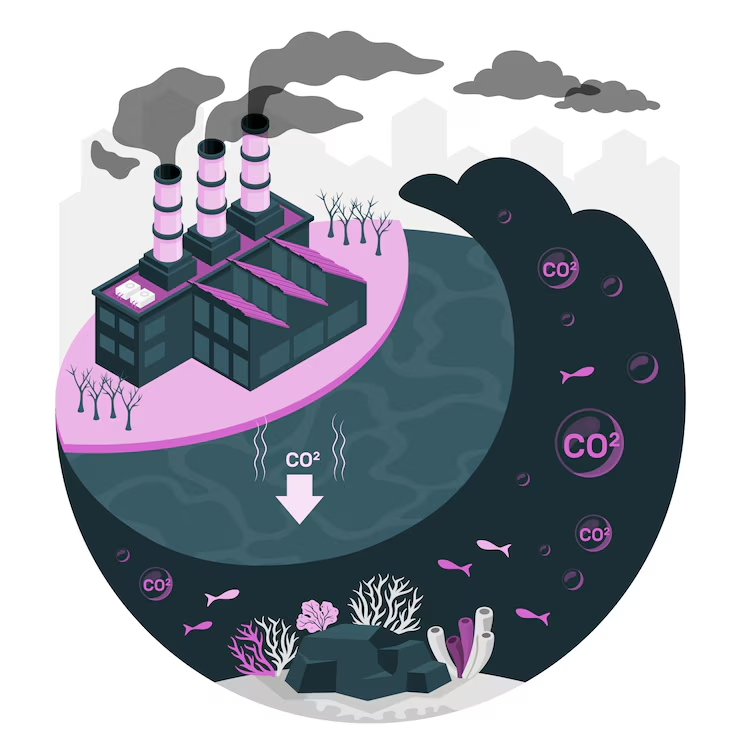
Carbon Emission in Heavy Industry
Cement production contributes a big chunk of industrial CO2 emissions, mainly because of the burning of fossil fuels and the emissions that happen during the clinker formation process. Clinker is an essential part of cement, and it is made by heating limestone, which is calcium carbonate, at really high temperatures. This process naturally lets out CO2. About 60-70% of emissions from cement production come from the process itself, which makes it tricky to tackle just by switching energy sources.
Did you know that steel production is a big player in emissions? It actually accounts for around 8% of the world’s CO2 emissions. Traditional steelmaking uses coal-based blast furnaces, which generate a lot of CO2 through high-temperature heat and chemical reactions. It is really important to retrofit existing plants and shift to green technologies if we want to decarbonize the steel sector.
The chemical sector ranks as the third-largest industrial emitter and is also the biggest user of fossil fuels. You know, chemicals play a huge role in our everyday lives, whether it is in fertilizers or plastics. But the thing is, making them takes a lot of energy and depends heavily on fossil fuels. Getting to net-zero emissions in this sector needs a well-rounded strategy that looks at energy use and feedstock consumption.
Also Read: Business Sustainability: Carbon Footprint Reduction Through Supply Chain Optimization
Key Strategies for Decarbonization in Cement
- Energy Efficiency Improvements:
Making some tweaks to kiln design and enhancing heat recovery systems can really help cut down on energy use. Using alternative energy sources like waste heat or renewable energy helps reduce our reliance on fossil fuels.Using renewable energy sources for process heating and electrifying chemical production can really help cut down emissions.Using electric arc furnaces (EAFs) that run on renewable energy can really cut down on emissions, especially when it comes to recycling scrap steel.
- Alternative Fuels and Materials:
Switching out fossil fuels for alternatives like biomass, non-recyclable plastics, or fuels made from waste can really help cut down on emissions. Using alternative cementitious materials such as fly ash, slag, or pozzolans to supplement clinker can help lower the carbon intensity of cement. Green hydrogen, made from renewable energy, has the potential to take the place of coal in direct reduced iron production, leading to a steelmaking process that is almost carbon-free. Hydrogen steelmaking is definitely the end goal, but right now, the costs and scalability issues mean it is more of a long-term solution.
- Carbon Capture and Storage (CCS) in Heavy Industry:
CCS has the ability to capture as much as 85% of CO2 emissions coming from cement plants. This tech is all about grabbing CO2 from exhaust gases, moving it through pipelines, and then tucking it away underground. Deploying CCS works really well in places that have easy access to offshore storage sites or industrial clusters, where you can keep transportation costs low. CCS provides a hands-on approach to cutting down emissions from current blast furnaces, particularly in areas where coal-based steelmaking is common. Even though it has a lot of promise, adopting CCS in the steel industry has hit some bumps along the way, like high costs, low capture rates, and gaps in infrastructure. Since global demand for cement is expected to increase by more than a third by 2050, thanks to urbanization and infrastructure growth, it is really important to focus on decarbonizing cement. Innovations like low-carbon cement and the adoption of CCS are really important for reaching net-zero emissions by the middle of the century. CCS takes care of emissions from production and end-of-life processes, either keeping them stored for good or finding new uses for them in industry. Bringing together CCS and direct air capture (DAC) can help reduce emissions from non-point sources, but the costs are still a challenge.
- Circular Economy Approaches:
Using construction waste for cement production is a great way to recycle materials. Using captured CO2 to create alternative materials like aggregates really helps promote a circular economy model. Switching out fossil feedstocks for renewable or recycled options, like bio-based or waste-derived materials, helps cut down on lifecycle emissions. Creating technologies that turn captured CO2 into useful chemicals really helps promote circularity. Recycling and reusing chemical products like plastics helps cut down on our reliance on new materials and the emissions that come with them. Policies such as the European Union’s Carbon Border Adjustment Mechanism encourage sustainable practices and help the chemical sector align with global climate goals.
- Government and Policy Support:
Public sector investments in CCS infrastructure, such as CO2 transport and storage networks, can de-risk private sector investments. Incentives and carbon pricing mechanisms encourage innovation and early adoption of green technologies.
Also Read: The Role Of CCS In A Sustainable Energy Future
Challenges of CCS in Heavy Industry
CCS looks like a great option for cutting down emissions in heavy industries, but there are still quite a few hurdles to overcome. Hydrogen and electrification are definitely the way forward for green steelmaking, but CCS plays an important role, too. It helps cut emissions in the plants we already have, making it a key part of the transition. With global steel demand on the rise, thanks to urbanization and the push for renewable energy infrastructure, it is really important to integrate these technologies for a sustainable steel industry. The U.S. is the second-largest chemical producer in the world, and it is navigating some challenges while also finding new opportunities in the shift towards sustainable production globally. If the U.S. invests in renewable technologies and CCS in Heavy Industry, it can really step up and become a leader in low-carbon chemical manufacturing.
- High Cost – CCS technology can be pretty pricey since it requires a lot of investment, and the costs can change depending on where it is set up and how big the project is. Finding affordable solutions is super important for getting everyone on board.
- Infrastructure Gaps – The lack of CO2 transport and storage infrastructure, particularly in regions with dispersed industrial facilities, limits the feasibility of CCS.
- Uncertainty in Policy and the Market- Having clear and consistent policies, like subsidies, carbon pricing, and public investments in infrastructure, is really important for boosting CCS deployment.
- Getting Along with Others: People are worried about the safety and environmental effects of CO2 storage, which makes it tough to get social acceptance.
To tackle these challenges, it is important for governments, industries, and stakeholders to work together and build a supportive environment for CCS. Putting money into research and development, building partnerships between the public and private sectors, and making sure global policies match climate goals will speed up the shift to sustainable heavy industries.
Conclusion
We really need to focus on decarbonizing the cement, steel, and chemical sectors if we want to hit those global climate targets. Carbon capture and storage technology, along with energy efficiency, alternative feedstocks, and renewable energy, provides a practical way to cut emissions in those tough-to-reduce industries. Even though there are still some hurdles to overcome, bringing together CCS and other green technologies, along with strong policies and investments in infrastructure, is going to set us up for a sustainable and low-carbon future. As heavy industries change, they will not just help with climate action but also open up chances for innovation, boost economic growth, and promote environmental care.
Also Read: Policy Frameworks For CCS: Incentives And Regulations Driving Adoption

0 Comments