
Millions of people in California, Oregon, and Washington are being severely impacted by a strong bomb cyclone that is forming off the Pacific Northwest. The storm quickly grew stronger early Tuesday, bringing with it snow, heavy rain, and powerful gusts of wind. Weather alerts for hazardous circumstances, such as blizzards, rockslides, and flooding, have been issued by authorities, who advise locals to stay home and refrain from traveling.
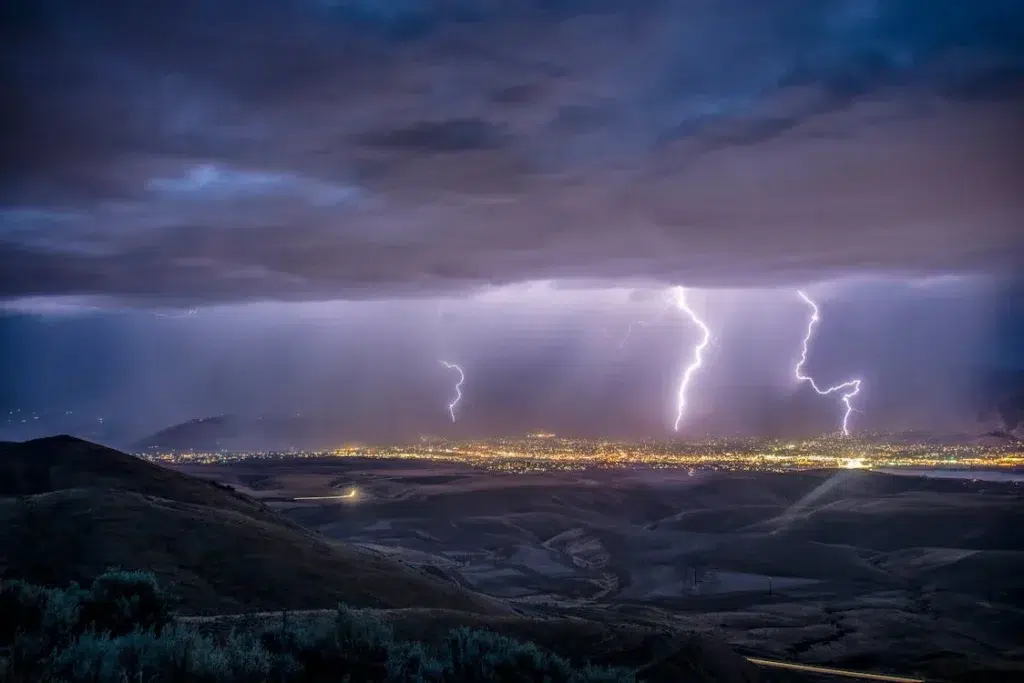
Fatalities, Power Outages, and Property Damage: Bomb Cyclone
Considerable damage has been caused by the storm. A woman tragically lost her life when a tree toppled on a homeless camp in Lynnwood, Washington. A fallen tree in Seattle trapped a person inside a car, but they were later rescued and reported to be in stable condition. Residents were advised by the Bellevue Fire Department to avoid windows and to remain on lower floors due to the extensive tree falls.
Early on Wednesday, more than 600,000 people in Washington lost power; the exact number of outages fluctuated due to disruptions in reporting caused by storm-related internet issues. Outages also occurred in California and Oregon, leaving over 19,000 people without power in California and more than 15,000 in Oregon.
Also Read: New Bee Diseases Endanger Pollination And Global Economies
Intense Weather Conditions and Travel Warnings
Extremely high gusts of 101 mph were recorded near Vancouver Island, 79 mph in Oregon, and 77 mph on Mount Rainier due to the bomb cyclone. Northern California could see up to 8 inches of rain, increasing the risk of flooding and debris flow in places like the Sacramento Valley and San Francisco Bay.
Mountain areas, such as the Sierra Nevada and the Cascade Range in Washington, are under a winter storm warning. Higher elevations could get as much as fifteen inches of snowfall, with wind speeds of more than 75 mph. Ferry services in northwest Washington have been suspended due to strong winds and choppy seas, while blizzards and whiteout situations are making mountain navigation dangerous.
Landslides and flash floods are also serious issues, particularly in southwestern Oregon and northern California. Authorities have issued a warning about the ongoing risks, asking locals to stay away from roads during the storm’s strongest parts and to be cautious near fallen trees and debris.
Classified as a bomb cyclone due to its rapid pressure drop, the storm underscores the risks of intensifying weather systems. Authorities are prioritizing public safety, providing continuous updates to affected regions as the storm unfolds.
Also Read: Unregulated Big Cat Trade Booms In South Africa Driving Global Wildlife Crime: New Report

0 Comments