
Zimbabwe plans to slaughter 200 elephants to address the hunger crisis under terrible drought conditions in the southern African countries. Zimbabwe stated Monday that the government will allow the shooting of 200 elephants so that their meat could be handed to needy people, while Namibia is murdering more than 700 wild animals, including 83 elephants, as part of a three-week-old scheme.
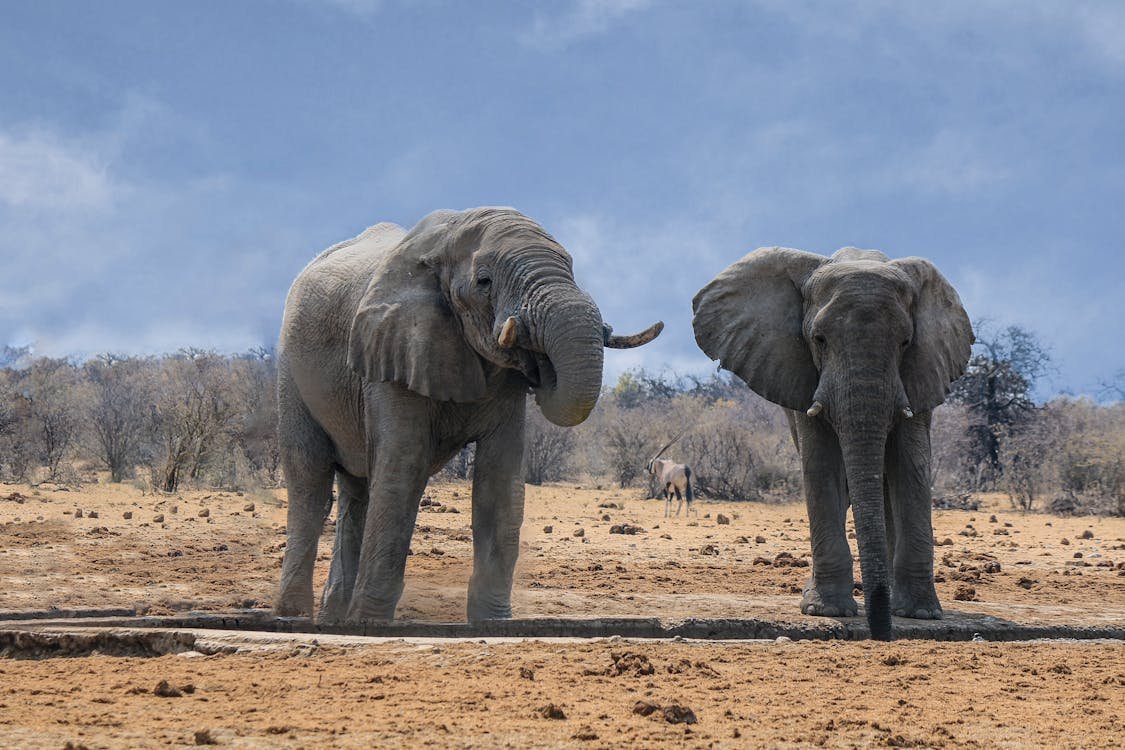
Tinashe Farawo, a spokesman for the Zimbabwe National Parks and Wildlife Management Authority, said the agency would give needy communities permission to hunt elephants and kill some of the 200 animals allotted. “We will start culling as soon as we have finished issuing permits,” he stated.
Farawo stated that the elephants will be cut off from a region where the population has extended to an unsustainable level. The hunting will occur in regions like Hwange National Park in the country’s arid west, where humans and wildlife are increasingly competing for food and water as temperatures rise and resources become scarcer.
According to Farawo, Hwange has moved more than 45,000 elephants but can currently barely sustain 15,000. According to park experts, the country’s total elephant population of approximately 100,000 is more than double what the country’s national parks can support.
The El Nino weather pattern has exacerbated the problem, with the Parks Service reporting in December that over 100 elephants died due to drought. According to Farawo, more animals may die of dehydration and hunger in the following weeks as the country approaches the warmest season of the year.
Zimbabwe’s Environment Minister, Sithembiso Nyoni, informed Parliament last week that Zimbabwe plans to slaughter 200 elephants to address the hunger crisis, and she had approved the culling scheme. “Indeed, Zimbabwe has more elephants than we need, more elephants than our forestry can accommodate,” Nyoni claimed.
She stated that the government was planning “to do what Namibia has done so that we can slaughter the elephants and mobilise the women to dry the meat, package it, and guarantee that it gets to the communities that require the protein.”
The Namibian government last month sanctioned the slaughter of 723 animals, including 83 elephants, 30 hippos, 60 buffaloes, 50 impalas, 300 zebras, and 100 elands, among others.
The animals will be sourced from five Namibian national parks, where the government is also working to reduce elephant populations due to conflicts between humans and wildlife.
“This is necessary and consistent with our constitutional mandate that our natural resources be used for the benefit of Namibian citizens,” Environment Department spokesman Romeo Muyunda stated. “This is also a prime example of how game conservation is beneficial.”
Botswana, located between Zimbabwe and Namibia, boasts the world’s largest elephant population of 130,000. Still, unlike its two neighbouring countries, it has yet to discuss slaughtering its elephants to feed its people.
Guyo Roba, a food security and agricultural expert at Kenya’s Jameel Observatory, said government moves in Zimbabwe and Namibia were comprehensible given the severity of the drought and the status of their animal herds.
“They are working against a wildlife population above their carrying capacity,” says Roba.
“So it may seem controversial initially, but the governments are torn between remaining faithful to some of their obligations at an international level in terms of conservation and supporting the population,” Roba said.
Also Read: India Set To Launch Its Own Carbon Credit Trading Market

0 Comments