
In an era when every brand seems to proclaim its green credentials, something strange is happening: despite increasing “Eco messaging and sustainable-branding efforts, environmental marketing is failing to translate into meaningful behavioral, operational, or systemic environmental change. Companies speak of “eco-friendly,” “carbon-neutral,” “purpose,” and green packaging, yet the data on emissions, waste streams and resource usage continue to escalate. This gap between marketing and measurable outcomes is a critical issue for the sustainability movement and for brands seeking credibility.
The Promise Vs. the Performance Gap
The idea behind environmental marketing is straightforward: by signalling green credentials via packaging, advertising, partnerships, and certifications, brands can both attract environmentally conscious consumers and steer business practices toward lower impact. But multiple studies show that this promise has not consistently been fulfilled. Researchers describe how companies engage in “green-spinning” or “green embellishment” — emphasising minor eco-improvements while leaving major environmental harms untouched.
A fundamental issue: many marketing efforts focus on communication (promotion) rather than altering the product, its supply chain, or business model. As one study notes, companies often “use the environment as an additional promotional dimension without any attempt to analyse or modify the product or its ingredients or its impact on the environment.” Meanwhile, consumers increasingly encounter vague claims —“eco”, “sustainable”, “green” — without concrete evidence. In the EU, for example, a 2020 study found that more than 53% of environmental claims were vague or misleading, and 40% lacked any substantive backing. In short, the gap between what marketing says and what operations deliver helps explain why environmental marketing is failing.
Also Read: Should Marketing Professionals Pursue Certification In ESG?
Consumer Scepticism and Signal-Noise Overload

Marketing thrives on signals, but when every brand uses “green” messaging, the signals can become noise. Consumers may become sceptical, confused, or simply indifferent. Research shows that many consumers “pay less attention to green messages” when they perceive them as low-credibility or divorced from meaningful action. Another study highlights how “greenwashing” — exaggerated or unsubstantiated green claims — erodes trust and makes consumers less inclined to pay a premium for genuinely sustainable products.
For example, in a real-world case, major airlines such as Lufthansa and Etihad Airways had adverts banned in the UK for suggesting greater environmental performance than they could evidence — undermining trust in green messaging. The more consumers feel they are being sold the idea rather than the substance of sustainability, the more likely they are to disengage — a key reason why environmental marketing is failing to drive deep change.
Also Read: Why Your ‘Carbon Footprint’ Is A Lie: The Carbon Footprint Lie And Corporate Greenwashing
Superficial Investments, Not Systems Change
Marketing often highlights “eco” features: recycled packaging, a tree planted, a carbon-offset program. But systems change — redesigning supply chains, reducing material use, rethinking business models — is much harder, slower, and costlier. Many brands stop at the visible marketing moves. In that sense, environmental marketing is failing because it focuses on promotional “feel-good” rather than structural transformation.
This superficiality also allows companies to neglect deeper impacts: for example, a product may be marketed as “eco-friendly” because of one attribute (e.g., biodegradable packaging), while the manufacturing, shipping, or product lifecycle still generates substantial harm (the “hidden trade-off” phenomenon). Without integration across the value chain, marketing becomes an isolated communication exercise — and ineffective for real environmental gains.
Also Read: Fashion Giants Accused Of Climate Greenwashing Amid Asia Emission Pledges
Regulatory and Measurement Shortcomings

Part of the challenge of why environmental marketing is failing lies in weak regulation and inconsistent metrics. Environmental claims often use undefined terms (“natural”, “eco”, “sustainable”) and eco-labels with minimal standardisation. A systematic review found that many companies exploit these ambiguities to “appear environmental” without rigorous backing.
Moreover, internal marketing teams often lack the expertise or data to substantiate environmental claims. A report by the Chartered Institute of Marketing (UK) found that 40% of marketers lacked formal sustainability qualifications, and nearly half feared being accused of greenwashing. In short, the combination of weak definitions, low regulatory burden, and marketing teams with limited domain expertise helps explain why environmental marketing is failing to deliver credible change.
Also Read: India Launched Draft For Climate Finance Taxonomy To Boost Green Investments And Combat Greenwashing
The Behavioural and Structural Disconnect
Even when marketing messages are accurate, there is often a gap between awareness and action. Consumers may feel good about “eco” brands, but that does not always translate into deeper shifts: reduced consumption, longer product life, meaningful lifestyle change. One study argues that the problem lies not in consumer unwillingness to act, but in the way green products are marketed — narrow promotion rather than transformational messaging.
In addition, environmental marketing often neglects structural levers: infrastructure (recycling, reuse), consumption culture, product-service systems, and regulatory frameworks. Without addressing these, marketing alone can’t steer broader systemic change. Thus, the reason why environmental marketing is failing is that it is mostly promotional, not generative of systemic behaviour change.
Also Read: The Circular Economy For Plastics: Real Solutions vs. Greenwashing
What Needs to Change For Marketing to Succeed
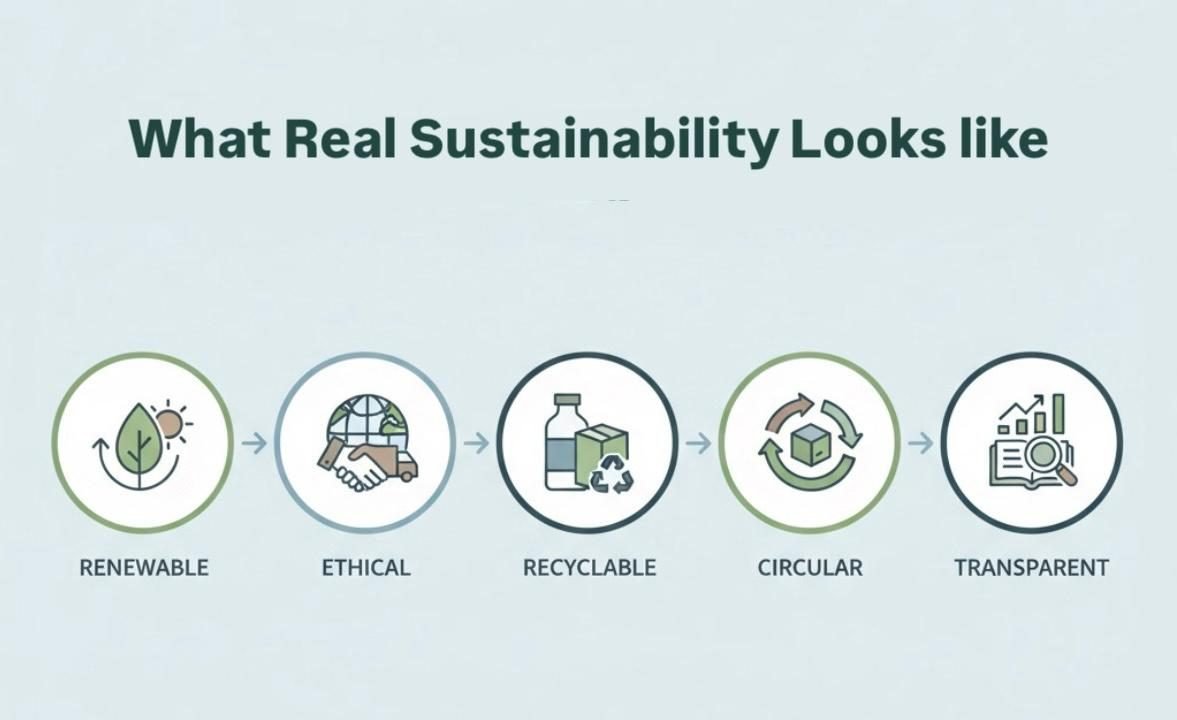
If we accept that environmental marketing is failing, how must it evolve? Here are key shifts:
a) Transparency and truth-in-marketing
Brands must move beyond vague statements and provide measurable, audited data on environmental performance, trade-offs, and limits. Ethical marketing requires honesty.
b) Depth of claim, depth of practice
Marketing must connect with genuine operational change: supply-chain redesign, product lifecycle reduction, circularity. Without this, communication will continue to ring hollow.
c) Consumer-centric relevance
Messages should show what sustainability means for everyday people, health, cost savings, quality, community impact, not just “save the planet.” As one advocacy piece notes: “People don’t care about us. They care about themselves.”
d) Regulatory alignment and standardised metrics
Clear guidelines, enforceable standards, and credible third-party validation are essential. When brands compete on ambiguous green claims, the advantage goes to those with the slickest marketing, not the deepest sustainability.
e) Systemic framing
Marketing must move from product-centric to system-centric: focusing on product-service systems, circular business models, and reducing overall consumption rather than just tweaking existing products. Only then will marketing shift from “eco-window-dressing” to genuine environmental leverage.
Also Read: How Corporate ESG Is Reshaping Progress On Climate Change—Greenwashing Or Real Gains?
Short Data Snapshot
| Metric | Finding |
|---|---|
| % of environmental claims that were vague/misleading | ~53% (EU study) |
| % of marketers lacking a sustainability qualification | 40% |
| % of marketers wary of sustainability campaigns due to greenwashing risk | 49% |
| Literature on green marketing failures identifies weak mix changes | Many companies focus solely on promotion rather than product/system change. |
Also Read: How Top Environmental Groups Greenwash Big Meat’s Climate Impact?
Conclusion
Environmental marketing has had its moment — brands have embraced “sustainable” language, eco-labels proliferate, and marketing departments rebrand. Yet the evidence shows that environmental marketing is failing to drive the deep change required: consumer confusion persists, operations lag behind claims, and systemic environmental indicators continue to deteriorate. If marketing is to genuinely contribute toward sustainability rather than simply signalling it, the discipline must evolve: integrate real practice, adopt transparent evidence, frame messages around everyday relevance, and push beyond communication into structural transformation. Only then will marketing become a lever for environmental impact rather than a badge of green virtue.
Also Read: Green Marketing: Promoting Business And Sustainability Together
FAQs
1. What exactly is environmental marketing?
Environmental marketing, also known as green marketing ,refers to promoting products or services based on their environmental benefits. It includes strategies such as eco-friendly packaging, carbon-neutral claims, or sustainable sourcing. However, the problem arises when these efforts are surface-level or misleading, leading to greenwashing rather than genuine environmental action.
2. Why is environmental marketing failing to make a real impact?
Environmental marketing is failing primarily because corporate sustainability campaigns often prioritize image over substance. Many brands focus on appearing green rather than transforming supply chains or operations to be genuinely sustainable. A 2023 report by the European Commission found that 53% of environmental claims made by companies were vague, misleading, or unfounded.
3. How does greenwashing affect consumers and the planet?
Greenwashing creates a false sense of progress, making consumers believe their purchases are helping the planet when they may not be. This not only erodes consumer trust but also diverts attention from real environmental solutions. For instance, when a brand markets a “biodegradable” product that doesn’t fully decompose, it contributes to waste and misleads buyers.
4. What can companies do to make environmental marketing effective?
To reverse this failure, companies need to embed sustainability into core business models, not just their messaging. This includes:
- Disclosing full supply chain emissions
- Setting verifiable science-based targets
- Using transparent certifications like B Corp or Fairtrade
- Communicating data-backed progress instead of buzzwords
Transparency and accountability are key to restoring credibility and impact.
5. How can consumers identify genuine environmental marketing?
Consumers can look for clear, specific, and verifiable claims, for example, “made from 100% post-consumer recycled plastic” is measurable, whereas “eco-friendly” is not.
Checking for independent certifications (like Cradle to Cradle Certified™ or Carbon Trust Verified) also helps. In short, consumers should look for proof, not promises.
Also Read: How Eco Marketing Influences The Green Consumer Behavior

0 Comments