
Whether it is boutique shops or big-box stores, the word “sustainable” has become a familiar part of packaging, advertising, and conversation. But behind every green label hides a deeper question – what actually pushes people to buy eco-friendly products and, more importantly, keep buying them? The answer sits at the intersection of identity, emotion, and economics. Understanding these motivations helps businesses transform sustainability and consumer behaviour for long-term impact.
Understanding Why People Choose to Go Green
For many out there, sustainable consumption is not only about the product, but it’s more about the person they become by choosing it. Making purchases of eco-friendly goods reinforces a moral and social identity, one that is interlocked with responsibility, empathy, and modern awareness. This emotional validation is a vital motivator for younger generations who treat sustainability as an expression of values rather than a marketing label.
Social influence amplifies that drive. Some studies display that 73% of global consumers consider sustainability as a key purchase factor, and 75% of millennials say they regularly choose brands aligned with their values. This draws our attention to how peer norms and generational expectations shape sustainability and consumer patterns worldwide.
Yet even faith has limits when affordability is an issue. The PwC 2024 Voice of the Consumer Survey unveiled that consumers are willing to pay up to 9.7% more for sustainable goods, and that’s an impressive sign of intent, but 53% still find such options too costly. Filling that gap between aspiration and accessibility remains critical for brands hoping to expand beyond niche audiences.
Also Read: EU Ecodesign Regulation: Advancing Sustainable Products
Key Motivators Across Generations

Also Read: The Concept Of Product-As-A-Service (PaaS) For Sustainable Consumption
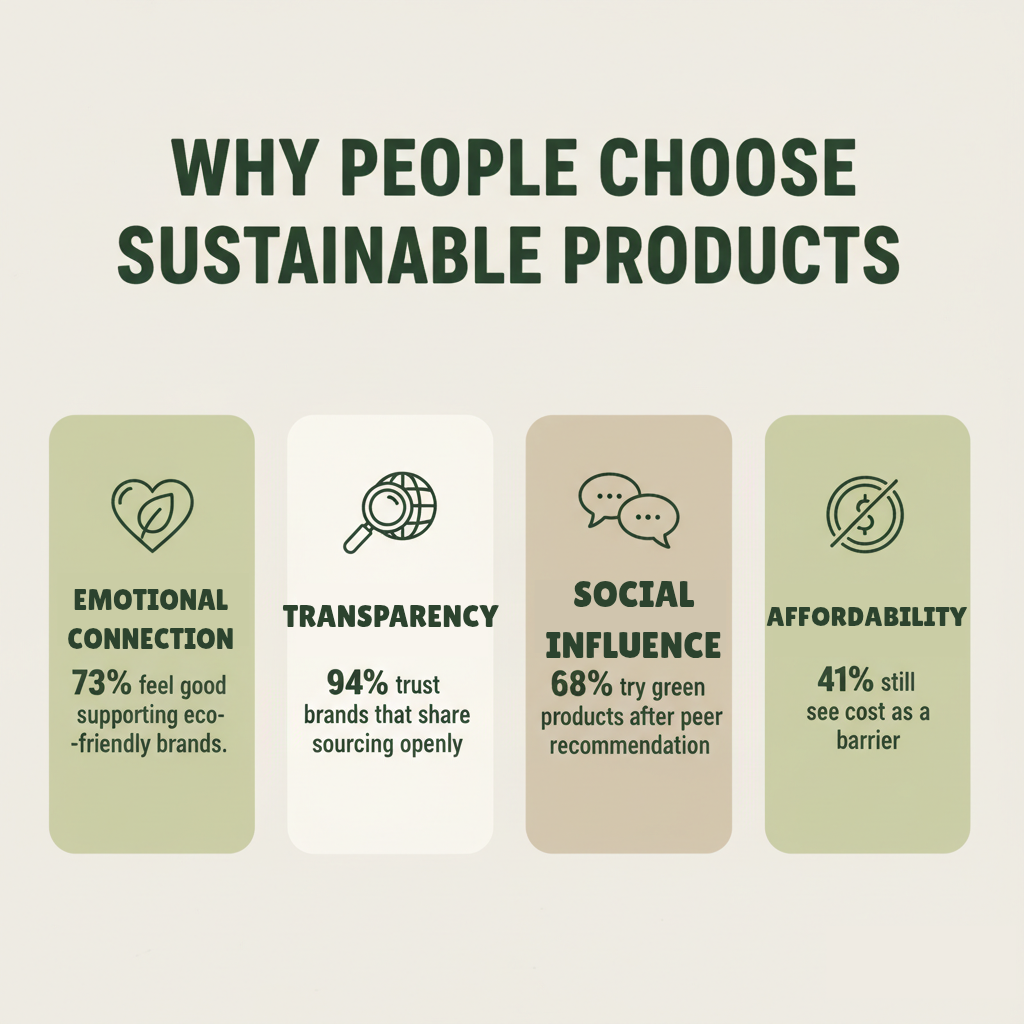
The Factors Behind Sustainable Choices
Here are some core factors that drive sustainable decision-making and make clear the evolving relationship between sustainability and consumer behaviour:
Emotional connection with purpose-driven brands
Those brands that communicate purpose beyond profit capture hearts as much as wallets. Companies like Patagonia and The Body Shop build loyalty through storytelling that closes the purchase and brings about positive change.
Transparency builds long-term trust
When brands spill the beans about how their products are sourced or manufactured, consumers reward them. As per the WhatTheyThink, 67% of shoppers are more likely to buy from brands that share sustainability information openly, while 73% say such transparency directly increases trust.
Social proof and community influence
Watching others embrace eco-conscious lifestyles drives behaviour change. Online communities and influencers have made sustainable products aspirational, a phenomenon central to sustainability and consumer psychology.
Accessibility and fair pricing
Availability always remains a key challenge. The platform Arbor Eco documented that 41% of consumers cite high cost as the top obstacle to sustainable buying. Brands addressing price gaps are rewarded with loyalty and trust.
Also Read: How Gen Z Is Redefining Consumer Sustainability Trends
What Keeps Consumers Loyal to Sustainable Products?
Even when a person makes an eco-conscious purchase, loyalty requires reinforcement through experience and credibility. The following factors help consumers stick with sustainable products:
Authenticity backed by measurable impact
People want full evidence that their choices matter, as some report notes that 94% of consumers are more loyal to transparent brands that show results based on facts.
Product quality that meets expectations
Consumers would never come to terms with it when it’s about performance. If sustainable products match conventional ones in durability and usability, trust grows naturally, and this automatically strengthens the bond and confidence of sustainability and consumers.
Reward systems that recognise sustainable actions
Programs that give discounts, points, or benefits for eco-friendly purchases give rise to repeat behaviour. A Convenience.org study discovered that 77% of buyers prefer such incentives, which are tied to sustainability.
Being in an environmentally responsible community, whether it’s online or offline, often creates emotional stickiness. Consumers become advocates, not just customers.
Also Read: Is Your Daily Routine Truly Sustainable For The Environment? 7 Surprising Habits To Rethink
How Companies Can Shape Sustainable Behaviour
Brands nowadays can shape sustainability and consumer trends rather than just react to them with vigor. The most effective strategies depend on psychology, data, and storytelling, which can be put into effort through three concise steps.
First, understanding the behavioural data. By analysing consumer motivations such as health, ethics, or savings, companies can align offerings with those priorities. This course of action has helped brands like Unilever and IKEA strengthen sustainable sales all over the markets.
Second, designing subtle nudges into shopping journeys. Keeping sustainable items at first in the listings, showing estimated carbon footprints, or offering eco badges, gives hope to conscious choices without lecturing customers.
Third, embracing radical transparency. As highlighted by Amra & Elma, 87% of shoppers will pay more for brands they trust more. Showing supply chain data, worker welfare standards, or recycling metrics creates or increases the level of trust. Over time, this transparency transforms awareness into loyalty and drives stability and fixes growth.
At its core, selecting a sustainable product isn’t just about helping the planet – it’s about choosing the kind of upcoming future we want to live in. Every purchase we make becomes a quiet vote for cleaner air, fairer trade, and a world that gives value to responsibility as much as comfort. When brands and consumers move hand in hand with shared purpose, change stops feeling like a sacrifice and starts feeling like hope in action. That’s the real strength of sustainability and consumer connection – it turns ordinary choices into lasting impact.
Also Read: 8 Sustainability Ideas That Will Change The World
Frequently Asked Questions (FAQs)
Q1. Why do some consumers hesitate to buy sustainable products?
Despite strong interest, cost always remains a strong barrier. As the NRF displays 53% of shoppers view sustainable goods as expensive. Others cite limited access or uncertainty about genuine eco claims, particularly as greenwashing erodes trust.
Q2. How can brands maintain long-term loyalty among their eco-conscious customers?
What matters the most is consistent communication, verifiable impact, and transparent storytelling. As the Psico-Smart Blog emphasizes, transparency drives enduring loyalty all over the industries.
Q3. What role does price play in sustainability and consumer decision-making?
While willingness exists, data from PwC shows an average 9.7% premium, and affordability determines the change in faith. The balance lies in displaying long-term savings or added personal value to give a reason for the higher costs, keeping sustainability and consumer alignment intact.
Also Read: Sustainable Food Systems: How To Feed Billions Without Destroying The Planet

0 Comments