
For the last 200 million years, turtles have walked the earth as aquatic /semi-aquatic creatures. These are very long-living animals with usual life expectancy ranging from 15-20 years and even 50 in some cases in the semi-aquatic genus of the species, while fully aquatic turtles like sea turtles can live for hundreds of years. They are well known for their distinctive shells that cover their back. These protect them from predators, extreme weather conditions and natural disasters. These qualities beg the question: what does turtles eat, making them one of nature’s longest, most adaptable, and most resilient animals?
Types of turtle
There are two types of turtles:
1. Aquatic Turtles
Aquatic turtles spend their life in water bodies or most of their life in ocean/sea (sea turtles) or freshwater bodies (ponds, rivers, lakes). These turtles have adapted certain evolutionary physiological features to survive in oceans and lakes.

Sea turtles have adapted to have flat flippers that can quickly propel their body, reaching impressively high speeds; the front flippers are tasked with propulsion, while the back helps with steering and stability. Other characteristics like flat, elongated shells moving through the water make it easier to minimize resistance through the water currents.
2. Semi-Aquatic Turtles
Semi-aquatic turtles can live on both land and sea and need both environments to survive, each playing an essential role in their survival. Semi-aquatic turtles are usually seen feeding, living near or in the water while laying their eggs on land to hatch; the female turtle covers these eggs with sand and camouflages them to keep them away from predators.
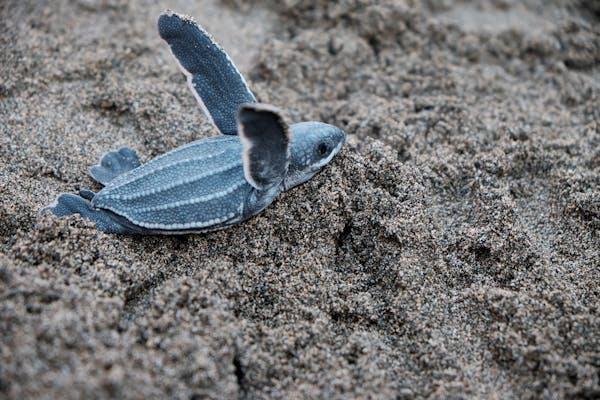
The baby turtles instinctively move toward water once hatched. They have webbed feet that help them guide them along the water, although not as well as Sea Turtles. Certain species, like the Painted Turtle, follow a technique called basking where they land, soaking in the sunlight to warm up their ectothermic (cold-blooded) bodies through thermoregulation.
Also Read: Top 10 Most Intelligent Sea Animals
What Does Turtles Eat?
Let’s understand turtle eating habits:
Aquatic Turtles
Turtles that reside in water bodies are known to enjoy different kinds of food depending on the species and their stage in life and development. Juvenile turtles are often not picky and eat whatever they can find, like small crustaceans such as shrimps, fish or algae. Adult turtles follow a whole different diet. For example, adult olive ridges still feed on many things, including fish and crustaceans.
On the other hand, Green turtles are herbivores. When they reach maturity, their serrated jaw helps them feed on seaweed, seagrass and algae. Hawksbill turtles have a very hardy stomach; they are omnivorous and eat a hugely diverse variety of things, from anemones, molluscs and crustaceans. Their favourite treat includes toxic and stinging creatures like sponges, corals and sea urchins. Hawksbills have a narrow head and beaks that allow them to retrieve food from crevices.
You can often see turtles enjoy eating jellyfish, which is the primary food source for the largest turtle species; this is why plastic bags are hazardous to sea turtles since they do not see very well and can mistake them for jellyfish and eat the bag. They have spiky growths coating their throats down to the stomach that makes it easier to eat their favourite food — jellyfish; their eyes are the most sensitive part of their body. A sting to the eyeball could be pretty painful to a turtle. Luckily, they have learned to attack with their eyes shut.
Semi-Aquatic Turtles
These turtles’ diets range from carnivorous animal protein to herbivorous plant-based food. These turtles have a unique trick up their shell, submerging their food underwater, making it easier to swallow. The younger turtles feed much more frequently and need a sizeable daily protein intake for proper development. On the contrary, the adults can be fed every other day. One of the most popular pet turtles, the Red-Eared Slider, are omnivorous, with their young turtles preferring insects, small fish, worms, and aquatic invertebrates needing a much more protein-centered diet.
Meanwhile, adults are more herbivores who consume aquatic vegetation, algae, and leafy greens. Snapping turtles are one of the most well-known turtles. These are very opportunistic predators. Their main tactic is ambushing their prey as they wait by areas’ schools of fish, frequently waiting to snap up prey with their powerful jaws. They also scavenge when available, feeding on both plant matter and animals, making them omnivorous. Their diet comprises common frogs, tiny fish, and carrion (dead animals). They scavenge occasional fruits and algae, and small birds, anything they can derive nutrients from.
Semi-aquatic turtles are resilient creatures. They adjust their diet according to the seasonal availability of prey and plants. Both carnivorous and omnivorous turtles prefer a more animal-based protein-centric diet as hatchlings wean off to plant matter as they develop, depending on the species.
Their varied diets are essential for survival in fluctuating environments, allowing them to consume aquatic and terrestrial resources. Turtles can develop changes in their diet depending on their age and developmental stage, mainly affecting how often turtles eat.
Also Read: Top 10 Fascinating Animals Of The Desert You Should Know
Frequency of Eating in Turtles
Aquatic Species:
- Hatchling- Daily or every other day.
- Adult- Every 2-3 days, though some may eat even less frequently.
Semi-aquatic and Terrestrial Species:
- Hatchling-Daily
- Adult- Every 2-3 days for most species, although giant turtles might eat even less often.
Their diet can also depend on seasonal changes and natural climate occurrences during the colder seasons of winter. Brumation is a hibernation state as their metabolism slows down, and they consume next to no food to conserve their energy. This contrasts with their diet in the warmer months of the year, where they feed on large amounts of food in preparation for hibernation. Turtles in captivity have a much more controlled and frequent diet, while wild turtles eat and scavenge based on what they find in their habitat, eating much more sporadically.
Age/Condition |
Feeding Frequency |
Reason |
|---|---|---|
Juvenile |
Daily or every other day |
High energy needs for growth |
Adult |
Every 2-3 days |
Slower metabolism and varied diet |
Cold Seasons (Brumation) |
Minimal to no feeding |
Metabolism slows, conserving energy |
Captive |
Daily to every other day |
Consistent feeding schedule in captivity |
In Conclusion
Both Semi-aquatic and aquatic turtles have very diverse diets. They are highly resilient in their diets, adapting to their environment to the seasonal rate of development, age, and species. Their diet varies widely by species, age, and environment, with young turtles requiring protein-rich meals for growth while adults shift to a more balanced diet, often incorporating plant matter. Seasonal shifts, such as brumation during colder months, lead to changes in feeding frequency and energy conservation. Their nature of acclimation and adaptability bring them longevity as one of the longest-living and unique animals on the planet.
Also Read: Beyond The Big Five: Conservation Of Lesser-Known Endangered Animals

0 Comments