
One of the most significant ecological crises in Australia’s marine history was caused by the extraordinary underwater heatwave in 2024 and 2025. Scientists caution that the long-term effects could alter the future of coral reef ecosystems as Western Australia’s Ningaloo Reef suffers a 70% loss. The World Heritage-listed Ningaloo Reef, which spans 1,500 kilometres of coastline, has long been praised for its abundant biodiversity, whale shark migrations, and immaculate lagoons. However, record-breaking ocean temperatures and sustained thermal stress have produced widespread bleaching and massive coral mortality, leaving more than two-thirds of the reef seriously damaged.

Researchers documented a catastrophic decline in coral cover, with mortality exceeding 60% in key northern lagoon areas, between early assessments in August 2024 and the comprehensive surveys conducted in May and October 2025. The reality is stark: Western Australia’s Ningaloo Reef suffers a 70% loss, marking one of the largest single-event declines ever observed in Australia.
What Caused Such Extreme Coral Loss at Ningaloo Reef?
A protracted, record-breaking marine heatwave that impacted almost the whole water column down to 300 meters is what scientists believe caused the collapse. Coral tolerance levels were pushed well beyond recovery capacity by this unprecedented heat event in Australia. As Western Australia’s Ningaloo Reef suffers a 70% loss, understanding these drivers is essential to preventing future devastation.
Important points:
- In 2023–2025, heatwaves affected 96% of the world’s oceans and lasted four times longer than historical averages.
- In late 2024, thermal buildup intensified, resulting in months of deadly water temperatures.
- Deep-dwelling animals were unable to avoid warming because full-column heating extended down to 300 meters.
- Coral health was already compromised by low-oxygen events in 2022, making them less resilient to additional stress.
Also Read: Mass Coral Bleaching: What The 2023–25 Global Event Means For Oceans And Coastal Economies
How Extensive is the Damage, and What Areas are Most Affected?
The results of recent surveys are not encouraging. In Ningaloo’s northern and central zones, coral mortality has exceeded 60%, and some species previously thought resilient have perished due to heat stress. The collapse is so extensive that it causes a 70% loss in both offshore reef habitats and shallow lagoons in Western Australia’s Ningaloo Reef.
Key points:
- Only 600 corals remained alive by October, a two-thirds decrease from the 1,600 corals inspected in March.
- Unprecedented bleaching is observed at famous locations such as Tantabiddi Sanctuary Zone and Turquoise Bay.
- Traditionally resilient places like Rowley Shoals and the Kimberley reefs are being affected.
- Acropora spp. and other dominant coral groupings have nearly entirely collapsed.
| Coral Species Response During the 2024–2025 Heatwave | |||
| Coral Species | Category | Heatwave Impact | Notes |
| Staghorn corals (Acropora tenuis/millepora/spicifera) | Fast-growing | Extremely high mortality | Major structural loss |
| Birdsnest coral (Seriatopora hystrix) | Branching | Severe bleaching, high death rate | Sensitive to temperature spikes |
| Veron’s tube coral (Echinopora ashmorensis) | Massive | Moderate survival | One of the few resilient species |
| Lesser knob coral (Cyphastrea microphthalma) | Encrusting | Moderate survival | Withstood prolonged heat better |
| Porites species | Massive | Mixed response | Some survival, slow recovery expected |
Also Read: Two Key Coral Species In Florida Declared Functionally Extinct After Devastating Ocean Heatwave
Why is This Coral Loss Level Important for Local Communities and Marine Life?
One-third of all marine species on Earth depend on coral reefs, which form the foundation of marine ecosystems. The biological fallout from the 70% loss of Western Australia’s Ningaloo Reef will affect tourism, fishing, and coastal protection for decades to come.
Key points:
- Fish, turtles, sharks, and invertebrates that rely on coral formations are at risk due to habitat collapse.
- Reef diving and whale shark cruises are examples of tourism sectors that have long-term economic effects.
- Reef stability and species diversity are further diminished by sponges and algae that colonise dead corals.
- Natural coastal barriers are weakened when coral is lost, increasing erosion and storm susceptibility.
Also Read: Coral Reefs Are Disappearing, Signaling Earth’s First Climate Tipping Point
What Can Be Done to Restore the Reef and Prevent Future Heatwave Damage?
Despite the extent of the harm, experts stress that focused restoration measures and immediate climate action can still support partial recovery. But as Western Australia’s Ningaloo Reef suffers a 70% loss, the path ahead requires long-term commitment and global cooperation.
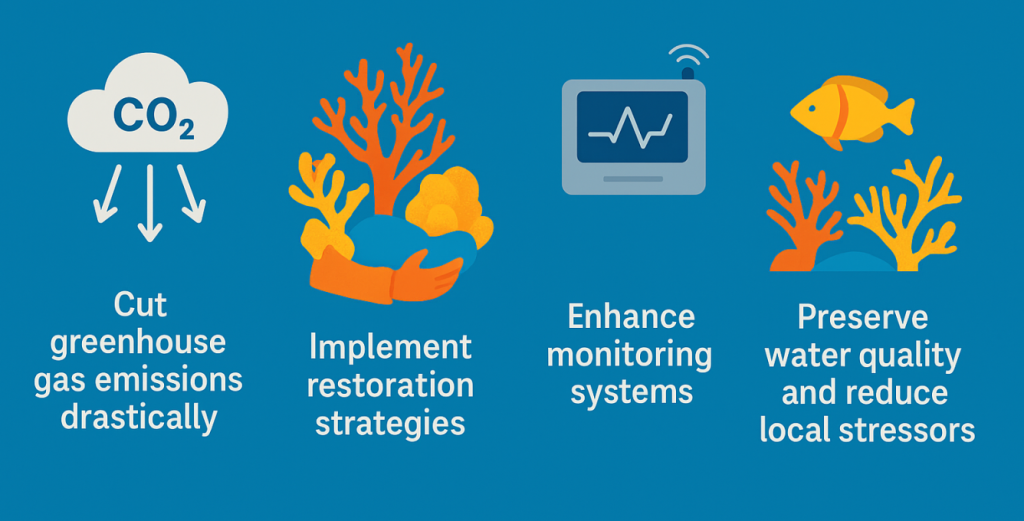
Key points:
- The best strategy for averting future marine heatwaves is still to cut greenhouse gas emissions drastically.
- Restoration strategies like selective propagation of hardy species and coral gardening can aid recovery.
- Enhanced monitoring systems can provide early alerts for bleaching episodes.
- The reef’s capacity to rebuild will be improved by preserving water quality and reducing local stressors.
Also Read: Climate Change Drives Historic Coral Bleaching In Great Barrier Reef
Frequently Asked Questions (FAQs)
Q1.Can Ningaloo Reef Recover from Such a Large Loss?
Although it will take decades, recovery is conceivable. There is hope because some hardy species managed to survive. However, prolonged regeneration may be hampered by frequent heatwaves.
Q2. Why Are Marine Heatwaves Increasing in Strength?
Oceans worldwide are warming due to climate change. Oceans absorb more than 90% of the extra energy that greenhouse gases trap, making marine heatwaves more intense and frequent.
Q3. Is Ningaloo’s Decline Part of a Global Trend?
Yes. Over 84% of the world’s coral reefs were impacted by heat stress between January 2023 and September 2025, and 83 countries suffered mass bleaching.
Also Read: Scientists Warn: Sunscreen Chemicals Threaten Marine Life And Coral Reefs

0 Comments