
Mangroves are a critical ecosystem under threat. They play a prominent role in climate resilience. The world’s first official Mangrove Conservation Summit discussed several points of importance. This article will focus on the three key aspects concluded from the mangrove conservation summit.
Mangrove forests act as carbon sinks. These mangroves are one of the most effective carbon storage systems, sequestering up to 4x more carbon per hectare than tropical rainforests. They act as a natural defense, reducing wave energy by 60–80% and protecting 15 million people annually from coastal flooding and erosion. They also serve as breeding grounds for 3000+ species, supporting marine and terrestrial biodiversity. Climate Mitigation aids adaptation by reducing the intensity of tropical storms and protecting critical infrastructure along coastlines.
The alarming loss of mangrove forests was discussed at length at the world’s first official Mangrove Conservation Summit. The rapid decline: Since 1996, over 1 million hectares of mangroves have been lost globally, equating to 2.5 million acres of essential ecosystems disappearing. Of the areas lost, 70% are considered restorable, but mature mangroves are irreplaceable with their vast carbon reserves. This causes future risks, where human activities such as aquaculture, logging, and urbanization could cause 50% of mangroves to collapse by 2050.
Key Highlights of the Summit in Abu Dhabi
The World’s First Official Mangrove Conservation Summit was held in Abu Dhabi, with delegates spanning over 400 attendees from various sectors, including government, NGOs, and academia. The speakers included more than 100 expert speakers who shared insights and innovations. With impressive international representation from delegates from 82 countries, emphasizing the summit’s global focus on mangrove conservation. Conservation has launched several mangrove breakthrough strategies.
These talks can be divided into three significant goals that have been conferred: to halt human-driven mangrove loss by addressing the root causes such as deforestation, aquaculture, and urbanization; to address the Double Conservation Areas planning to expand protected mangrove regions to ensure ecosystem preservation; and to restore 50% of Lost Mangroves to commit to restoration initiatives in the high-priority areas. The summit was organized and spearheaded by the Global Mangrove Alliance, a coalition of over 30 organizations.
Also Read: Afforestation And Biodiversity: Restoring Habitats For Endangered Species
Technological Innovations for Mangrove Conservation
To answer these three main concerns, they began with the plan to introduce the Global Mangrove Watch.
It begins with providing the solution to halt human-driven mangrove loss by addressing the root causes of deforestation, aquaculture, and urbanization. The Global Mangrove Watch is an open-access platform that utilizes remote sensing and data analytics to support mangrove conservation efforts. It helps track global mangrove coverage, monitor carbon storage capacity in mangrove forests, and identify conservation hotspots for targeted efforts. It provides accurate, real-time data to aid policymakers, researchers, and communities.
Future applications are multitudes that use localized monitoring. This enables detailed tracking for small-scale conservation and restoration projects. It also assists local communities in managing their mangrove ecosystems effectively. It records and identifies restoration potential, locates areas with high restoration feasibility, helps allocate resources strategically, predicts potential outcomes of conservation projects, and optimizes efforts for long-term success.
Also Read: Afforestation Vs. Reforestation: Key Differences And Their Environmental Impact
Refining Best Practices for Mangrove Restoration
Challenges of mass planting efforts are plenty. The low success rates result from many large-scale planting initiatives failing to develop into functional mangrove forests due to poor site selection, lack of species diversity, and absence of ecological balance. An Ecosystem-based approach is needed to recognize the interdependence of mangroves with neighboring ecosystems like seagrasses, corals, and river systems.
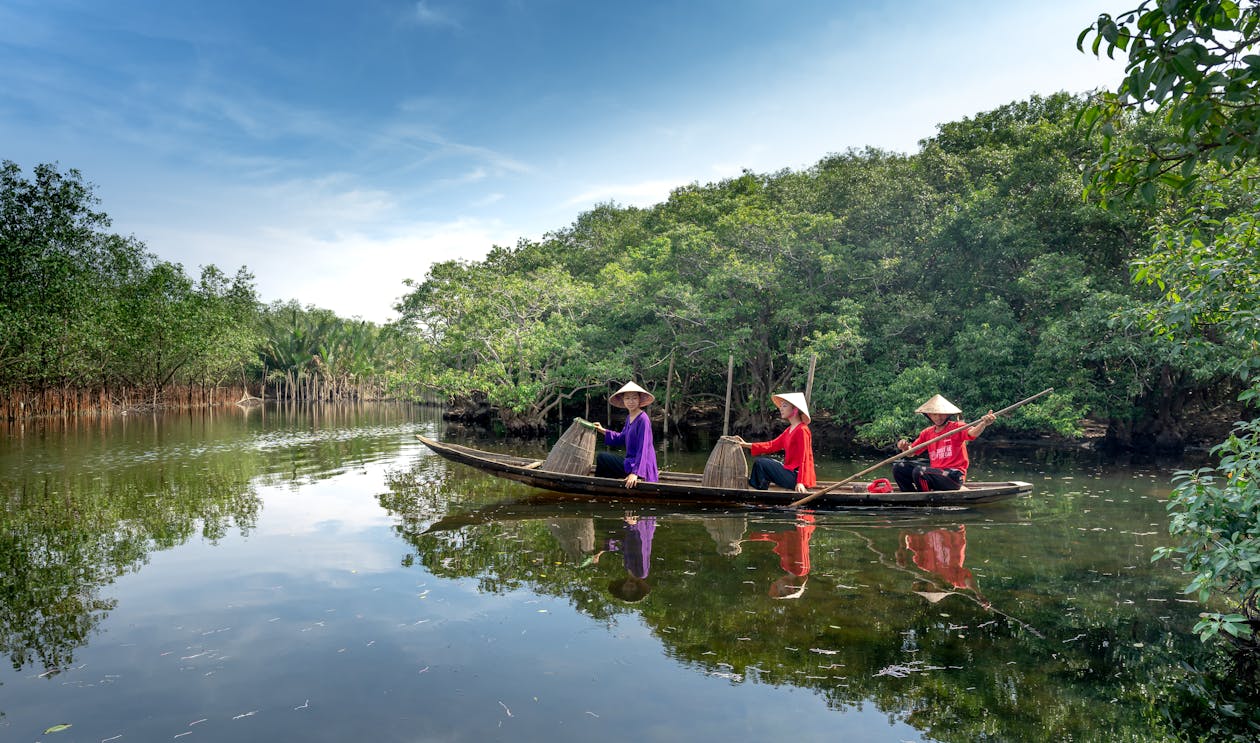
It ensures the holistic restoration, increasing biodiversity and climate resilience. The emphasis was mainly on community-led projects describing why community involvement matters. The local communities are stakeholders who depend on mangroves for livelihoods and survival. Their involvement ensures long-term commitment and better maintenance of restored areas. Natural Regeneration & Species-Specific Planting focuses on letting nature lead the restoration while supplementing with appropriate native species. They create more resilient and ecologically functional mangrove forests.
Success stories can be seen across the globe, beginning with Kenya, where Community-led initiatives restored degraded mangroves by combining traditional knowledge with scientific monitoring. In Indonesia, long-term programs integrating community participation have restored thousands of hectares of improved fish and reduced flood risks. Meanwhile, in Guinea Bissau, mangrove regeneration through community-driven efforts boosted local farming and fishing, creating sustainable livelihoods.
How These Address the Three Key Goals of the Summit
- Stopping human-driven mangrove loss by community-led approaches reduces destructive practices like deforestation and ensures the sustainable use of mangroves. Ecosystem-based approaches connect mangroves with surrounding habitats, maintaining ecological balance and reducing vulnerability.
- The restoration through community projects expands the total mangrove coverage, helping double conservation zones effectively. Success stories inspire replication in other regions, scaling conservation efforts.
- Restoring 50% of lost mangroves through natural regeneration methods has proven more effective than mass planting, improving success rates and ensuring long-term restoration. Restoration strategies tailored to local ecosystems align with this goal.
Also Read: Understanding Ocean Food Chains: From Plankton To Apex Predators
Bottlenecks in Funding
There exists a significant mismatch between investor expectations and project timelines. Many investors seek short-term returns, while mangrove restoration often takes years to show measurable results. The long-term nature of conservation projects can discourage traditional investment.
Project scalability also presents promising challenges. High upfront costs and uncertain returns make scaling mangrove projects difficult. More financial support for local stakeholders often needs to be provided, limiting community involvement.
Building sustainable finance systems has also been a central point of the summit, mobilizing $4 Billion through the Global Mangrove Alliance. This ambitious goal combines public funding, private investment, and non-profit partnerships. It focuses on leveraging resources for conservation and restoration efforts worldwide and bridging policy, finance, and on-ground action with blended finance models.
Public subsidies reduce risks for private investors. Community-focused implementation ensures funds are directed to impactful on-ground actions.
Also Read: Afforestation Initiatives Around The World: Success Stories And Challenges
Lessons Learned from the World’s First Official Mangrove Conservation Summit
The successful models for scaling community-led projects in Mexico with integrated reforestation and ecotourism improved local livelihoods. In Indonesia, mangrove-linked enterprises boosted economic resilience while conserving biodiversity. The United States Blue carbon credit systems supported large-scale restoration projects.
Several key elements of success have been seen with the active participation of local stakeholders, and long-term ownership ensures accountability and sustainability.
Awareness of policy integration with governments incorporating mangrove conservation into national climate and biodiversity frameworks. Policies aligned with global goals, such as the Paris Agreement and Sustainable Development Goals (SDG 14). International collaboration and advocacy continued partnerships among nations, NGOs, and scientists drive progress.
In Conclusion
The primary lesson learned through the summit and its convening is the importance of community support through public involvement in conservation and local and global advocacy. There are multiple ways to support mangrove conservation initiatives. Protecting mangroves is not just about saving trees—it’s about securing a future where ecosystems and communities thrive together.
Also Read: Mangrove Forests In Florida: Where Land Meets Sea

0 Comments