
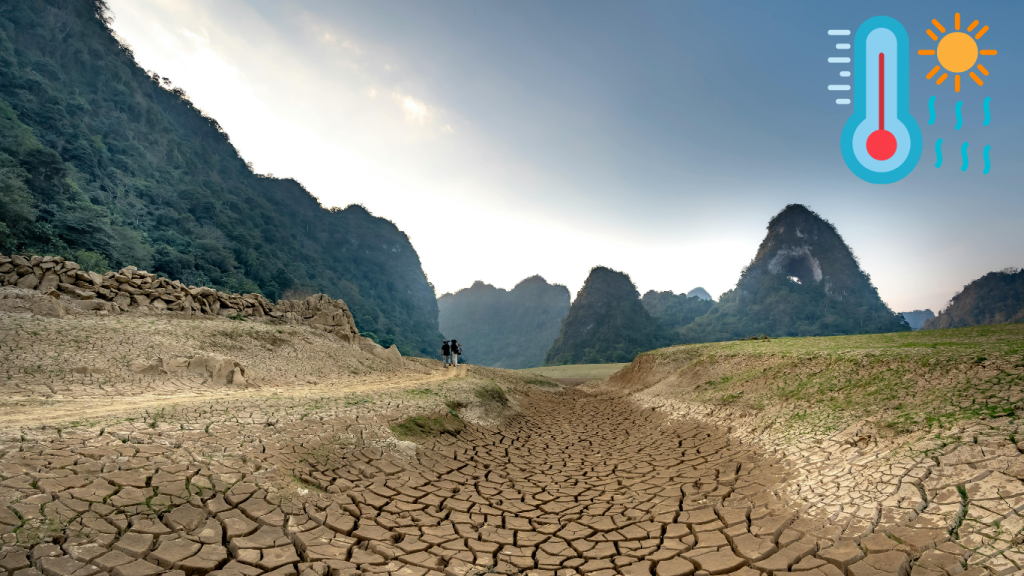
Global heatwaves and droughts could intensify by 2100, according to a recent scientific study, highlighting one of the most serious long-term risks of climate change. The research suggests that extreme heat and water scarcity will increasingly occur together, creating compound climate events that are far more damaging than either hazard alone.
This emerging pattern signals a major shift in how climate risks will affect populations, economies, and ecosystems worldwide.
What the Study Reveals
A recent study published in Geophysical Research Letters warns that nearly one-third of the global population could face extreme heatwaves and droughts simultaneously by the end of the century.
- Around 28% of the global population (about 2.6 billion people) could be affected
- These compound events may occur up to five times more frequently by the 2090s
- Tropical and lower-income regions are expected to be the most vulnerable
The findings highlight how climate change is not just increasing individual risks, but also combining them in ways that amplify their impact.
Also Read: Delhi’s New Water ATMs Aim To Ease Heatwave Stress
What Are Compound Heatwave-Drought Events?
Compound heatwave-drought events occur when two or more climate extremes happen at the same time, making their overall impact much more severe. In this case, extreme heat and drought conditions overlap, creating a situation where both risks intensify each other.
When heatwaves occur during drought periods, higher temperatures increase evaporation and further reduce available water. This worsens water scarcity and places additional stress on crops, soil, and natural ecosystems. At the same time, dry conditions and extreme heat can increase the risk of wildfires, land degradation, and agricultural losses.
Scientists emphasize that when heatwaves and droughts happen together, their combined effects are far more damaging than when they occur separately.
Also Read: Delhi Mandates Rainwater Harvesting To Combat Water Scarcity
Why This Is Happening
The rise in global heatwaves and droughts could intensify by 2100 and is closely linked to global warming and changes in the Earth’s climate system.
- Higher temperatures increase evaporation rates, drying out soil and water sources
- Changes in rainfall patterns make droughts more frequent and prolonged
- A warmer atmosphere intensifies extreme weather events
Climate change is also disrupting the global water cycle, leading to more variability and extreme conditions across regions.
Also Read: Secunderabad And Mumbai Among World’s Largest Methane-Emitting Landfills In 2025
Key Impacts on People and Economies
The combined effect of heatwaves and droughts can have widespread consequences.
- Increased heat-related deaths and health risks
- Decline in agricultural productivity and food security
- Higher risk of wildfires and ecosystem damage
- Water shortages and rising competition for resources
- Economic instability due to disrupted supply chains
Experts warn that these impacts will be especially severe for outdoor workers and vulnerable populations.
Also Read: India’s Seafood Exports Hit Record High Despite Global Challenges
Global Trends Already Pointing in This Direction
Current climate patterns already show signs of intensifying extremes.
- Heatwaves have become more frequent and intense globally since the 1950s
- Droughts are increasing in severity across multiple regions worldwide
- Extreme heat is already affecting food systems and crop yields globally
These trends suggest that the study’s projections are not distant possibilities; they are extensions of ongoing climate changes.
Future Climate Risk by 2100
Indicator |
Projection |
|---|---|
Population at Risk |
~28% of global population |
People Affected |
~2.6 billion |
Increase in Frequency |
Up to 5× more frequent |
Most Affected Regions |
Tropical & low-income countries |
Key Risks |
Heatwaves + drought occurring together |
Also Read: Clean Energy Generation In India: Growth Surges, But Coal Still Dominates
Can This Future Be Avoided?
While the projections are alarming, scientists emphasize that the outcome is not fixed.
Key actions that can reduce risk:
- Rapid reduction in greenhouse gas emissions
- Investment in climate-resilient infrastructure
- Improved water management and conservation
- Adoption of climate-smart agriculture
- Early warning systems for extreme weather
Stronger climate action today could significantly reduce the number of people exposed to these extreme conditions.
Also Read: Indonesia’s Waste-To-Energy Plan May Harm Both People And The Environment
Final Thoughts
The warning that global heatwaves and droughts could intensify by 2100 highlights a critical turning point in climate science. The challenge is no longer just about rising temperatures, it is about how multiple climate risks interact and amplify each other.
If left unaddressed, these compound events could reshape global living conditions, particularly in vulnerable regions. However, with timely action, policy changes, and technological innovation, the worst impacts can still be mitigated.
The future depends on how quickly and effectively the world responds today.
Also Read: Antarctic Megaberg’s 40-Year Ocean Voyage Finally Ends

0 Comments