
Although the Iowa water crisis has not dominated mainstream cable news, it is quietly reshaping the political landscape ahead of the 2026 midterms. In two competitive U.S. House districts, voters are signaling that polluted drinking water and agricultural runoff are no longer abstract environmental concerns.
The Iowa water crisis, once dismissed as a purely regulatory debate, is emerging as a defining issue with the potential to tip the balance of Congressional control.
A Boiling Point in the Heartland

For decades, Iowa’s agricultural success narrative has been tethered to fertilizer-intensive corn and soybean production. However, nutrient runoff has steadily increased nitrate concentrations in rivers and drinking water sources.
The Central Iowa Source Water Research Assessment attributed 80 percent of nitrates in the Des Moines and Raccoon rivers to agricultural fertilizers. As nitrate levels rise, treatment facilities face mounting pressure and higher costs, reinforcing the urgency of the Iowa water crisis.
Also Read: Health and Environmental Groups Sue EPA Over Repeal of Landmark Climate Finding
Poll Numbers That Could Shift Power
Global Strategy Group surveyed 600 registered Iowa voters in early 2026, reflecting the state’s demographic and political breakdown.
The percentage climbs to 85 percent in Iowa’s 1st District and 83 percent in the 3rd District. Iowa exhibits the second-highest cancer rate in the United States—a statistic that has intensified scrutiny of environmental exposures.
Data Snapshot: Iowa Water and Political Stakes
| Indicator | Latest Figure | Source |
|---|---|---|
| Voters favoring clean water prioritization | 85% (1st District) | https://insideclimatenews.org |
| Statewide support for ag pollution mandates | 79% | https://insideclimatenews.org |
| Nitrate contribution from agriculture | 80% | https://www.polkcountyiowa.gov |
| Iowa cancer ranking | 2nd highest in the U.S. | https://www.cdc.gov |
| Wildlife crashes annually in Iowa | ~1,200 | https://www.theguardian.com |
These figures underscore how the Iowa water crisis intersects with public health and electoral politics.
Also Read: Water Sustainability: The Next Big Global Crisis?
Water Quality and Public Health
Cancer can happen for many reasons, but high nitrate levels in drinking water have worried people. The EPA says drinking water should not have more than 10 milligrams of nitrate per liter.
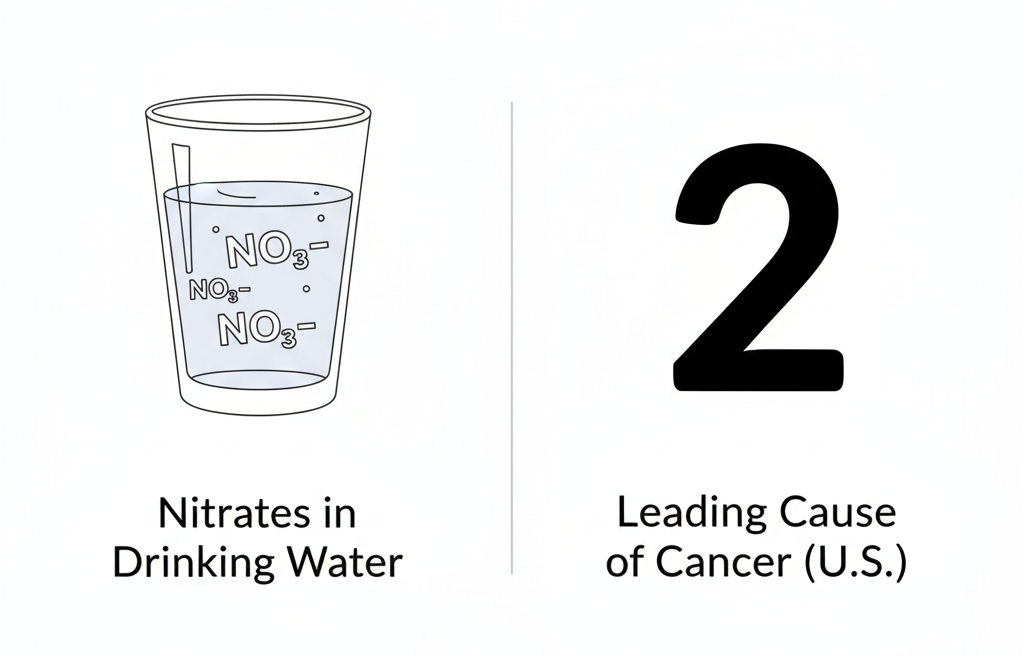
According to the utilities, at the time of nitrate spikes, the utilities are forced to escalate the expensive treatment procedures, imposing financial expenses on the consumers.
Consequently, the Iowa water crisis blends health anxieties with economic pressures.
Also Read: Freshwater Scarcity: The Next Global Conflict Trigger?
Congressional Control in the Balance
Democrats need a three-seat turnaround in 2026 to be voted back into a majority in the House.
In 2024, Rep. Mariannette Miller-Meeks served as a winner by a margin of less than 800 votes, and Rep. Zach Nunn was reelected by only 52 percent of the votes.
Given these narrow margins, the Iowa water crisis may prove decisive.
Also Read: NGT Flags Excessive Groundwater Use At Cricket Stadiums, Calls For Shift To Treated Water
The PERMIT Act Controversy
Critics argue the bill weakens protections for waterways already burdened by runoff. Proponents argue that it will ease regulatory requirements on farmers. The Iowa water crisis has thus become a referendum on environmental governance and agricultural accountability.
Also Read: Greater Noida Microsoft Project Pulled Up For Illegal Groundwater Use
Voluntary Versus Mandatory Solutions
For decades, Iowa has relied on its Nutrient Reduction Strategy, emphasizing voluntary conservation practices.
While adoption has increased, nitrate levels have continued to rise. According to poll results, even a third of people with direct relationships to agriculture want stricter regulations.
This cross-partisan support makes it difficult to presume that regulation is politically disagreeable in agrarian states.
Also Read: The Effects Of Drought In New England: Water Levels And Environmental Impact
Economic Concerns and Agricultural Realities
Farm work is a key part of Iowa’s economy and makes billions of dollars each year. The farmers are concerned that the tight rules may be detrimental to their competitiveness and profitability.
Still, the water problem in Iowa shows that pollution without control costs money, too. It makes water treatment more expensive and could hurt health. The key policy dilemma is to find a balance between economic vitality and environmental protection.
Also Read: The Effects Of Drought In New England: Water Levels And Environmental Impact
Climate Change Complicates the Picture
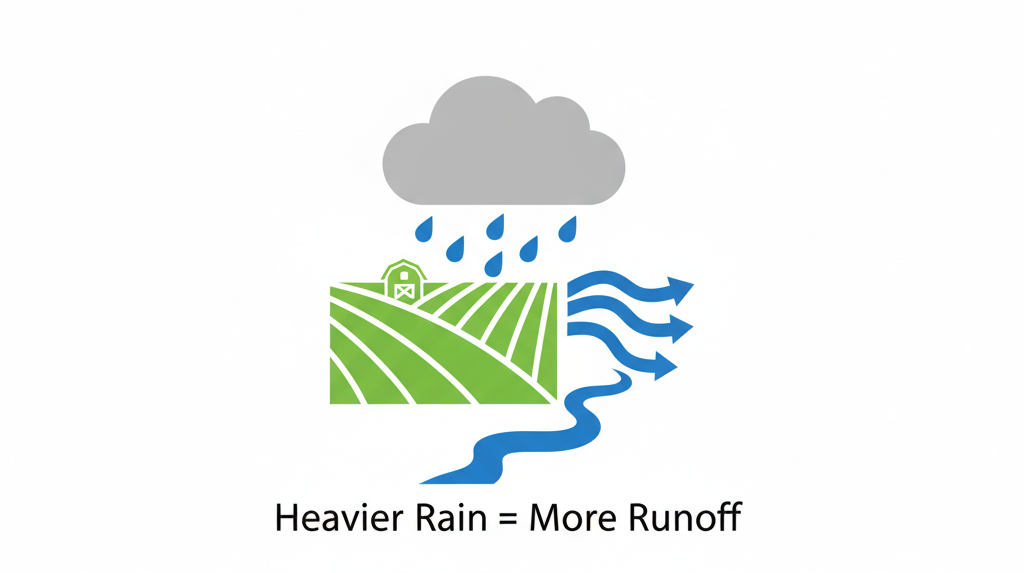
In the Midwest, climate change amplifies the frequency of rainfall, resulting in more nutrient runoff into the rivers. The Intergovernmental Panel on Climate Change found that there has been increased heavy rainfall in North America.
With heavy rain, the fertilizer is washed off the fields into streams at a quicker rate. So, Iowa’s water problem is linked to climate change, making it more urgent.
Also Read: Why The World May Be Approaching Irreversible Climate Tipping Points
Lessons From Other States
States like Minnesota have gone a notch higher in regulations on the management of nutrients. Local water districts in Des Moines have previously considered lawsuits against upstream counties for pollution control costs.
Analogous agricultural-runoff issues have been covered in the Mississippi River Basin by National Geographic. These examples suggest that the Iowa water crisis reflects a nationwide pattern.
Also Read: Mountain Ecosystems Under Pressure From Climate Change And Rising Temperatures
Why Voters Care Now
Famous floods, higher water costs, and talks about health have made water quality a regular topic. People of all political views now see clean water as important for their own health.
The water crisis in Iowa matters because it affects water at people’s taps, not just in faraway policy talks. Environmental issues become tangible and lead to increased political activity among people.
Also Read: Protecting Ocean Ecosystems Amid Pollution And Climate Change
Campaign Strategy and Messaging
Candidates in competitive districts are recalibrating their messaging to address water concerns. There are those who highlight the importance of fair regulation that safeguards farmers and families.
Others frame the Iowa water crisis as evidence of regulatory failure. Messaging clarity may determine whether water becomes a sleeper issue or a central campaign theme.
Also Read: Why Black Ice Is So Dangerous And How Climate Trends Could Affect Its Frequency
Broader Environmental Momentum
In spite of federal retreats, state and local environmental successes have been experienced throughout the country.
Methane tracking, wildlife crossing, and sustainable agriculture are examples of innovations that show policy resilience. The Iowa water crisis fits within this pattern of localized environmental accountability.
Voters are increasingly bending their votes toward pragmatism and not partisan stalemate.
Also Read: Inside Trump’s 2026 Climate Agenda: Attacks, Reversals, And Resistance
Conclusion
The Iowa water crisis is no longer a niche environmental concern confined to regulatory agencies and advocacy groups.
It has now become a fact, a voter-centered phenomenon that has the potential to alter the leadership of the U.S. House by 2026. Polls show strong support from both parties for stronger water rules, even in farming communities.
When candidates run close races, clean water could become the hidden topic that decides elections. It is not just a matter of partisan dominance, but matters of the health of the people, environmental protection, and the viability of agricultural practices in the American Midwest. In Iowa, the water running through rivers and pipes may ultimately flow into the halls of Congress.
Also Read: Climate Rollbacks After One Year Of Trump: Domestic And International Impact
FAQs
1. What is the Iowa water crisis?
The Iowa water crisis refers to rising nitrate pollution in rivers and drinking water sources, largely linked to agricultural runoff.
2. How many voters prioritize clean water?
Eighty‑five percent of voters in Iowa’s 1st District support candidates prioritizing clean water protections.
3. What is the political importance of this problem?
Two competitive congressional districts in Iowa could determine control of the U.S. House in 2026.
4. How does agriculture contribute to nitrate pollution?
Agricultural fertilizers account for approximately 80 percent of nitrates in key Iowa rivers.
5. Is climate change connected to the crisis?
Yes, heavier rainfall events linked to climate change increase nutrient runoff into waterways.
Also Read: China’s Emissions Policies’ Side Effects: Balancing Climate Gains With Emerging Challenges

0 Comments