
Ordering several styles or sizes can make an online fitting room feel effortless. The unwanted pieces disappear into a parcel, a label is scanned, and a refund follows. Yet the return is not the end of a purchase. It begins another journey through transport networks, warehouses, inspection stations, and resale decisions. That online fashion returns journey has a climate and waste footprint, but the return trip is only part of the story. A garment already carries the impacts of fiber production, dyeing, manufacturing, and its first delivery. If it never reaches another wearer, those embedded resources have produced little or no useful life.
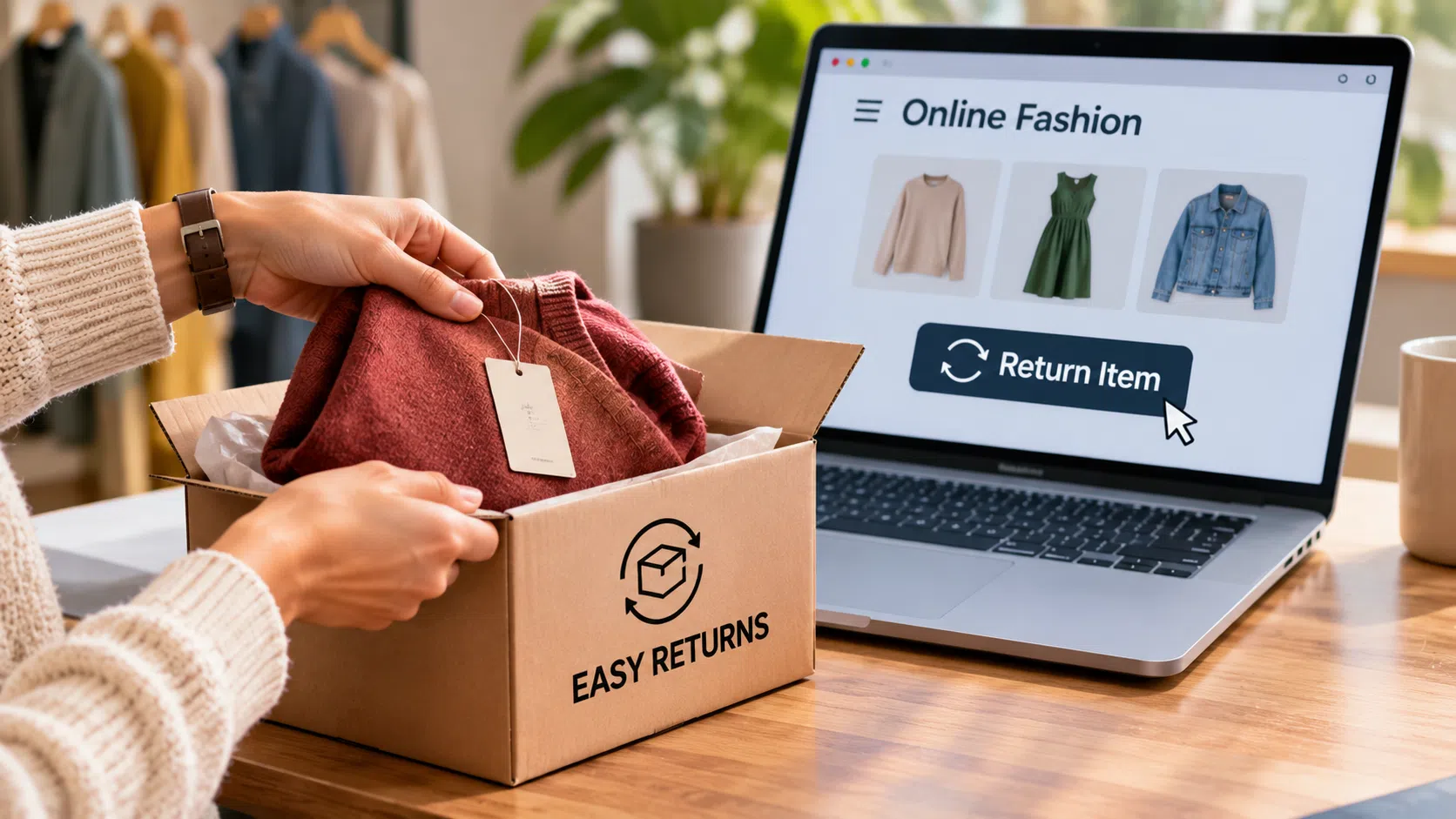
The Online Fashion Returns Journey
In retail, the route back is called reverse logistics. A returned dress may be collected from a home or parcel shop, consolidated with other packages, transported to a return center, opened, inspected, sorted, and repackaged. If approved for resale, it may then travel to a warehouse, store, outlet, or secondary-market buyer.
Every stage can require fuel, electricity, labor, and materials. Distance matters in particular. A centralized return center may improve sorting efficiency while also sending parcels hundreds of miles away. A separate car trip to drop off one package can add another layer, while a collection added to an existing delivery route may have a smaller marginal impact.
Packaging adds a visible form of waste. A shipping bag may be replaced after it is torn, labels can make a box unsuitable for direct reuse, and a resold item may need fresh protective material. The environmental balance depends on packaging weight, recycled content, reuse rates, and whether a return system keeps materials in circulation.
It is therefore misleading to say that online shopping is always worse than shopping in a store. Delivery density, vehicle type, consumer travel, and return distance can change the comparison. The UN Trade and Development analysis of e-commerce notes that collection, sorting, and redistribution increase transport activity, especially when return centers are far from customers.
Also Read: Fashion Industry Emissions Increase 14%: Apparel Impact Institute
When Products Come Back
A Value Decision
A returned garment does not have one predetermined destination. An unworn item in season may return to stock. Others can move to an outlet, liquidator, donation partner, or secondary marketplace. Products that are damaged, marked, unhygienic, out of season, or too costly to process may instead be recycled, incinerated, or sent to landfill.
The decision often reflects value as much as physical condition. Inspection, cleaning, pressing, repackaging, storage, and redistribution all cost money and take time. The European Environment Agency estimates that most returned and unsold clothing is resold or sold through outlets, yet 22% to 43% of clothing returned from online purchases in Europe is destroyed.
The Embedded Footprint
Destruction wastes more than the material in the bin or furnace. Cotton, synthetic fibers, water, chemicals, factory energy, and outbound transport have already been used before the parcel reaches its first customer. When a serviceable product never finds a wearer, replacing it requires another garment and another production cycle.
A study of more than 630,000 returned apparel items in the European Union found that 22% to 44% did not reach a secondary consumer. In its illustrative cases, the emissions associated with producing and distributing unused returns were two to sixteen times greater than emissions from post-return transport, packaging, and processing. Preserving product value can therefore matter more than optimizing one parcel journey.
Also Read: Fashion Brands Aim for Sustainable Puffer Jackets Amid Climate Concerns
Fit Information Prevents Waste
Some online fashion returns are necessary. A garment can arrive damaged, look different from its description, or simply fit a body in an unexpected way. Fair return rights protect shoppers in those situations. Sustainability efforts should focus on avoidable uncertainty rather than making customers keep unsuitable products.
Retailers can reduce that uncertainty with garment-specific measurements, consistent size definitions, clear descriptions of stretch and opacity, photographs from several angles, and reviews that explain fit. Return data can reveal repeated problems with a particular cut, color, image, or description, allowing the product page or garment itself to be corrected.
Shoppers also benefit from deciding what function and fit they need before opening several tabs. When browsing Modlily or any other online fashion site, shoppers can take current body measurements, compare them with the available product information, and examine fabric and coverage details before ordering. This does not eliminate every return, but it reduces preventable guesswork.
Ordering several sizes with the intention of keeping one may feel convenient, yet it multiplies the number of products entering reverse logistics. A more deliberate order becomes easier when retailers provide dependable information. The responsibility is shared: customers can read carefully, while sellers must make the information accurate, comparable, and easy to find.
Also Read: Fashion’s Climate Lag Poses Financial Threat, New Report Finds
Build a Lower Return System
A lower-impact system starts before checkout. Retailers can identify high-return products, improve descriptions, test sizing tools, and avoid incentives that encourage speculative baskets. Charging for every return or shortening deadlines is not a complete environmental strategy. Restrictive policies can shift risk to customers without correcting poor information or inefficient operations.
After a return begins, regional consolidation, efficient routing, rapid inspection, and strong resale channels can shorten travel and keep seasonal goods valuable. Right-sized packaging can reduce material, while durable packaging may support reuse when collection and cleaning do not erase the benefit. A suitable option depends on the logistics network rather than a single universal material.
Customers can order deliberately, select consolidated delivery where it is offered, and avoid a separate car journey solely to return one parcel. During a home fitting, keeping tags, liners, and packaging intact improves the chance of resale. If an item must go back, returning it promptly gives the retailer more time to place it with another buyer.
The environmental impact of online fashion returns extends from the doorstep back through the supply chain. Better fit information can prevent avoidable shipments, better logistics can reduce the footprint of necessary returns, and faster resale can preserve the value already invested in a garment. A fair return system can remain convenient without treating clothing as disposable.
Also Read: The Hidden Environmental Cost Of Fast Fashion: One Pair Of Jeans Uses 7,500 Litres Of Water

0 Comments