
Recent research has uncovered concerning tendencies regarding the critical systems that maintain the Earth’s temperature, with far-reaching impacts on climate stability. The study, titled Low Latency Carbon Budget Analysis, reveals a large decline of trees and land carbon absorption in 2023 and highlights that one of the planet’s primary cooling mechanisms—carbon dioxide (CO2) absorption by trees and land—had a dramatic reduction last year.
According to reports, natural carbon sinks absorbed essentially no CO2 in 2023. Trees regulate the Earth’s climate by absorbing CO2, which helps to chill the globe. However, this process is decreasing, raising concerns about the resilience of terrestrial ecosystems. Another important cooling process involves zooplankton, which rise to the ocean at night to graze on microscopic algae, eliminating millions of tonnes of carbon from the atmosphere annually. These two mechanisms, when combined, assist in moderating growing CO2 levels in the atmosphere. However, the study found that these natural carbon sinks are unstable.
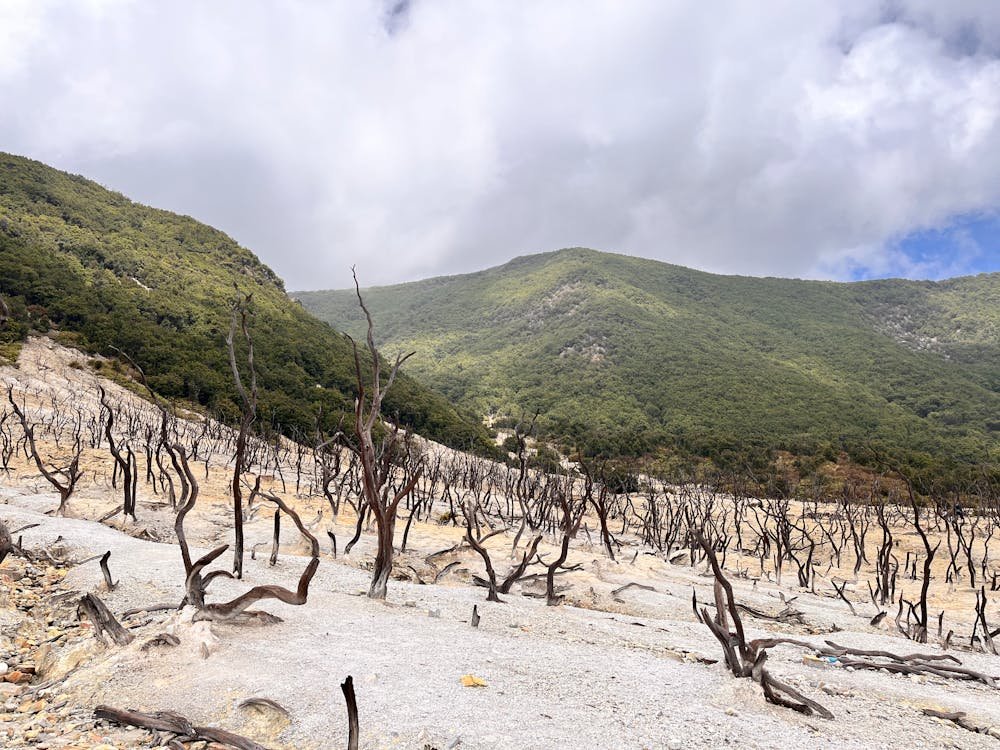
Record CO2 Growth and Decline in Carbon Sinks
The research showed that the CO2 growth rate in 2023 was 3.37 ± 0.11 parts per million (PPM) at Mauna Loa, Hawaii—86% greater than the previous year and the highest rate measured since 1958. This rise in CO2 levels indicates a significant weakening of both terrestrial and ocean carbon sinks. The study raises questions about why and where this dramatic reduction occurred, implying that these natural systems’ ability to absorb carbon quickly declines.
Although worldwide CO2 emissions increased by only 0.6 ± 0.5% last year, the collapse of land carbon sinks is a matter of concern. The report stated that it is too early to determine if this is a permanent shift or an isolated incident. The vast flames that raged across the Northern Hemisphere in 2023 may have significantly influenced the land sink’s ability to function.
Speaking at an event during New York Climate Week in September 2023, Johan Rockström, head of the Potsdam Institute for Climate Impact Research, noted that cracks are forming in Earth’s resistance. “We’re seeing massive cracks on land—terrestrial ecosystems are losing their carbon store and carbon uptake capacity, but the oceans are also showing signs of instability,” he said. These findings mark the situation’s urgency, as land and ocean sinks play key roles in climate regulation.
Also Read: Ukraine’s Forests Destroyed By War: Shelling And Fires Leave Vast Devastation
The Unexpected Pace of Carbon Sink Decline
Although it is commonly established that nature’s carbon sinks will lose effectiveness over time owing to climate change, the rate at which these changes occur has surprised academics. Andrew Watson, the head of Exeter University’s marine and atmospheric research group, commented on this unexpected development: “Overall, models agree that both the land sink and the ocean sink will diminish due to climate change. However, it is unclear how quickly this will occur. The simulations suggest that this will happen gradually over the next century.”
This abrupt decline in the land sink’s ability to absorb CO2 shows that the effects of climate change are growing quicker than expected. The planet’s natural systems are under strain, and data from 2023 clearly warns about the possibility of more severe disturbances in the future.
The study emphasises that while it is too early to say if this decrease in carbon absorption will become a regular occurrence, the results show that Earth’s natural systems are becoming more fragile. As researchers continue to watch these patterns, the findings highlight the importance of dealing with the root causes of climate change and safeguarding the planet’s critical trees and land carbon absorption capacity. Without these important processes, the Earth might continue to warm even quicker, potentially causing disastrous repercussions for ecosystems and human existence.
Also Read: West Rajasthan’s Thar Desert Experiences 20 Years Of Above-Normal Rainfall

0 Comments