
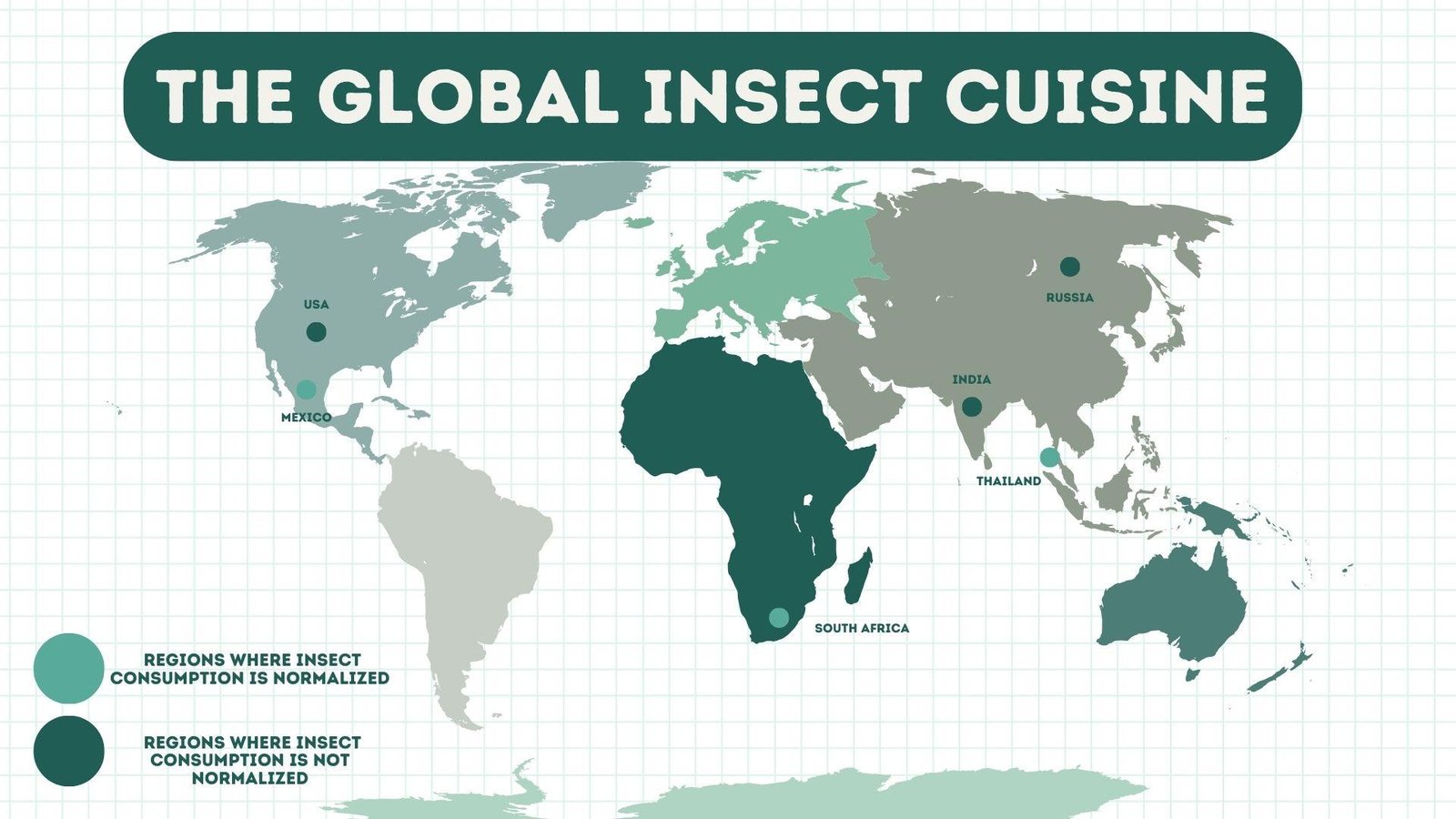
Insect cuisine refers to the practice of consuming insects as food. It is a centuries-old tradition in many cultures and is gaining recognition worldwide as a sustainable and nutritious alternative to traditional protein sources. According to the Food and Agriculture Organization (FAO), over 2 billion people regularly include insects in their diet. Insect cuisine is especially prominent in Asia, Africa, and Latin America.
Countries like Thailand, Mexico, Uganda, and Japan incorporate insects as key ingredients in traditional recipes. These insects come along with added nutritional benefits. Insects are a nutritional powerhouse, offering high protein content. They provide iron, zinc, magnesium, and B12. Unlike meat, insects contain chitin, a type of dietary fibre beneficial for digestion.
Environmental Impact
Insect farming, in comparison to livestock farming, is significantly more sustainable. They use 80% less land usage compared to cattle farming and 99% lower water consumption (FAO, 2021). Producing insects emit less greenhouse gases than livestock farming.
A Journey Through Traditional Practices
Regions and cultures across the globe embrace insect cuisine. Asia is a centrality in this. In Thailand, for example, fried crickets are a street food staple and are high in protein. Silk moth pupae are stir-fried or boiled and often served with spices.
In Japan, a dish called Inago, made of locusts simmered in soy sauce and sugar, is a popular snack in rural areas. Beekeepers in Japan also consume bee larvae as a delicacy.
On the other hand, South Africa is famous for its Mopane worms and caterpillars of the Emperor Moth, which are often dried or stewed with tomatoes and onions. They are rich in protein and widely sold in local markets.
In Uganda, grasshoppers (locally called nsenene) are fried with salt and enjoyed as snacks. Termites are roasted or made into flour for bread.
Latin American countries such as Mexico are known for delicacies like Chapulines (spiced grasshoppers), Often seasoned with chili, lime, and garlic, served as a snack or taco filling, and Escamoles ant larvae harvested from agave plants served in butter or as a topping for tortillas.
In Colombia big-bottomed ants (Hormiga Culona) are roasted and eaten as snacks, believed to be an aphrodisiac.
Australians, specifically Indigenous Australians, have a plethora of dishes, such as Witchetty Grubs, the larvae of moths, which are traditionally consumed raw or roasted as a high-protein food source. Honey ants, known for their sweet, nectar-filled abdomens, are also a delicacy.
Also Read: Impact Of Expiry Dates On Food Waste: Myth Vs. Reality
Cultural Significance and Ceremonial Use
Insects have been known to be used in Africa by certain tribes to incorporate locusts into ceremonies as symbols of abundance and fertility.
Mopane worms are not only a staple food but also a source of income and social cohesion for women in rural communities. Meanwhile, in Latin America, insects like chapulines are often prepared during festivals and traditional celebrations in Oaxaca, Mexico. Escamoles were considered a delicacy in Aztec cuisine and continue to hold cultural importance.
Indigenous Australians have consumed witchetty grubs for thousands of years, connecting their diet with ancestral traditions and land stewardship.
Modern Innovations in Insect Cuisine
Insects are the food of the future. It is a sustainable solution to tackle food security and environmental concerns. With the global population expected to reach 9.7 billion by 2050, insects are seen as a sustainable solution to address food shortages.
Insect cuisine has positive environmental benefits. Insects emit less greenhouse gases compared to traditional livestock like cows and pigs. Farming insects also requires less land and uses significantly less water, making it a viable option for densely populated or arid regions.
One kilogram of crickets requires 1 liter of water, compared to 15,000 liters for beef. Insects have a high feed-to-protein conversion rate; crickets can convert 2kg of feed into 1kg of protein, compared to cattle, which require 8kg of feed for the exact protein yield.
This cuisine also acts as a supporting aid for a circular economy. Insect farming can repurpose food waste, as insects like black soldier fly larvae thrive on organic byproducts, reducing waste and promoting a circular food system.
Innovative food products have also been developed recently, and there has been increased curiosity about insect cuisine. High-protein cricket flour is used in protein bars. Several brands like Exo and Chapul offer cricket-based protein bars for health enthusiasts. Pasta and baked goods have also joined the club; cricket flour is a gluten-free alternative for making pasta, cookies, and bread.
Gourmet edible insect dishes have been a novel experience in high-end restaurants across Europe, and the U.S. Ant caviar is an exemplary dish created by Danish chef René Redzepi, who serves this delicacy at Noma, one of the world’s top restaurants.
Nutritional Powerhouse: Why Eat Insects?
The nutritional breakdown of edible insects reveals high protein content. Many edible insects, like crickets, contain 60-70% protein, significantly higher than beef or chicken. Grasshoppers and silkworm pupae also boast high protein levels, making them a valuable dietary addition.
They are rich in healthy fats. Eating insects is an excellent source of unsaturated fats, including omega-3 and omega-6 fatty acids, which are crucial for brain health and heart function.
They are also packed with micronutrients such as iron crickets, which contain more iron than spinach, making them a solution to combat iron deficiency. Zinc is essential for immunity; zinc levels in insects rival those of oysters. Vitamins such as high concentrations of B12, riboflavin, and pantothenic acid support energy production and neurological health. Fibre is unique to insects; their exoskeletons contain chitin, a form of dietary fibre that promotes gut health.
Overcoming the “Yuck” Factor
Psychological barriers to insect consumption range from cultural stigma experienced in Western cultures, where insects are often associated with pests or dirt, making the idea of eating them unappealing. This stigma contrasts with many Asian, African, and Latin American countries where insects have been a traditional dietary staple for centuries.
The evolution of perception historically shows that insects were seen as emergency food for survival during famines or resource shortages. As awareness of sustainability and nutrition grows, insects are being rebranded as a valuable food source, especially in eco-conscious communities.
Also Read: What Is The Desert Ecosystem Food Chain?
The “Unfamiliarity Factor”

Consumers often reject unfamiliar foods. The visual appearance of insects as food (e.g., whole crickets or mealworms) can trigger disgust. Studies suggest that presentation matters and people are more likely to try insects when they are processed or hidden in familiar forms like flour or protein bars.
Fun Fact: The average person eats 500g of insects annually unknowingly through processed foods!
In Conclusion
Insect cuisine is a snapshot of the global tapestry. Insect cuisine is not just a food source but a reflection of the world’s diverse traditions. Celebrating these practices fosters cultural appreciation and preserves culinary heritage. Embracing insect cuisine can broaden your palate and build a greener, more sustainable planet while enjoying their nutritional benefits.
Also Read: 14 Surprising Foods That Contain Animal Products

0 Comments