
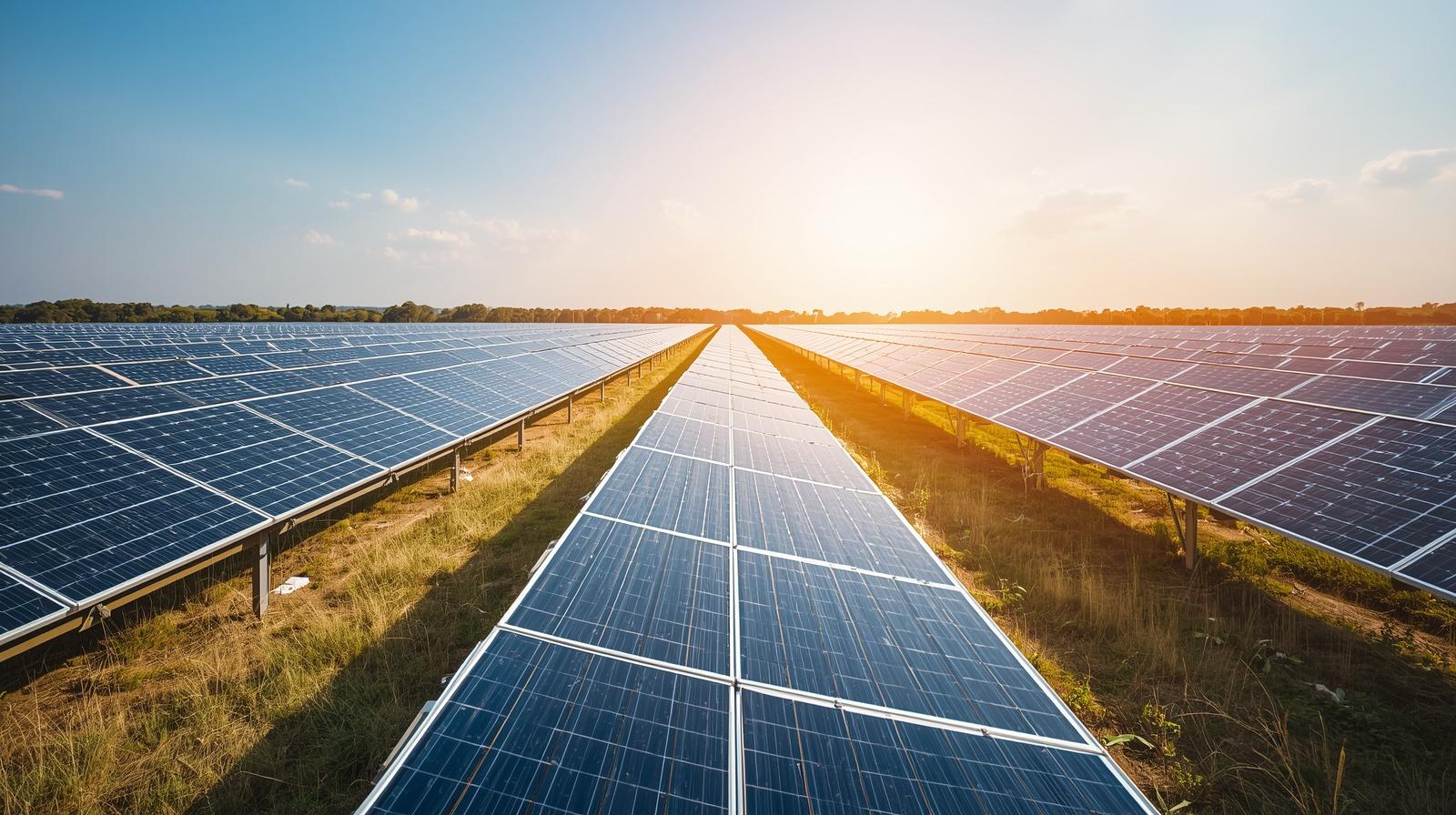
India’s installed solar capacity nears 136 GW, shared by Union Minister for New and Renewable Energy Pralhad Joshi during the International Solar Alliance’s Foundation Day in New Delhi. India’s really stepped up when it comes to renewable energy, and solar power is right at the heart of it. Hitting this milestone shows just how serious India is about clean energy, pushing new technology, and tackling climate change, which also puts India firmly on the map as a heavyweight in the global solar scene.
What Key Milestones Mark India’s Solar Energy Growth?
- 136 GW Capacity Achieved: India has achieved a significant milestone by developing an installed capacity of close to 136 GW of solar power capacity, which accounts for almost 50% of the country’s overall renewable energy capacity developed over the last decade.
- Strong Policy Support: Strong policies have helped the solar energy sector achieve a significant growth trajectory, which has helped India achieve the status of being among the top five countries producing solar energy.
- Global Cooperation via ISA: The International Solar Alliance, formed by Prime Minister Narendra Modi and France during the COP21 Paris Climate Conference 2015, now comprises more than 120 countries working together to promote the adoption of solar energy.
- Rapid Adoption of Solar Energy Globally: It took the global community 25 years to achieve the installation of the first 1,000 GW capacity. However, the next 1,000 GW capacity is expected to be achieved much faster.
Also Read: Conflict’s Carbon Cost: Israel-Gaza War Produced 33 Million Tonnes Of CO₂ Equivalent
Which are the Government Schemes Promoting Solar Power?
- PM Surya Ghar-Muft Bijli Yojana: This flagship programme is aimed at encouraging people to install solar panels on their rooftops and generate their own electricity, thus reducing their electricity bills as well as their carbon footprint.
- PM-KUSUM Scheme: This programme allows farmers in the country to install solar-powered irrigation pumps, thus reducing their diesel usage and consequently their agricultural power expenses.
- Solar Power in Rural Regions: Solar power is helping to provide power in rural regions where power infrastructure is still in its nascent stages.
- Renewable Power Targets in India: The country is targeting a capacity of 500 GW of non-fossil power by 2030, with solar power leading in terms of capacity addition.
Also Read: Fuel Prices Likely To Stabilize Within Two Months, Says John Catsimatidis
Why Is Solar Energy Becoming Central to the Global Energy Transition?
According to experts from the International Solar Alliance (ISA), investments into solar energy projects are being made in the countries of Africa, the Asia-Pacific region, Latin America, and the Caribbean to meet the growing need for electricity and reduce greenhouse gas emissions. The ISA’s Director General, Ashish Khanna, shared that member countries now have support from multiple international organizations, NGOs, financial institutions, and young solar resources, which together will help accelerate solar technologies’ deployment in developed nations.
By supporting clean and renewable energy policies, increasing international cooperation on clean energy projects, and attracting additional private sector investment, solar energy is anticipated to be the dominant form of renewable energy growth in the future. India’s installed solar capacity nears 136 GW, clearly demonstrating how India is rapidly progressing towards a more sustainable, cleaner energy future.
Also Read: India’s LPG Crisis: Electric Cooktop Sales Jump 30X As Businesses Struggle

0 Comments