
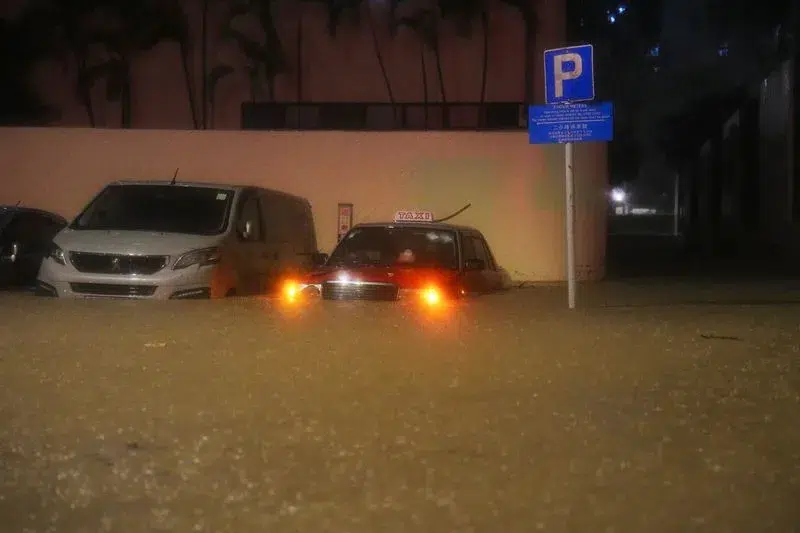
The Hong Kong Observatory issued its highest “black” rainfall warning, which remained in place until 11 a.m. on August 5, 2025, after heavy rains pummeled Hong Kong. Schools, courts, and non-essential hospital services have been closed due to the severe storms, which come after fatal flash floods in Guangdong province in Southern China that killed five people. Hong Kong issues the highest weather warning as the city experiences significant floods and traffic congestion due to up to 90mm of rain per hour and around 10,000 lightning strikes in one hour, highlighting the growing impact of extreme weather occurrences in the area.

Source: Yahoo News
What Does the Black Rainstorm Warning Mean for Hong Kong?
Source: Yahoo News
When rainfall surpasses 70 mm per hour, Hong Kong issues the highest weather warning, the black rainstorm warning, which is triggered, indicating a high risk of flooding and landslides. The Hong Kong Observatory released it on August 5, 2025, and due to dangerous circumstances such as traffic jams and road flooding, it led to extensive safety precautions. To prevent hazards like flash floods, which recently claimed five lives in nearby Guangdong, residents were asked to take cover right away. While emergency wards remained open, the warning resulted in the closing of non-essential hospital services, including outpatient clinics, courts, post offices, and schools. Two hours after the warning was canceled, the judiciary was scheduled to reopen.
The Hong Kong Stock Exchange continued trading whatever the weather late last year, reflecting a policy change that guarantees economic continuity. Hong Kong Disneyland prioritized safety by operating with fewer services. Hong Kong’s airport has continued to operate normally, though some flights experienced delays. Passengers were advised to proceed to the airport only after confirming their flight schedules.
This response highlights the city’s adaptable strategies to deal with extreme weather, which is becoming more frequent as a result of climate change, while striking a balance between vital operations and public safety.
Also Read: Meghalaya Faces 56% Rainfall Deficit Amid Monsoon Shift
How Are Extreme Weather Events Impacting the Region?
With Guangzhou also receiving 60–90 mm of rain per hour, the intense rains in Hong Kong are a part of a larger pattern of extreme weather that is impacting Southern China. Moreover, half of Hong Kong’s 2,220 mm of annual rainfall falls during the region’s rainy season, which usually lasts from April to September. However, recent occurrences show that the intensity is rising, most likely due to climate change.
Typhoon Haikui was responsible for the 2023 Hong Kong rainstorm, which smashed records with 158.1 mm of hourly rainfall and resulted in extensive floods and landslides. With more than 1,300 rescuers dispatched in Guangdong after recent flash floods, these incidents put a burden on emergency services and infrastructure. To lessen future effects, improved weather monitoring and early warning systems—such as those the Hong Kong Observatory implemented in 2024—are essential.
Also Read: 12000 Years Of Climate History Discovered In Alps Ice Core

0 Comments