
Over the past decade, a concerning trend has emerged in the world of infectious diseases: the spread of a deadly flesh-eating fungus is no longer a rare occurrence. It’s adapting to a changing climate, developing resistance to medications, and expanding its reach across continents. This shift from a localized issue to a global health problem has prompted international organizations, researchers, and medical facilities to re-evaluate their strategies for diagnosis, treatment, and monitoring.

Why This Fungus Is So Dangerous
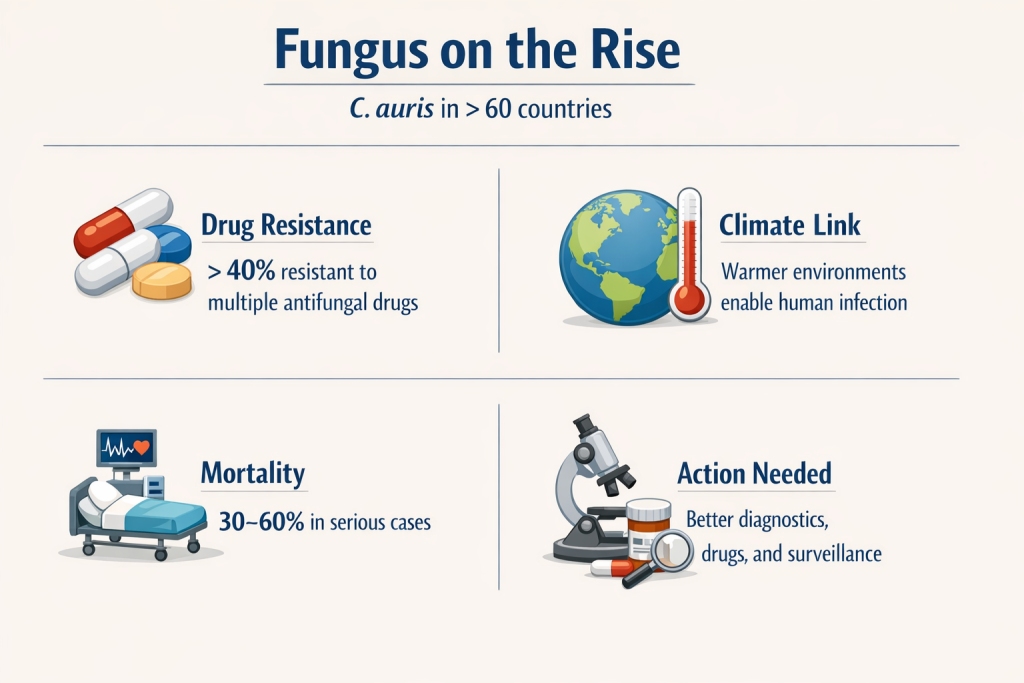
One deadly flesh-eating fungus driving this crisis is Candida auris, a multidrug-resistant pathogen that was first identified in Japan in 2009. Since then, it has spread to over 60 countries, causing difficult-to-treat infections, especially in hospitals and healthcare settings.
The global spread of this fungus poses several dangers:
- Multidrug Resistance: Certain strains of C. auris have become resistant to multiple major antifungal medications, severely limiting treatment options.
- High Mortality Rates: Invasive infections caused by this fungus can lead to systemic diseases with mortality rates anywhere from 30% to over 60% in vulnerable groups.
- Misdiagnosis and Persistence: Standard laboratory procedures can sometimes misidentify C. auris, which can delay proper treatment. It can also survive on surfaces and medical equipment, contributing to its spread within healthcare facilities, which makes it even more concerning.
Also Read: Harmful Fungus In Bat Faeces Used As Fertilizer Linked To Deaths Of Two Marijuana Growers
Role of Climate Change in Fungal Disease Expansion
The way this deadly flesh-eating fungus interacts with climate change is very important. Fungi typically can’t survive at human body temperatures. But as global temperatures increase, these organisms are adapting, allowing them not only to survive but also to thrive and cause illnesses in humans.
The Centers for Disease Control and Prevention (CDC) suggests that climate change may be altering the basic biology of fungi, allowing previously harmless environmental species to become pathogens capable of infecting humans. Rising temperatures also affect fungi populations in agriculture, creating resistance as a result of the widespread use of fungicides in crops. This climate-related spread isn’t exclusive to Candida auris. Other fungi, like Aspergillus fumigatus, are expanding their range and causing disease in humans.

Also Read: Infectious Animal Diseases Expanding Globally, Nearly Half Pose Zoonotic Risk: WOAH Report
How Drug Resistance Is Making Things Worse
The drug resistance makes the global spread of this fungus even worse. Drugs that once worked are now becoming less and less useful. Data shows that over 40% of C. auris cases are resistant to at least two types of antifungal drugs, and roughly 4% are resistant to all three.
The World Health Organization (WHO) has classified C. auris and other fungal pathogens as priority pathogens, clearly stating the need for new medications and diagnostic tools. Studies suggest that the fungicides used in agriculture may be contributing to this problem by triggering the selection of resistant characteristics that ultimately affect clinical settings.
Key global trends related to Candida auris infections and their drug resistance:
| Metric | Statistics | Source |
|---|---|---|
| Countries reporting C. auris | Over 60 | WHO & CDC |
| U.S. reported cases in 2025 | About 7,000+ | CDC |
| Resistance to ≥2 antifungal classes | Over 40% | PubMed/Systematic Review |
| Mortality estimate in invasive cases | 30–60% | Health reports |
| WHO priority pathogen listing | Yes | WHO FPPL |
Note: These numbers can change based on location and reporting practices; the table shows the general scale of the problem.
Also Read: The Spread Of Chronic Wasting Disease: A Growing Threat To Cervids
Bridging the Gaps: Surveillance and Research
There are several gaps in surveillance and testing. Surveillance systems for fungal infections aren’t as advanced as systems for bacterial and viral pathogens. Fungal infections often go unnoticed until the person develops severe symptoms because tests are slower, more costly, and harder to get in some countries.
To improve the situation, scientists are pushing for:
- Better diagnostic tools for fungal infections
- More widespread monitoring in hospitals and the environment
- Research into new antifungal medicines and vaccines
- Better drug management of current drugs
Some studies are testing new agents that could bypass current resistance mechanisms, which could mean future treatments. For example, Mandimycin is an agent that has had effects against resistant fungi in the lab; however, clinical trials are still pending.
Also Read: Climate Change May Fuel Global Spread Of Lethal Aspergillus Fungi, Study Finds
Conclusion
The spread of fungus is a complicated problem that involves climate change, drug resistance, and public health. Hospitals, research labs, and clinics are finding it challenging to track, diagnose, and treat these infections. Without a global response that includes improved monitoring, smarter drug choices, and treatment improvements, these pathogens will continue to spread, which puts vulnerable people at higher risk.
Also Read: Climate Inaction Could Fuel Spread Of Fungal Infections In Europe: Study
FAQs
1. What is the deadly flesh-eating fungus?
This usually refers to Candida auris, a fungus that is resistant to many drugs and can cause serious infections, especially in people with weak immune systems and in healthcare facilities.
2. Why is it spreading globally?
It spreads easily due to climate change, increasing medications, global travel, and limited monitoring.
3. Who is most at risk?
Those with compromised immune systems, like people in hospitals, ICUs, or long-term care facilities, are most susceptible to severe infections.
Also Read: Over 1000 Fungi Species Now Threatened With Extinction, IUCN Reports

0 Comments