
As cities grow, urban populations face challenges like traffic congestion, pollution, and energy shortages. But here’s a thing – to tackle these issues, cities worldwide are embracing smart technologies, sustainable planning, and data-driven governance. These “smart cities” are reshaping urban life by combining innovation, efficiency, and eco-conscious design. In this article, we will explore a global list of smart cities leading in technology, transport, and sustainability, with real-world data and examples.
What Makes a City “Smart”?
A smart city integrates technology, data, and citizen services to optimize urban living. Key features include:
Smart Transportation
It includes traffic monitoring, real-time public transit updates, and ride-sharing systems that make commuting faster and more efficient. Let’s see it through an example, like Singapore’s Area Licensing Scheme, which reduced traffic entering its CBD by 76% and boosted transit usage to 70%.
Sustainable Infrastructure
Cities implement renewable energy, green buildings, and advanced water management systems to reduce environmental impact. Here’s a striking fact: Singapore has already greened over 55% of its buildings, with a goal of reaching 80% by 2030.
Technology Integration
Use of AI and digital governance allows cities to collect data, optimize services, and make smarter decisions for urban management. Consider this: globally, cities account for nearly75% of energy use and 70% of carbon emissions.
Citizen-centric Services
Residents benefit from digital healthcare, e-governance platforms, and energy monitoring that make everyday life more convenient and connected.
And the results speak for themselves: globally, smart cities have reported up to 30% reductions in energy use and 20–25% improved traffic efficiency, according to the International Data Corporation (IDC) 2024 Smart Cities Report.
Also Read: Climate Change Adaptation Strategies For Coastal Cities: Mitigating Risks And Building Resilience
Global List of Smart Cities
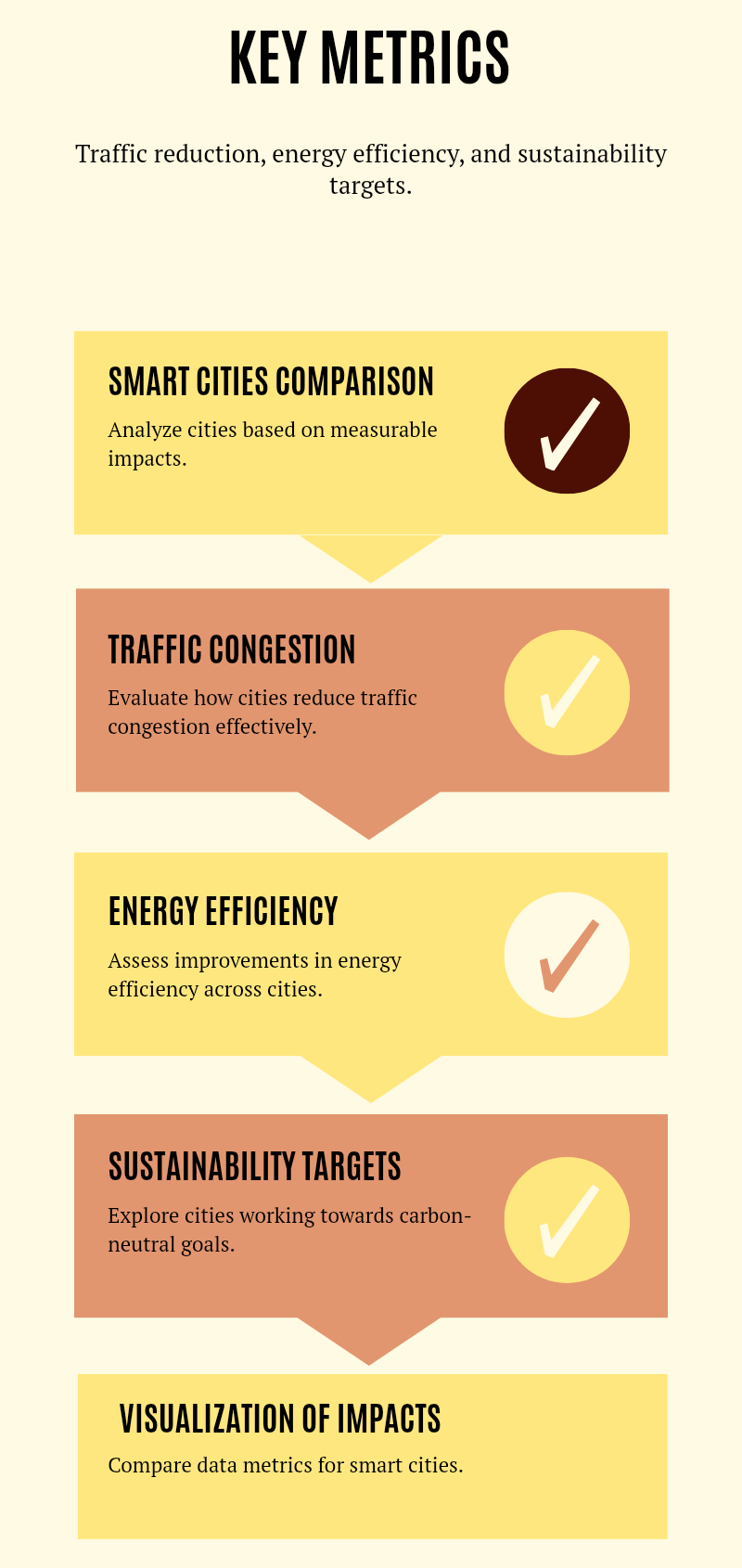
Here’s a detailed list of smart cities with notable initiatives and measurable impacts:
| City | Key Features | Measurable Impact | Sustainability Initiatives |
|---|---|---|---|
| Singapore | Smart Mobility, Driverless Buses, AI Traffic | 15% reduction in traffic congestion | 80% of buildings are green-certified (BCA Singapore) |
| Tokyo, Japan | AI traffic Management, High-Speed Rail | Commute times improved by 20% | Solar energy and waste-to-energy programs |
| Copenhagen | Cycling Infrastructure, Smart Grids | 50% citizens commute by bike | Carbon-neutral target by 2025 (UN-Habitat) |
| Barcelona | IoT Street Lighting, Pollution Monitoring | 25% decrease in energy consumption for street lights | Smart water system and renewable energy |
| Amsterdam | Smart Traffic, Open Data, Energy Efficient | 20% reduction in energy use in public buildings | Electric buses and bike sharing programs |
| Dubai | AI Public Services, Autonomous Vehicles | 30% faster emergency response times | Smart building solution and renewable energy |
| Helsinki | Digital Healthcare, Real-Time Transport Apps | Improvement in public transit efficiency by 18% | Efficient waste management, renewable energy |
| New York City | Big Data Traffic Management, Green Rooftops | 15% reduction in urban heat island effect | Electric buses, recycling initiatives |
| Seoul | Autonomous Shuttles, IoT Monitoring | 22% reduction in traffic congestion | Smart grids, eco-friendly structure |
Notice something interesting? These cities are not just talking the talk–they’re delivering measurable improvements in traffic, energy efficiency, and sustainability.
Also Read: The Role Of US States And Cities As Climate Leaders
Why Smart Cities Matter

Source: Researchgate
Smart cities improve urban life through innovation and sustainability. Key benefits include:
- Reduced congestion and travel times
- Lower greenhouse gas emissions
- Efficient energy and water use
- Enhanced citizen engagement through technology
Also Read: How Climate Technology Is Rewiring Cities For A Net-Zero Future
Challenges Facing Smart Cities
While innovation is key, smart cities face challenges:
Data Security and Privacy Concerns
Protecting citizen data is critical, as by 2030, the number of connected devices is expected to exceed 29 billion, making cities more vulnerable to data breaches if protections aren’t robust. Consider that with billions of IoT devices connected globally, cybersecurity risks are on the rise.
High Infrastructure Costs
Developing smart infrastructure, advanced technology, and green systems is a costly endeavor. Global investments in smart cities are projected to reach $327 billion by 2025, with major spending focused on transport systems, renewable energy, and digital platforms.
Digital Divide
Equal access to smart solutions isn’t enough. According to the World Bank, nearly 37% of the world’s population still lacks internet access, leaving millions excluded from digital services in emerging smart cities.
Climate Resilience
Cities must balance innovation with disaster preparedness. Here’s why it matters: the United Nations projects that by 2050, 68% of the global population will live in urban areas, many of which are highly vulnerable to floods, heatwaves, and rising sea levels. Balancing innovation with disaster preparedness is essential.
Addressing these challenges requires collaboration between governments, businesses, and citizens.
Also Read: New Study Reveals Best Times To Use Electricity To Slash Carbon Emissions
Frequently Asked Questions (FAQS)
1. Why are cities investing so much in becoming “smart”?
Cities are turning smart because traditional urban systems can’t keep up with growing populations, traffic, and pollution. In other words, by using digital tools like AI, IoT, and big data, cities can cut energy waste, manage transport better, and make life more convenient for residents.
2. Which cities are considered the best examples of smart cities today?
Singapore, Copenhagen, and Barcelona often top the list because of their strong focus on technology and sustainability. For instance, Singapore’s Smart Nation program has transformed transport and healthcare, while Copenhagen is on track to become the world’s first carbon-neutral capital.
3. How do smart cities make everyday life easier for people?
Residents benefit in simple, visible ways: shorter commutes thanks to real-time traffic updates, lower energy bills from efficient systems, cleaner air through green policies, and faster access to services like healthcare and e-governance platforms – all of which add up to a better quality of life.
Also Read: European Cities Harness AI To Boost Energy Efficiency And Cut Consumption, Says ICLEI

A very illuminating summary of the smart city concept and practice across the globe. I am impressed by the emphasis on citizen participation and call for transparency at implementation. There tends to be unfair practice where technologies are developed and the majority of operational costs borne by poorer segments of the society