
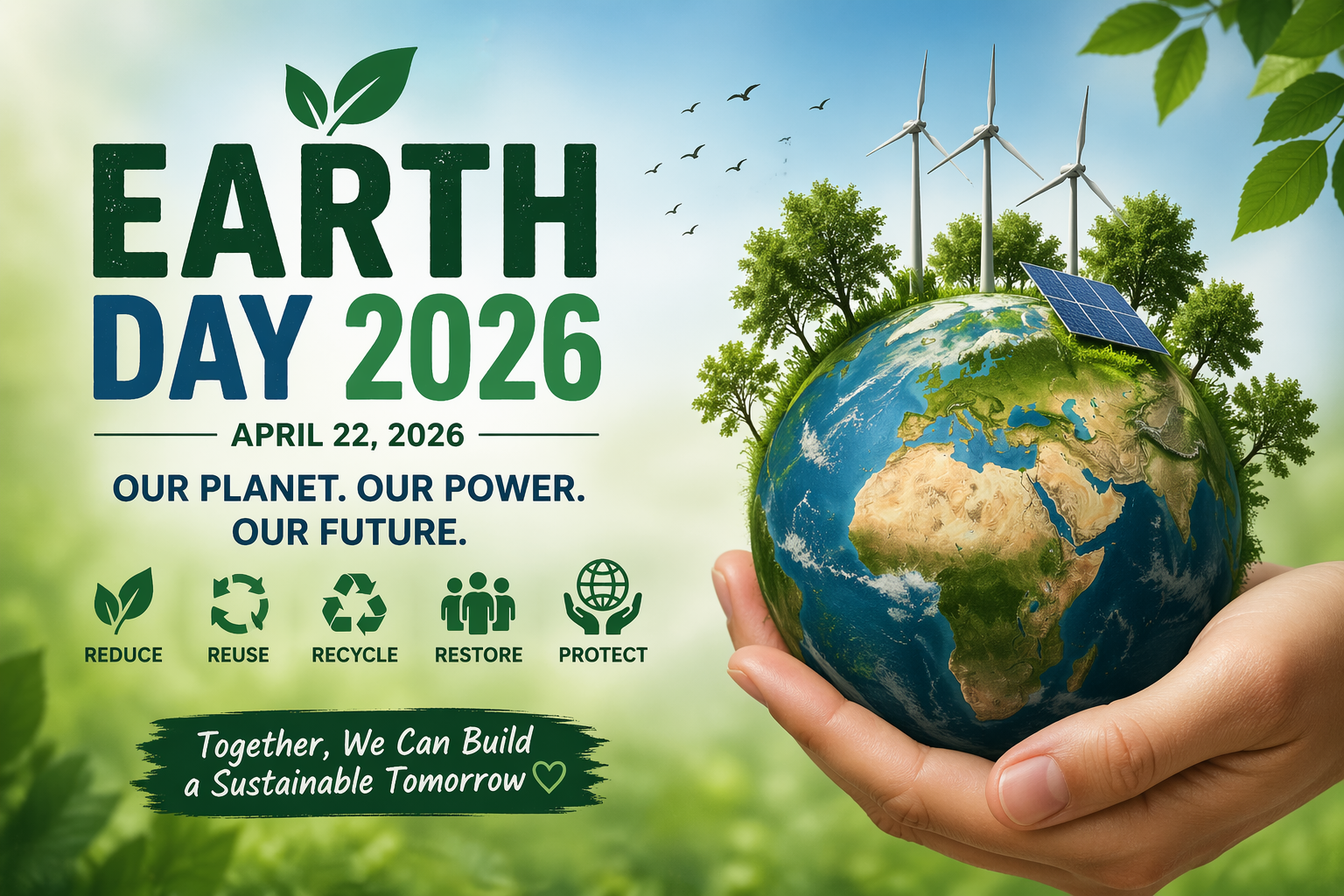
Earth Day 2026 is not just another environmental observance; It is a global reminder that the choices we make today will shape the future of the planet. Celebrated every year on April 22, Earth Day has grown into one of the world’s largest environmental movements, bringing together individuals, businesses, institutions, and governments to support sustainability and climate action.
In 2026, its relevance is even greater. As climate concerns intensify and sustainability becomes more deeply connected to policy, business, and everyday life, this day stands as an important opportunity to reflect on progress, identify gaps, and take meaningful action.
What is Earth Day and Its Theme This Year?
Earth Day began in 1970 as a public movement to raise awareness about environmental protection and the growing impact of human activity on nature. Over the decades, it has expanded into a worldwide event observed in more than 190 countries. Today, Earth Day is not only about awareness but also about inspiring practical action, influencing policy, promoting sustainable habits, and encouraging long-term environmental responsibility across communities and industries.
The theme this year is expected to center around climate resilience, clean energy transition, and sustainable living. These themes reflect the major environmental priorities facing the world today. From reducing carbon emissions and accelerating renewable energy adoption to conserving biodiversity and encouraging circular economy practices, Earth Day 2026 is likely to emphasize the need for both immediate action and long-term commitment from all sections of society.
Also Read: Warming Climate Is Altering Arctic Rivers Differently Across Regions
Why This Day is Crucial
The world is at a critical point where climate change is no longer a future concern but a current reality affecting ecosystems, economies, and communities.
Key reasons why Earth Day 2026 matters:
- Rising global temperatures and more frequent extreme weather events
- Sea level rise affecting coastal populations
- Rapid biodiversity loss and ecosystem imbalance
- Industrial emissions and urban pollution continuing to grow
- Water scarcity becoming a concern in many parts of the world
Earth Day 2026 is a reminder that awareness alone is not enough. Action is now essential.
Also Read: Climate Change’s Impact On Mangoes: How India’s Favourite Fruit Is Under Threat
Global Environmental Snapshot (2026)
Here is a quick overview of some important environmental indicators shaping discussions today:
Indicator |
Current Status (Approx.) |
Impact |
|---|---|---|
~1.2°C above pre-industrial levels |
Increased climate instability and heatwaves |
|
CO₂ Emissions |
~36–37 billion tonnes/year |
Major contributor to global warming |
Renewable Energy Share |
~30% of global electricity |
Positive growth, but more acceleration needed |
~10 million hectares/year |
Loss of biodiversity and carbon sinks |
|
Plastic Waste |
~400 million tonnes/year |
Severe land and ocean pollution |
Also Read: Emissions Fell Barely In Germany In 2025 Amid Slow Pollution Cuts In Buildings And Transport
How Businesses Are Responding
In 2026, sustainability is no longer seen as an optional initiative. It is increasingly becoming a strategic priority for companies across sectors.
Common business responses include:
- Adoption of ESG reporting frameworks such as GRI, BRSR, and TCFD
- Investment in net-zero and carbon reduction strategies
- Use of AI and analytics for sustainability tracking
- Shift toward circular business models
- Greater attention to Scope 3 emissions
Businesses are not only acknowledging Earth Day 2026 but are also integrating its values into their long-term operations and reporting systems.
Also Read: Japan’s FY2024 Greenhouse Gas Emissions Drop To Record Low
What You Can Do on Earth Day 2026
Meaningful impact does not always require large-scale action. Small and consistent efforts can contribute significantly over time.
Simple actions you can take:
- Reduce the use of single-use plastics
- Use energy-efficient appliances
- Support sustainable and local products
- Choose public transport, cycling, or carpooling
- Participate in plantation or cleanup drives
- Spread awareness about environmental issues
- Measure and reduce your personal carbon footprint
Also Read: India’s Emissions Growth Slows Significantly In 2025, Report Shows
What the Future Depends Upon?
Earth Day 2026 represents a broader shift from awareness to accountability. It highlights the growing need for collaboration between individuals, businesses, and governments to create measurable environmental change.
The future depends on:
- Individual responsibility
- Corporate leadership
- Strong public policy
- Technological innovation
When these forces work together, they can help build a more sustainable and climate-resilient world.
Also Read: The Environmental Impact Of Landslides In Mining Regions
Final Thoughts
Earth Day 2026 is not just a day to celebrate the planet. It is a day to think seriously about how we protect it.
The real issue is not only what is happening to Earth, but what we are doing in response. This Earth Day, even one positive action can matter. When millions of people take small steps together, the impact can be powerful.

0 Comments