
Many resilient cypress trees are found all over the globe in any landscape due to their ability to adapt to various ecological settings. Ranging from soaring Italian cypresses to water-loving bald cypresses, these trees provide a landscape with aesthetic beauty, prevent soil erosion, act as good habitats, and can be used for producing superior-quality timber. Their cultural significance has survived through history, in the strength and length of their ties—to symbolism for longevity and resilience. This paper discusses the taxonomy and various cultivars of cypress trees, along with their ecological benefits and various uses in current landscaping practice.
Scientific Classification of Cypress Trees
| Kingdom | Plantae |
|---|---|
| Clade | Tracheophytes |
| Class | Pinopsida |
| Order | Pinales |
| Family | Cupressaceae |
| Genus | Cupressus (and several other related genera such as Chamaecyparis, Taxodium, and Callitris) |
Types of Cypress Trees
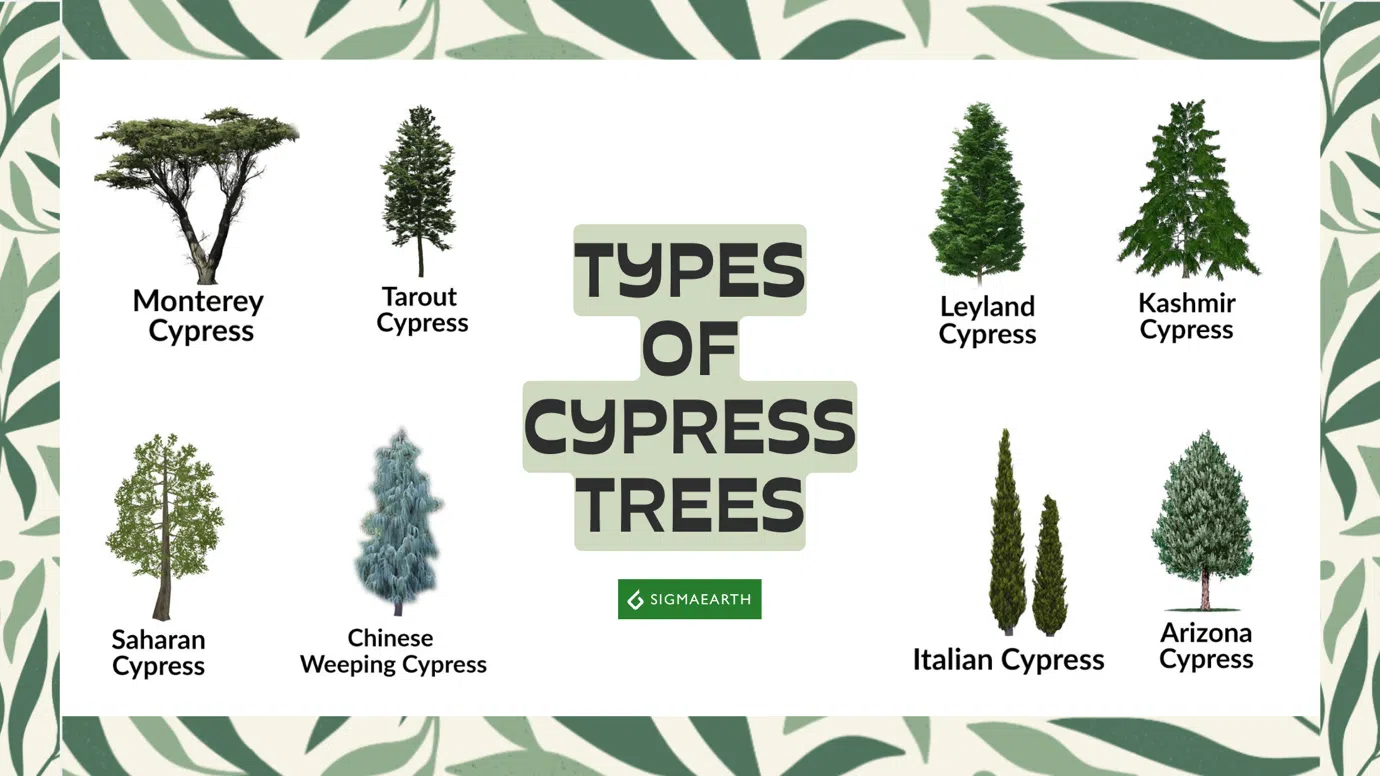
Cypress trees are diverse and found in various regions. Here are some of the most well-known types:
| Name | Nativity | Something to Know |
|---|---|---|
| Monterey Cypress (Cupressus macrocarpa) | Native to the central coast of California. | Recognized for its picturesque, wind-sculpted shape. |
| Leyland Cypress (Cuprocyparis leylandii) | A hybrid of Monterey cypress and Nootka cypress. | Popular as a fast-growing dense screen. |
| Arizona Cypress (Cupressus arizonica) | It is found in the southwestern United States and northern Mexico. | Notable for its bluish foliage and drought tolerance. |
| Italian Cypress (Cupressus sempervirens) | Native to the eastern Mediterranean region. | It is known for its tall, slender shape, making it a popular ornamental tree. |
| Bald Cypress (Taxodium distichum) | It is found in the southeastern United States. | A deciduous conifer that thrives in swampy areas and is famous for its “knees” or pneumatophores. |
| Atlantic White Cedar (Chamaecyparis thyoides) | Native to the eastern United States. | It grows in wetland areas and is valued for its durable wood. |
| Hinoki Cypress (Chamaecyparis obtusa) | Native to Japan. | It is valued for its fragrant wood and is used extensively in Japanese architecture and bonsai. |
| Sawara Cypress (Chamaecyparis pisifera) | Also native to Japan. | It is grown as an ornamental tree and is popular in bonsai cultivation. |
| Port Orford Cedar (Chamaecyparis lawsoniana) | Native to Oregon and northern California. | It is known for its aromatic wood and ornamental value in gardens. |
| Chinese Swamp Cypress (Glyptostrobus pensilis) | Native to China and Vietnam. | It adapts well to wetland conditions and is prized for its conical shape and attractive foliage. |
| Japanese Cedar (Cryptomeria japonica) | Native to Japan. | Often confused with cypresses due to their similar appearance, they are valued for their straight grain and light, fragrant wood. |
| Alaskan Cedar (Cupressus nootkatensis) | Native to the Pacific Northwest of North America. | Features soft, aromatic wood used in construction and furniture making. |
| Chinese Cypress (Cupressus funebris) | Native to China. | Known for its weeping habit and dark green foliage, it is often planted as an ornamental tree in gardens and parks. |
| Mexican Cypress (Cupressus lusitanica) | Native to Mexico and Central America. | Valued for its rapid growth and dense foliage, it is used for windbreaks and timber production. |
| Moroccan Cypress (Cupressus dupreziana) | Native to the Atlas Mountains of Morocco. | Rare and endangered species adapted to arid climates are recognized for their unique appearance and conservation significance. |
These cypress trees contribute further diversity to landscapes and highlight their adaptability to different climates and growing conditions. Each species offers unique characteristics that enhance its appeal in both natural and cultivated settings.
Benefits of Cypress Trees
Cypress trees are valued for their erosion control, carbon sequestration, and habitat creation abilities, alongside their durable wood used in construction, offering both ecological and practical benefits.
1. Environmental Benefits
- Erosion Control: Cypress trees have a good application of binding soils from erosion, especially in wetland areas.
- Carbon Sequestration: Like all other trees, cypresses absorb carbon dioxide and thus contribute a bit to reducing climate change.
- Habitat Creation: Cypress groves host many wildlife habitats, including those of birds, insects, and aquatic species.
2. Aesthetic and Landscaping
- Ornamental Value: Their varied forms, from towering Italian cypress to broad bald cypress, create distinctive landscape visual interest.
- Privacy Screens: Fast-growing species such as Leyland cypress are used for natural privacy screens.
- Windbreaks: They work well as windbreakers in gardens and farmlands.
3. Economic Benefits
- Timber Production: The woods of many cypress species are very strong, resistant to rot and inflammable, making them suitable for buildings, furniture, and shipbuilding.
- Aromatic Oils: Some species yield fragrant oils utilized in perfume and traditional medicine.
4. Cultural Significance
- Historic Interest: Cypress wood has always been used for building temples, especially in Japan, as it is durable and fragrantly sweet.
- Symbolism: Cypress trees represent immortality to some cultures and are therefore grown in many cemeteries.
Integrating cypress trees into landscaping promotes environmental sustainability while creating aesthetic appeal and functional benefits such as privacy screens or windbreaks, which prove beneficial in many outdoor settings.
Also Read: Top 5 Largest Lakes On Earth
Landscaping Uses
Cypress trees are versatile in landscaping, serving roles in hedges, windbreaks, and specimen planting. They grow in different climates and soil types and provide shade, privacy, and beautification of the outdoors.
a. Hedges and Screens:
Leyland cypress is often used to make dense hedges and privacy screens because it grows rapidly and has dense foliage.
b. Specimen Planting:
Exceedingly tall and columnar in shape, the Italian cypress often serves as a centerpiece in formal gardens and landscaping plans.
c. Wetland and Water Gardens:
The bald cypress is better situated to spotlight its special root structures, growing directly in water gardens and around the periphery of ponds and streams.
d. Bonsai:
A few species attain outsized acceptance for bonsai purposes because of their modest size and attractive foliage, of which Hinoki and Sawara cypress are prime examples.
e. Topiary and Sculpture:
Cypress trees, mainly those with dense foliage and manageable growth habits, such as Leyland cypress, are suitable for topiary and sculptured forms in a garden or formal landscape.
f. Sound Barrier Plantings:
Tall and dense varieties, like the Italian cypress, intentionally planted as sound barriers along highways, urban areas, or between properties, could reduce noise pollution.
From landscape beautification in urban parks to residential garden design, cypress trees are very adaptable and offer a lot of aesthetic appeal with practical solutions for developing elegant and sustainable outdoor spaces.
Interesting Facts on Cypress Trees
From the longevity of the bald cypress to maybe over a thousand years in age to the “knees” essentially coming out of the roots of some species and having a role in water interchange and balance, a lot about the cypress tree is quite interesting.
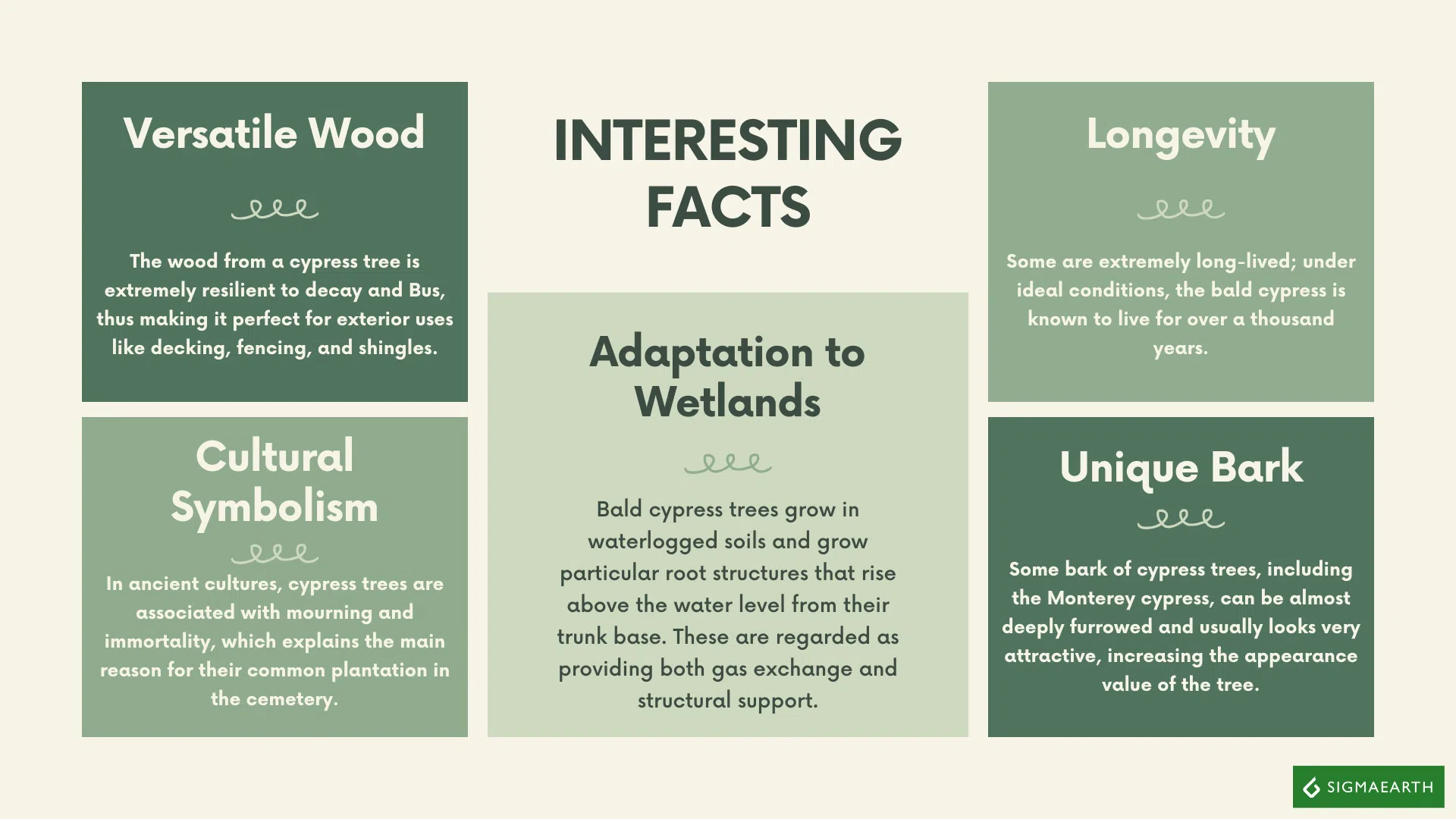
With their nifty characteristics, historical symbolism, and ecological value, the cypress tree readily reaps continuance of attraction across the globe in both landscapes and conservation efforts alike.
The cypress tree has been a strong representation of the wavelength between natural beauty and practical use in deciding which trees to use for landscaping. Together with their undemanding hospitality to diverse kinds of environments and attendant economic and environmental benefits, the trees are, therefore, quite indispensable in modern horticulture and conservation. From specimen ornamentation to privacy screening, habitat enhancement, or general beautification, cypress trees never fail to enhance our landscapes while maintaining their historic and cultural integrity. Safeguarding the diversity and resilience of cypress is the way forward for generations to a sustainable and beautiful landscape.
Also Read: Role Of Forests In Mitigating Climate Change

0 Comments