
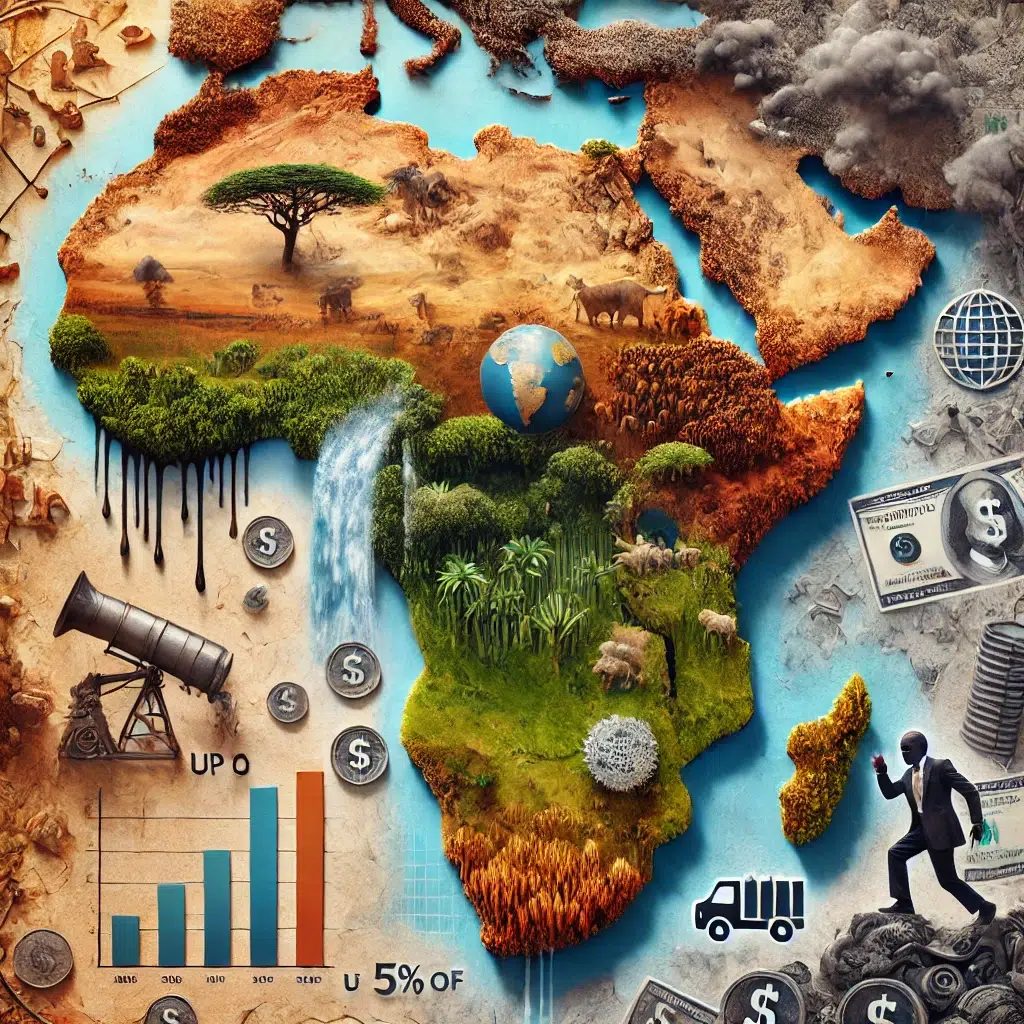
According to UN climate chief Simon Stiell, Africa is losing up to 5% of its economic output due to global warming. He advocated for more funding to assist African nations in adapting to climate change, as climate change costs Africa up to 5% of GDP. Africa emits considerably fewer emissions than the industrialised world but receives barely 1% of global climate financing each year.
The impact of global warming is that climate change costs Africa up to 5% of GDP, according to the United Nations climate chief, who called for additional investments to help them adapt to the changing environment. The 54-nation continent, which has suffered the brunt of climate change despite emitting much fewer pollutants than the developed world, receives only 1% of annual global climate money.
“The climate crisis is an economic sinkhole, sucking the momentum out of economic growth,” said Simon Stiell, executive secretary of the UNFCCC, speaking to African environment ministers in Abidjan, Ivory Coast.
African nations and climate negotiators discuss alternative tactics at a pre-COP29, or Conference of the Parties, preparatory conference in the West African country.
Although the continent has recently attracted new investors in climate mitigation and adaptation initiatives, African government officials claim it receives only a tiny share of the $100 billion in global investment.
According to officials, that is a drop in the ocean of the $1.3 trillion required; who needs to specify when the sum will be needed? “An epidemic of underinvestment is thwarting Africa’s vast potential to drive forward climate solutions,” Stiell informed the audience.
According to Stiell, the required investments include $4 billion each year to eradicate the continent’s use of traditional cooking fuels, such as wood, which contributes to greenhouse gas emissions.
“Of the more than $400 billion spent on clean energy last year, only $2.6 billion went to African nations,” he said.
Climate change has been blamed for protracted droughts and catastrophic flooding across Africa, hampered food production, raised commodity prices, and exacerbated hunger.
Stiell stated there are growing calls for Africa to secure additional climate financing in the run-up to COP29 in Baku, where states will seek agreement on new international climate finance goals.
“We must use innovative financing solutions for adaptation without exacerbating debt burdens,” said Hanan Morsy, chief economist of the United Nations Economic Commission for Africa (UNECA), during a climate finance conference last week.
She stated that such ideas include debt refinancing, swaps, and carbon markets.
Also Read: Over 520 Million Saplings Planted Under Ek Ped Maa Ke Naam Campaign: Bhupender Yadav

0 Comments