
$25.6 billion invested in India’s EV shift since 2020, which comes from manufacturers ramping up their own production, government incentives, subsidies, and building out charging stations, but it’s only about 18% of what India needs to actually hit its 2030 electrification targets. The gap is big, and if India can’t close it, those climate and mobility goals start to look less like a plan and more like a wish. These numbers highlight the three most essential foundations of the Indian EV market : the production capacity, consumer support, and charging infrastructure, but also indicate that the current investment is nowhere near sufficient to tap the full market potential.
Inside the Investment: What the Numbers Reveal
$25.6 billion invested in India’s EV shift, with manufacturing capital accounting for the bulk of realised investment, especially from companies making the vehicles themselves, putting in their own money and relying less on outside investors. The real action is happening with two-wheelers and three-wheelers, with three-wheelers alone having grabbed nearly 78% of all the vehicle manufacturing investment between 2020 and 2025.
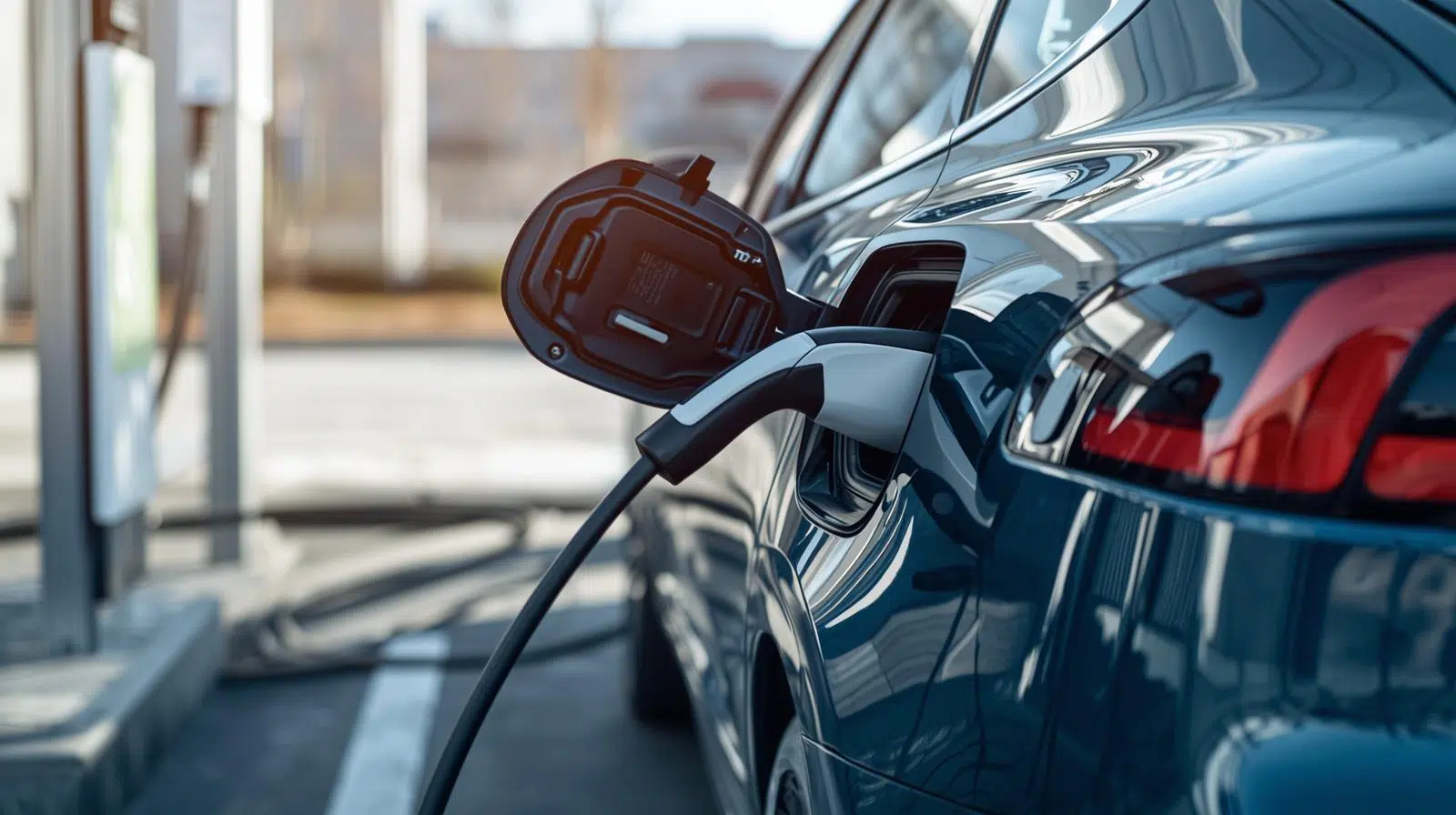
But while the vehicles are rolling out, the charging infrastructure just isn’t keeping up. Right now, less than 10% of the investment needed for charging stations by 2030 is in place. If people can’t charge up easily, it’s going to be tough to get everyone on board with going electric.
| Investment Segment | Amount Deployed (2020–25) | Estimated Required by 2030 |
|---|---|---|
| EV Manufacturing | The majority share of ₹2.23 lakh crore | Part of ₹12.5 lakh crore total |
| Public Subsidies & Incentives | Moderate share | — |
| Charging Infrastructure | ~9.6% of the required | ₹20,600 crore (~$2.36 billion) |
| Total EV Investment | ₹2,23,119 crore ($25.6B) | ₹12,50,000 crore (~$143B) |
Also Read: Plug-In Hybrid Electric Vehicles Emit Nearly As Much Pollution As Petrol Cars, Report Finds
Why the Investment Falls Short
Even being a data success story so far, the $25.6 billion invested in India’s EV shift only captures a moment in time, with nearly 82% of the investment needs still pending. The reasons are:
1. High Rates of Borrowing
Commercial EV loans have interest rates ranging from 15-33%, which can often nullify the overall cost of ownership advantage of EVs and slow down demand from the consumer and fleet sides. This is because of the lenders’ concerns regarding battery degradation, residual values, and usage risks, the perimeter issues of this new industry.
2. Dependence on Internal Sources
The OEMs are largely dependent on their retained earnings and not on external capital markets, which helps to improve their strategic independence, but it also slows down the growth and pace of expansion.
3. Charging Infrastructure
The charging infrastructure in the Indian EV market has improved from a mere 5,200 units in 2020 to nearly 39,500 units, but this growth still lags far behind what’s needed for mass electrification.
Also Read: Commercial Electric Vehicles As A Strategic Lever For ESG And Operational Excellence
EV Adoption and Policy Landscape
Government initiatives have played an important role in encouraging early growth; more than ₹ 18,000 crore has been disbursed under various programs to promote EV adoption. The Faster Adoption and Manufacturing of Hybrid and Electric Vehicles (FAME) is a government-sponsored program designed to encourage EV adoption.
However, the focus is shifting away from subsidies and towards developing a mature market. The substantial decrease (over 80% reduction) in the electric two-wheeler purchase subsidy from fiscal year 2022-2023 to 2025 reflects the government’s plan to develop self-sustaining industrial sectors rather than to continue relying on subsidies.
India’s 2030 targets for electrifying 30% of passenger vehicles, 70% of commercial vehicles, 40% of buses, and 80% of two- and three-wheeled vehicles demonstrate commitment and urgency.

Also Read: UAE Shifts Gears To Lead The Middle East’s Electric Vehicle Revolution
A Strategic Financing Blueprint for the Future
An array of new financial instruments and new partnerships needs to be created and developed in order to unlock funds for the EV market. Some examples of potential measures include:
- Integrated financing platforms that provide EV financing (credit guarantees, residual value protection, battery as a service, co-lending structures, etc).
- Development banks (like SIDBI for MSME/small fleet and IIFCL for larger, commercial entities) will play a role in securing a risk-sharing framework for the EV market.
- Carbon finance and setting up securities-backed revenue to attract private institutional investors.
These new systematic innovations would help reduce borrowing costs to the 8%-12% range, thereby making Electric Vehicles (EVs) more affordable and accessible for consumers and businesses.
Also Read: Maintenance Tips For Your Electric Vehicle: Extending Battery Life And Performance
Shaping a Viable EV Future
India’s push toward electric vehicles is already underway; just look at the $25.6 billion invested in India’s EV shift, but still, there’s a long way to go, and the money invested so far isn’t nearly enough to meet what’s needed by 2030. To really get there, India needs smarter financing strategies, broader market involvement, and a bigger dose of investor trust.
Hitting those electrification targets will take well-designed policies, solid financial models that share risk, and a lot more investment in both manufacturing and infrastructure. If India can’t close the funding gap, the dream of seeing EVs everywhere, boosting energy security, cleaning up the air, and cutting carbon risks will stay just that: a dream, not a real change.
Also Read: Norway Leads Global EV Transition As 96% Of New Cars Are Electric
FAQs
1. What is the meaning of $25.6 billion invested in India’s EV shift?
It symbolizes the total investment made in electric mobility, including production, subsidies, and charging infrastructure, from 2020 to 2025, as per an IEEFA report.
2. Why is there still a funding gap despite such a large amount of investment already made?
India requires an investment of ₹12.5 lakh crore (~$143B) to meet its 2030 electrification targets, but only ₹2.23 lakh crore has been achieved so far, resulting in a significant funding gap.
3. How can India fill this funding gap?
By embracing integrated finance solutions such as credit guarantees, co-lending models, residual value support, and encouraging private investment to lower the cost of finance.
Also Read: Electric Vehicle Charging Station Cost: A Breakdown For Home Installations

0 Comments