
The US deep-sea mining proposal near the Mariana Trench is putting 28 million hectares (69 million acres) of Pacific seabed under consideration for commercial exploration, drawing strong opposition from US territories that depend heavily on their surrounding marine resources. The Marine Mineral Administration (MMA), an agency within the US Department of the Interior, has proposed auctioning leases off the Northern Mariana Islands and Guam, allowing companies to explore for polymetallic nodules containing minerals considered important for batteries, electronics and defence technologies.
The proposal comes as the Trump administration seeks to strengthen US access to critical minerals amid strategic competition with China. But Pacific leaders and environmental groups argue that economic and national-security priorities should not move ahead of scientific research into the potential consequences of disturbing deep-ocean ecosystems.
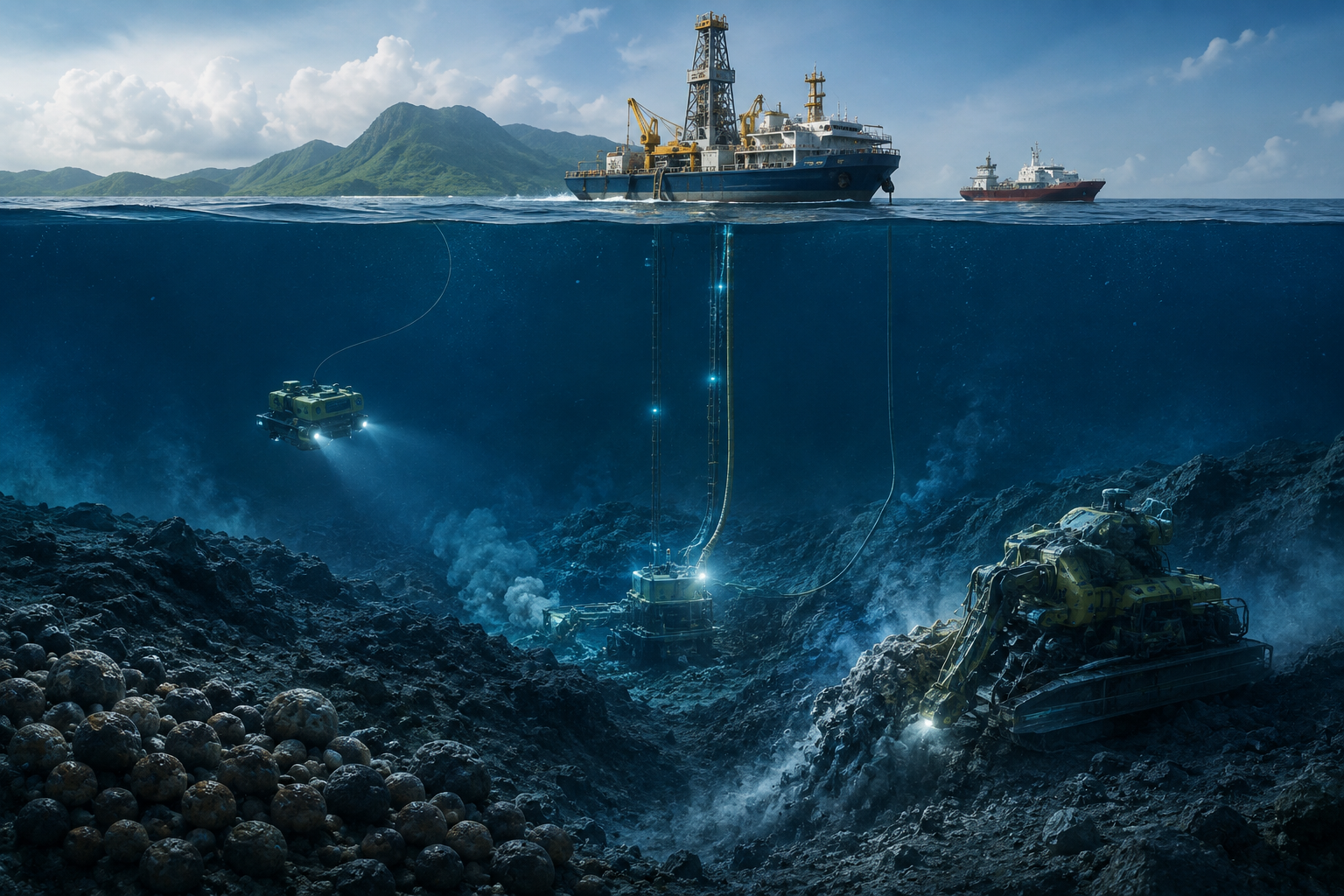
28 Million Hectares Proposed for Exploration
The MMA released its proposal on Tuesday covering a vast area of seafloor surrounding the Northern Mariana Islands and Guam.
The proposed leases would initially permit companies to explore seabed deposits. Any future extraction would involve a separate stage of development, meaning the lease announcement itself does not automatically authorize commercial mining.
Key detail |
Information |
|---|---|
Proposed seabed area |
28 million hectares |
Equivalent area |
69 million acres |
Location |
Northern Mariana Islands and Guam |
Proposed activity |
Deep-sea exploration |
Potential resources |
Polymetallic nodules |
Possible uses |
Batteries, electronics and defence |
Lead federal agency |
Marine Mineral Administration |
Northern Mariana Islands review period |
60 days |
The MMA said it had completed an environmental review of proposed commercial leases in the Marianas region and would consider comments submitted by the Northern Mariana Islands governor.
Also Read: Colorado River Water Cuts Set To Hit California, Arizona And Nevada
Pacific Leaders Demand Stronger Safeguards
Northern Mariana Islands Governor David Apatang said his administration would approach the proposal with “extreme caution”. While recognizing the strategic importance of critical minerals, he called for rigorous scientific baseline studies, transparency and explicit protections for marine resources.
His administration plans to examine the proposed terms over the next 60 days.
Guam’s government has also raised concerns. Although it acknowledged Washington’s national-security priorities, officials argued that those priorities should not mean accepting environmental risks before they are properly understood.
Guam Lieutenant Governor Joshua Tenorio went further, saying the territory was unequivocally opposed to deep-sea mining in the region.
Also Read: Drought Disaster Declared For US Virgin Islands As Water Supplies Come Under Pressure
Environmental Concerns Extend Beyond the Mariana Islands
The controversy comes as the federal government expands its broader push to access seabed minerals elsewhere in the Pacific.
- Only weeks before the Marianas proposal, the government began a leasing process covering 12.4 million hectares (31 million acres) of seabed around American Samoa.
- Contracts are expected to be awarded in November.
American Samoa Governor Nikolau Pula has opposed deep-sea mining, warning that untested extraction methods could threaten the territory’s tuna industry, which is an important part of its economy.
- Environmental groups in American Samoa and Hawaii have also launched legal action seeking to stop the proposed seabed permit auction.
- Their complaint argues that federal agencies failed to adequately assess potential damage to marine ecosystems.
Also Read: Australia Halts Coal Production as Latrobe Valley Faces Economic Shift
Why Deep-Sea Mining Is Controversial
The concern is not limited to the extraction of minerals themselves.
- Mining machinery operating on the seafloor can disturb sediments and marine habitats that scientists still understand relatively poorly.
- Environmental groups have warned that sediment plumes could introduce harmful substances into marine food webs and smother organisms living on the seabed.
- Exploration can also generate significant underwater noise, potentially affecting marine mammals and other wildlife.
- For Pacific communities, the issue is therefore closely tied to fisheries, food security and the long-term health of surrounding waters.
The US deep-sea mining proposal near the Mariana Trench reflects a growing international race to secure minerals needed for advanced technologies, but the opposition from Guam, the Northern Mariana Islands and other Pacific communities shows the difficult balance between mineral security and environmental protection.
Also Read: Australia Phases Out Coal Industry as Latrobe Valley Transitions

0 Comments