
War is often analyzed through the lenses of geopolitics, human suffering, and economic consequences, yet the environmental costs of war remain one of the least discussed aspects of armed conflict. From contaminated soil and polluted rivers to destroyed forests and long-term toxic residues, warfare leaves a deep environmental footprint that can persist for decades. Modern military operations generate enormous quantities of explosives, chemical residues, and hazardous debris, making the environmental costs of war an increasingly important issue for scientists, policymakers, and environmental organizations worldwide.
Explosives, ammunition, and military equipment introduce heavy metals, toxic chemicals, and persistent pollutants into ecosystems. According to the United Nations Environment Programme, a total of over 40 percent of natural resource-related internal conflicts have involved armed conflicts within the last six decades.
This reality highlights how the environmental costs of war extend far beyond battlefields, affecting ecosystems, agriculture, water resources, and human health.
Understanding Military Waste and Explosive Residues

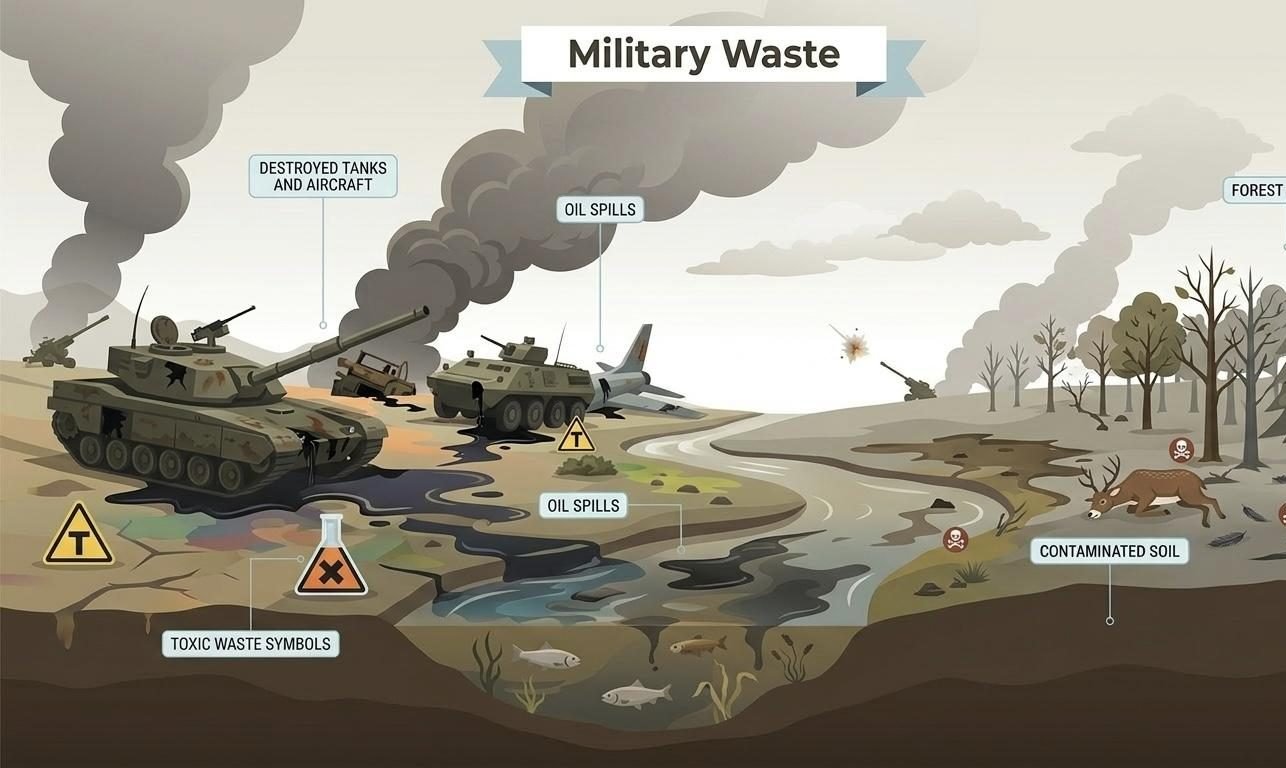
Activities in the military result in a large volume of waste materials, with several being hazardous materials. Chemical residues of explosives in soil and water are common characteristics of bombs, missiles, artillery shells, and landmines.
These wastes may take years to dissipate in the ecosystems, as they diffuse in the ecology. The environmental costs of war become evident when toxic substances contaminate farmland, forests, and rivers. Chemicals that are usually related to explosive residues are TNT, RDX, and heavy metals that may settle down in the ecosystem and be hazardous to wildlife.
These pollutants illustrate why the environmental costs of war are considered long-term environmental challenges.
Also Read: Industrial Waste Pollution: Hidden Environmental Costs Of Manufacturing
Explosives and Soil Contamination
War explosives have the potential to change the soil chemistry and soil fertility dramatically.
The chemical elements of explosives leak into the soil when munition explosives go off or when they degrade with time. These chemicals have the ability to harm microbial ecosystems, which propagate plants.
In agricultural regions affected by conflict, the environmental costs of war can directly threaten food production. Studies indicate that explosive compounds may persist in soil for decades after conflicts end.
Such contamination demonstrates how the environmental costs of war continue long after military operations have ceased.
Also Read: Toxic Legacy: 520+ Chemicals Discovered In Soil Across England
Water Pollution from Military Activities
Water systems are particularly vulnerable to pollution caused by military waste. Explosives, fuel residues, and chemical agents can enter rivers, lakes, and groundwater sources. Once these pollutants spread through water systems, they can affect both wildlife and human populations.
The environmental costs of war often include contamination of drinking water sources. According to the United Nations Environment Programme, conflicts frequently damage water infrastructure and contaminate water supplies.
This type of pollution demonstrates the widespread environmental consequences of warfare.
Also Read: Why Every City Needs A Smarter Stormwater Pollution Prevention Plan—Before The Next Flood Hits
Data Snapshot: Environmental Impacts of Military Conflict
| Indicator | Latest Data | Source |
|---|---|---|
| Share of conflicts linked to natural resources | Over 40% | https://www.unep.org |
| Environmental damage from warfare | Soil, water, ecosystems | https://www.unep.org |
| Key pollutants from explosives | TNT, RDX, heavy metals | https://www.nationalgeographic.com |
| Ecosystems affected by military conflict | Forests, rivers, and farmland | https://www.unep.org |
| Long-term environmental recovery time | Often decades | https://www.nationalgeographic.com |
These data highlight how the environmental costs of war affect ecosystems long after conflicts end.
Also Read: Pollution From Russian Strike On Ukraine’s Hydro Plant Cuts Water To Moldovan City
Forest Destruction and Habitat Loss
Due to the military conflicts, forests and natural habitats are usually destroyed on a large scale. This is because explosions, fires, and military infrastructure may destroy centuries-old developed ecosystems.
These environmental effects interfere with biodiversity and wildlife. The environmental costs of war frequently include widespread habitat loss. As an example, forests, wetlands, and grasslands can be destroyed by the bombing programs and artillery attacks. This devastation compels the wildlife to move or become extinct.
Such habitat damage shows how the environmental costs of war extend beyond human communities.
Also Read: From ‘Black Rain’ To Marine Pollution, Iran War Sparks Severe Environmental Crisis
Landmines and Long-Term Environmental Damage

One of the long-term environmental war legacies is landmines. These concealed explosives are also functional for many years after the conflict is resolved, and they still pose a threat to humans and animals.
Landmine contamination also prevents agricultural use of land for many years. The environmental costs of war, therefore, include loss of productive land and disrupted ecosystems.
According to humanitarian organizations, millions of landmines remain buried in conflict zones worldwide. These unexploded devices highlight how the environmental costs of war can persist for generations.
Also Read: Energy Shock From Iran War Shows Need To Move Beyond Fossil Fuels
Wildlife and Ecosystem Disruption
War zones often become dangerous and unstable environments for wildlife populations. Military noise, explosions, and habitat destruction force animals to abandon their natural habitats.
- Many species suffer population declines in conflict regions.
- The environmental costs of war also include disruption of ecological relationships such as predator-prey interactions.
- Some species adapt to these disturbances, but many others struggle to survive.
Biodiversity loss is therefore another important dimension of the environmental costs of war.
Also Read: Emissions Fell Barely In Germany In 2025 Amid Slow Pollution Cuts In Buildings And Transport
Toxic Materials in Military Equipment
Modern military technology includes many hazardous materials used in weapons and vehicles. These materials can include heavy metals, chemical compounds, and radioactive substances. These pollutants are able to leak out into the surrounding ecosystems when military equipment is destroyed or damaged.
Military waste has been identified to pollute the environment, with examples of pollutants such as:
- Lead and mercury from ammunition and equipment.
- Spills of fuel in broken cars and aircraft.
- Explosives and weapon system residues, chemicals.
These pollutants contribute to the environmental costs of war by contaminating ecosystems.
Also Read: Inside The Korean Demilitarized Zone’s Transformation Into A Wildlife Sanctuary
Climate Impacts of Military Activities
Military operations also contribute to greenhouse gas emissions and climate change.
Military vehicles, aircraft, and naval vessels consume large amounts of fossil fuels. These emissions add to global carbon output. The environmental costs of war, therefore, include climate-related consequences as well.
This connection highlights the broader environmental implications of warfare.
Also Read: Reef Damage Near Disputed Shoal Linked To Military Drills, China Says
Environmental Recovery After Conflict
It is slow to repair war-torn ecosystems. Recovery usually requires the cleaning of soil, planting trees, and purifying water. It takes decades to restore ecosystems through these projects.
Some methods of decreasing the environmental costs of war include:
- Landmine and bomb clearance.
- Cleaning water and soil pollution.
- Planting forests and preserving wildlife.
- Recovery normally requires international assistance.
These measures reduced the impact of war in the long term on the environment.
Also Read: How To Recycle An Old U.S. Military Base?
International Efforts to Address War’s Environmental Impact
Recognizing the environmental consequences of armed conflict, international organizations are increasingly focusing on environmental protection during wartime. The United Nations came up with regulations to reduce the environmental harm during military operations.
The key measures to reduce the environmental cost of war include:
- Observing the destruction of the environment in war zones.
- Assistance in the recovery of postwar ecologies.
- Calling for sustainable exploitation of natural resources.
These regulations attempt to minimize the destruction of nature in fights.
Also Read: The Biggest Blind Spot In Climate Change: Military Emissions Nobody Reports
Why the Environmental Costs of War Matter
The environmental consequences of warfare affect both ecosystems and human communities.
War transforms nature and human existence. Poisonous soil, contaminated water, and demolished houses complicate the process of recovery and growth. The environmental costs of war often impact vulnerable populations who depend on natural resources for survival. Environmental degradation can also increase the risk of future conflicts by reducing access to water, food, and land.
Understanding the environmental costs of war is therefore essential for building more sustainable peace strategies.
Also Read: Construction Waste Recycling: Building A Circular Construction Industry
Conclusion
War leaves scars that extend far beyond the battlefield, affecting ecosystems, natural resources, and environmental health for decades. The environmental costs of war include soil contamination, water pollution, habitat destruction, and long-term ecosystem disruption. Explosives, landmines, military waste, and damaged infrastructure introduce toxic substances into ecosystems and threaten both wildlife and human populations.
Addressing the environmental costs of war requires greater awareness, stronger international policies, and coordinated environmental restoration efforts. By recognizing the ecological consequences of armed conflict, governments and global organizations can work toward minimizing environmental damage and supporting ecosystem recovery after conflicts end. Ultimately, protecting the environment during and after warfare is essential for preserving biodiversity, safeguarding natural resources, and ensuring a sustainable future for communities affected by conflict.
Also Read: Urban Waste Crisis: Why Cities Struggle With Waste Disposal
FAQs
1. How expensive is war to the environment?
War pollutes, destroys habitats, contaminates soil, and destroys ecosystems.
2. What is the effect of explosives on the environment?
They are abandoned to give off chemicals such as TNT and heavy metals that pollute soil and water.
3. What are the reasons why landmines are hazards to the environment?
They not only prevent land use but also damage wildlife, and remain hazardous even after fights are resolved.
4. Is it possible for ecosystems to recuperate following war?
Well, it might take decades to clean up and put it back together.
5. What is the significance of dealing with environmental degradation by warfare?
Cleaning the environment secures the population and prevents the struggle over resources in the future.
Also Read: Smart Waste Management Systems Transforming Modern Cities

0 Comments